

In temperate zones, including Europe, Asia, Russia, and North America, an impressive diversity of fruit varieties has been created through human selection and breeding over the last several millennia. These fruits are most often grown intensively to enrich the diet and bring true abundance to the plate, along with intense sweet pleasure. These varieties include pome and stone fruits such as apples, pears, peaches, cherries, plums, and apricots, as well as fruits like grapes, figs, and persimmons. They are characterized by seasonal fruiting cycles, specific cultivation techniques, and a remarkably high sugar content.
Growing these fruits often involves heavy use of chemical pesticides and crop-protection inputs to shield harvests from diseases, fungi, and insects. Apples and grapes are among the most heavily treated fruits, receiving 40 to 60 chemical applications per year depending on the region. Their shelf life and availability have been vastly expanded through refrigeration, drying, and preservation methods (chemical waxes, fungicides, and controlled-atmosphere warehouse storage). These techniques extend their storage life by several months or even longer. They also keep the fruit looking flawless and allow for a much longer marketing window.
To curb the massive destruction of wildlife and plant life, as well as the threat chemical inputs pose to human health, organic farming reduces the damage without being able to eliminate it entirely. Organic treatments can also affect non-target insects, such as pollinators and natural beneficial predators. Certain products applied repeatedly, such as copper, can pollute the soil, leach into groundwater and waterways, and disrupt wildlife as well as soil life. Still, these impacts remain less severe than those of conventional chemical treatments, which systematically destroy biodiversity (wild flora and fauna).
Thanks to globalization, eating these fruits is no longer limited to the local season. Imports from the Southern Hemisphere and modern storage technologies provide nearly year-round access to them on store shelves in the Northern Hemisphere, and vice versa. Their nutritional profile includes natural sugars, fiber, essential minerals, vitamins, and antioxidants, which can theoretically contribute to a balanced diet. However, that contribution can turn negative if these fruits are eaten in excessive amounts throughout the year, due to their high sugar content, and especially fructose. It is also important to keep in mind that, depending on farming methods, the differences between modern varieties – high in sugar yet low in nutrients – and heirloom varieties can be significant. As a result, many fruits are no longer as rich in vitamins and antioxidants as they originally should be.
Fruit Acidity
Fruits naturally contain acidity that brings freshness, enhances flavor, and intensifies aromas. This acidity comes mainly from three natural organic acids: citric, malic, and tartaric acid. Their presence balances out sweetness and enhances the overall taste experience.
While eating fruit in reasonable amounts during the summer generally poses no issue, excessive acidity can weaken tooth enamel and cause digestive discomfort in sensitive individuals, particularly in the stomach and intestines. Eating acidic fruits year-round without a winter break can, over the medium or long term, trigger digestive issues, even if you do not immediately connect them to fruit because it never seemed to cause any trouble before.
As with everything, it is important to watch out for excess and remember to vary your eating habits. Not everyone handles acidity and sugar the same way; some bodies tolerate them poorly, and over the decades, sensitivities can emerge and intensify. We should also remember that the vast variety of vegetables provides substantial nutritional richness without the downsides tied to fruit sugar.
The Most Acidic Temperate-Climate Fruits:
- Pomegranates contain about 1 to 2 g of organic acids per 100 g.
- Plums provide about 1 to 1.5 g.
- Apricots come in at around 1 to 1.5 g.
- Cherries contain about 1 to 1.2 g.
- Apples can reach 1 g depending on the variety, especially tart ones like Granny Smith.
Moderately Acidic Fruits:
- Persimmons contain about 0.7 to 1 g per 100 g.
- Pears range from 0.3 to 1 g depending on the variety.
- Peaches sit around 0.7 to 1 g.
The Least Acidic Fruits:
- Figs contain about 0.4 to 0.7 g per 100 g.
- Grapes provide 0.3 to 0.6 g.
- Melons and watermelons are the least acidic, at about 0.1 to 0.4 g.
Apples
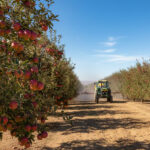
Apples are among the most widely consumed and cultivated temperate-zone fruits in the world, accounting for roughly 20% of European fruit-growing acreage, for example. They are grown on a massive industrial scale because they store for a very long time. They receive between 20 and 40 pesticide treatments per year (sometimes more), primarily chemical fungicides and insecticides, most of which are classified as harmful to human health and the environment. Organic apple orchards also receive more than twenty approved treatments that, while not synthetic chemicals, are not entirely benign either.
Apples are mainly grown intensively in China, the United States, Poland, France, Italy, Chile, and New Zealand. In the Northern Hemisphere, harvest runs from September to November, and in the Southern Hemisphere from March to May, enabling continuous year-round availability, especially given how long they can be stored using chemical preservation processes.
Global apple production for the 2024/2025 marketing year is estimated at 83.9 million metric tons by the USDA. China dominates by a wide margin with an expected output of around 48 million metric tons, representing more than half of total global volume. (1 and 2) Behind this giant, the leading producers are the European Union with roughly 10.2 million metric tons in 2024 (3), the United States with around 4.7 million metric tons (259.5 million bushels) for 2024/2025 (4), and Turkey with 4.0 million metric tons over the same period. (5) In the Southern Hemisphere, New Zealand plays a strategic role in the export market with a 2023/2024 harvest of 483,000 metric tons, about 340,000 metric tons of which are destined for export. (6) In France, 2024 production is estimated at 1.57 million metric tons according to Agreste. (7)
1) USDA Foreign Agricultural Service - "World Apple Production 2024/2025"; 2) USDA FAS / Tridge - "Global Apple Production Forecast 2024/25"; 3) WAPA / USDA FAS - "Prognosfruit 2024: EU Apple Production Declines"; 4) USApple - 2024-25 "Apple Production Projected to Reach Nearly 260 Million Bushels"; 5) USDA FAS - Turkey Fresh Deciduous Fruit Annual; 6) USDA FAS - New Zealand Fresh Deciduous Fruit Annual 2023/2024; 7) Agreste / INSEE - Infos Rapides July 2024 No. 88: 2024 Apple Production.
Nutritional composition per 100 g: 54 kcal
- Carbohydrates: 11.5 g, including about 10 g of sugars (6 g fructose, 2 g glucose, 2 g sucrose).
- Fiber: 2.4 g (mainly pectins).
- Vitamin C: 5 to 6 mg.
- Potassium: 120 mg.
- Vitamin C: 4 to 8 mg.
- Quercetin: 2 to 10 mg, concentrated in the skin.
- Water content: about 85%.
When dried, apples are very high in sugar: 65 g per 100 g, including 35 g of fructose, 25 g of glucose, and 5 g of sucrose.
Pears
Pears are a widely consumed fruit prized for their sweet, juicy flavor. Global production is substantial, particularly in Europe, China, and the United States. They are grown both for fresh consumption and for industrial processing (compotes, canned fruit, and jams).
Pears are a fairly heavily treated fruit, mainly with fungicides and insecticides to control common diseases and insect pests. The number of applications varies by region and pear variety, averaging 10 to 25 per year.
Global pear production for the 2024/2025 marketing year is estimated at 26.6 million metric tons by the USDA, up from previous seasons. (1) It is overwhelmingly dominated by China, the undisputed leader with 20.2 million metric tons (about 76% of global volume). (2) In Europe, 2024 production recovered slightly after hitting a record low in 2023: WAPA (World Apple and Pear Association) estimates it at 1.79 million metric tons, a 4.9% increase over 2023. While Italy is rebounding, it remains below its historical averages, as do Belgium and the Netherlands, specialists in intensive production, particularly of the Conference variety. Spain remains a key producer on the continent. (3) In the United States, production is concentrated in the Pacific Northwest (which accounts for 77% of national volume), at around 510,500 metric tons (200,000 metric tons in Oregon and 192,000 metric tons in Washington). (4) France, for its part, confirms its renewed momentum with a harvest estimated at over 119,000 metric tons (up 12%), primarily in Provence-Alpes-Côte d'Azur, the Rhône Valley, Occitanie, and the Loire Valley. (5 and 6) The Southern Hemisphere takes over from March to May, led by Argentina (614,000 metric tons in 2024), followed by South Africa (536,000 metric tons) and Chile (203,000 metric tons). (7)
Sources: 1) USDA Foreign Agricultural Service - "World Pear Production 2024/2025"; 2) USDA FAS / ProduceReport - "China's Apple and Pear Production Expected to Rise in 2024/25: 20.2 MMT"; 3) USDA FAS / WAPA - Prognosfruit 2024; 4) USDA NASS / Northwest Horticultural Council - "U.S. Pear Production in 2024: 510,500 Metric Tons"; 5) FranceAgriMer / RNM - The Pear Market in 2024-2025; 6) Agreste / Réussir Fruits & Légumes - 2024 French Pear Production Estimated at 135,700 Metric Tons as of July 1; 7) WAPA / ProduceReport - "Southern Hemisphere Pear Harvest Forecast for 2024"
- Water: 84 g.
- Sugars: 10 g total.
- Sugar breakdown: 5.5 g fructose, 3 g glucose, 1.5 g sucrose.
- Fiber: 2 g.
- Vitamin C: 5 mg.
- Potassium: 120 mg.
- Quercetin: 1.3 to 5 mg.
Grapes
Grapes are an economically vital fruit, used for fresh consumption and above all for winemaking. They are one of the most heavily treated fruits, typically receiving between 20 and 40 treatments per year depending on the region. Even in organic viticulture, copper and sulfur applications are frequent. Like apples, grapes are therefore among the most destructive crops for wildlife, wild flora, the environment, and soil life.Table grapes, with global production reaching around 28.4 million metric tons in the 2023/2024 marketing year, are mainly grown in China, the undisputed leader with over 13.5 million metric tons, followed by India (3.0 million metric tons), Turkey (1.9 million metric tons), the European Union (1.3 million metric tons, primarily Italy and Spain), and Egypt among the major African producers. In the Southern Hemisphere, Peru (the world's leading exporter with 595,000 metric tons exported in 2023/2024), Chile (565,000 metric tons exported), and South Africa (310,000 metric tons exported) are key players in counter-seasonal exports. Harvest runs from August to October in the Northern Hemisphere and from December to April in the Southern Hemisphere, ensuring near-continuous availability on store shelves. (1) Wine grapes face a more challenging outlook, with historically low global wine production estimated at around 225.8 million hectoliters for 2024 according to the International Organisation of Vine and Wine (OIV), the lowest level since 1961. (2)
Sources: 1) USDA Foreign Agricultural Service - Fresh Deciduous Fruit: World Markets and Trade (Table Grapes 2023/24); 2) OIV - International Organisation of Vine and Wine - "Statistical Fact Sheet: Wine, Table Grapes, and Raisins in 2024" (April 2025).
- Sugars: 15.5 g (including 8.3 g fructose and 7.1 g glucose).
- Fiber: 1.6 g.
- Vitamin C: 7 mg.
- Potassium: 190 mg.
- Antioxidants: polyphenols and resveratrol.
- Water content: about 81%.
Apricots
A beloved summer fruit, apricots are eaten fresh or dried and widely cultivated in warm regions. They receive an average of 8 to 12 pesticide treatments per year.Global apricot production, estimated at 3.73 million metric tons in 2023, is heavily concentrated around the Mediterranean basin and Central Asia. (1) The leading producers are Turkey, the undisputed leader with 750,000 metric tons in 2023 (about 20% of global volume, dominating the dried fruit market with 87,170 metric tons of dried apricots produced in 2023/2024 - see 3), Uzbekistan (500,545 metric tons in 2023), and Iran (318,475 metric tons that same year). (2) In Europe, 2024 production is estimated at 524,000 metric tons: Italy (214,000 metric tons), Spain (135,000 metric tons), France (88,000 metric tons in 2024, though reaching up to 100,000 metric tons depending on the year), and Greece (87,500 metric tons) are the main players. (4) Algeria stands out as Africa's top producer, with an estimated 200,566 metric tons in 2023. (2)
Sources: 1) FAOSTAT / Statista - World Apricot Production 2023: 3.73 million metric tons; 2) FAOSTAT / TheWorldRanking - Top 5 Apricot-Producing Countries 2023; 3) Statista / USDA FAS - Dried Apricots: Turkey World Leader 2023/24; 4) Europech / medFEL - European Apricot Forecast 2024.
- Sugars: 8.3 g (including 4.3 g fructose, 3 g glucose, and 0.5 g sucrose).
- Fiber: 1.7 g.
- Vitamin C: 10 mg.
- Potassium: 280 mg.
- Antioxidants: beta-carotene.
- Water content: about 86%.
Peaches, Brugnons (Clingstone Nectarines), and Nectarines
These widely consumed summer fruits, cultivated all over the world, receive roughly 20 pesticide treatments per year. They are produced primarily in China, Spain, Italy, the United States, Greece, Chile, and Australia. Their fruiting season runs from June to September in the Northern Hemisphere and from December to February in the Southern Hemisphere. Nutritional composition per 100 g:- Sugars: 8 to 9 g (including 2.2 g fructose, 2 g glucose, and 3.7 g sucrose).
- Fiber: 1.8 g.
- Vitamin C: 7 mg.
- Potassium: 190 mg.
- Antioxidants: including beta-carotene 160 to 200 µg (vitamin A precursor), lutein 30 to 50 µg, and zeaxanthin 10 to 20 µg.
- Water content: about 89%.
Plums
Plums are a widely enjoyed fruit, eaten either fresh or dried as prunes, and carry major commercial importance.Global plum production was estimated at 12.49 million metric tons in 2023. (1) As with pears and apples, China is the undisputed giant of the sector, accounting on its own for roughly 54% of global volume, or 6.75 million metric tons. Behind this leader, the main producers are Romania (the historical European leader with roughly 597,000 to 603,000 metric tons depending on the year, representing 23% of European production), Serbia (3rd in the world with an average of 441,000 metric tons), Chile (a major Southern Hemisphere player with 425,000 metric tons), and the United States (around 280,000 to 390,000 metric tons depending on the year, primarily in California for prunes). In Europe, Italy ranks among the top producers with roughly 187,000 to 215,000 metric tons (2, 3, 4), ahead of France, where table plum production reached 14,395 metric tons in 2023 and mirabelle plum production totaled 20,775 metric tons that same year. As for Agen Prunes PGI (Pruneau d'Agen), output reached 40,500 metric tons in 2023 (including 32,000 metric tons under PGI certification), making France the world leader in this segment. (5)
Sources: 1) FAOSTAT - World Plum Production 2023: 12.49 million metric tons; 2) FAOSTAT - 2022 World Ranking: China 6,752,221 t (54%), Romania, Serbia, United States 279,500 t, Italy 187,350 t; 3) Contemporary Agriculture (2024) / FAO - Serbia: 3rd largest world producer averaging 440,910 t (2012-2021); Romania 597,400 t (1st in Europe); Italy 193,200 t (3rd in Europe); 4) World Population Review / FAOSTAT - Chile: 424,887 t; United States up to 390,000 t/year (California); 5) Chambres d'Agriculture France (October 2024) - French Table Plums 2023: 14,395 t (Agreste); Mirabelle Plums 2023: 20,775 t (Agreste); Agen Prunes average: 40,000 t/year.
Growing plums requires constant crop-health monitoring (around 8 to 12 treatments per year to protect the harvest). The harvesting period extends from July to September in the Northern Hemisphere and from December to February in the Southern Hemisphere, ensuring steady availability on the global market.
Nutritional composition per 100 g:
- Sugars: 10.1 g (including 4.3 g fructose, 5.1 g glucose, and 0.7 g sucrose).
- Fiber: 2 g.
- Vitamin C: 7 mg.
- Potassium: 220 mg.
- Antioxidants: soluble fiber, polyphenols.
- Water content: about 87%.
Prunes (dried plums) have a high sugar concentration ranging from 60 to 70 g per 100 g (including 20 to 25 g of fructose, 25 to 30 g of glucose, and 10 to 15 g of sorbitol). It is advisable not to eat too many, or too often.
Figs
Figs are a beloved Mediterranean fruit, eaten fresh but even more commonly dried. Pesticide treatments vary by region, though they generally remain moderate. The leading producing countries are Turkey, Egypt, Morocco, Algeria, Iran, Spain, Italy, Greece, and the United States. Their fruiting season runs from July to September in the Northern Hemisphere, offering a predominantly seasonal supply.
Nutritional composition per 100 g:
- Sugars: 16 g (including 8 g fructose, 7 g glucose, and 1 g sucrose).
- Fiber: 2.5 g.
- Vitamin C: 2 mg.
- Potassium: 190 mg.
- Antioxidants: total polyphenols between 250 and 350 mg, flavonoids from 30 to 50 mg.
- Water content: about 80%.
The dried version of figs is heavily concentrated in sugar. It contains an average of 60 to 65 g of total sugars per 100 g, including 25 to 30 g of fructose and 20 to 25 g of glucose, though the exact ratio can vary depending on the drying method and producer.
Cherries
Cherries are a much-loved fruit eaten fresh during a short season. They receive an average of 8 to 12 pesticide treatments per year. The main producing regions are Europe (France, Italy, Spain, Germany), the United States (California, Michigan), and Turkey. Harvest takes place from June to July in the Northern Hemisphere, providing limited but highly sought-after availability.
Nutritional composition per 100 g:
- Sugars: 13 g (including 6.5 g fructose, 5 g glucose, and 1.5 g sucrose).
- Fiber: 1.5 g.
- Vitamin C: 10 mg.
- Potassium: 160 mg.
- Antioxidants: anthocyanins 60 to 80 mg, flavonoids between 20 and 30 mg.
- Water content: about 82%.
Persimmons
Persimmons are an autumn fruit appreciated for their richness in sugars and antioxidants. Pesticide treatments vary by country and growing conditions. They are mainly cultivated in China, Korea, Japan, Spain, and Italy. Harvest runs from October to December in the Northern Hemisphere, offering a sweet, colorful fruit for fall. And yes, persimmons are very sweet, and their dried form is pure concentrated sugar candy. Because of this, it is wise to keep an eye on how much you eat!
Nutritional composition per 100 g:
- Sugars: 16 g (including 8 g fructose, 6 g glucose, and 2 g sucrose).
- Fiber: 2.5 g.
- Vitamin C: 7 mg.
- Potassium: 170 mg.
- Antioxidants: total carotenoids between 200 and 300 µg, beta-carotene from 100 to 150 µg, lutein between 30 and 50 µg.
- Water content: about 81%.
Dried persimmons concentrate those sugars further: they contain an average of 55 to 65 g of total sugars per 100 g, including 25 to 30 g of fructose and 20 to 25 g of glucose depending on the variety and drying method.
Pomegranates
Pomegranates are prized for their antioxidant properties and can be enjoyed fresh or as juice. Crop treatments vary depending on the growing region. They are primarily cultivated in India, Iran, the United States, Spain, Turkey, and Israel. Harvest takes place from September to November in the Northern Hemisphere, delivering juicy red fruit in autumn.
Nutritional composition per 100 g:
- Sugars: 13 g (including 7 g fructose, 5 g glucose, and 1 g sucrose).
- Fiber: 3.6 g.
- Vitamin C: 8 mg.
- Potassium: 260 mg.
- Antioxidants: total polyphenols 1.2 to 1.8 g, punicalagins from 0.8 to 1.2 g.
- Water content: about 78%.
When processed into juice, pomegranates retain a large share of their antioxidants, though sugar concentration can vary depending on how it is prepared.
Melons
This refreshing summer fruit is widely consumed. Pesticide treatments vary depending on the growing area. It is intensively cultivated in China, Turkey, Iran, the United States, Spain, France, and Italy. Harvest runs from June to September in the Northern Hemisphere.
Nutritional composition per 100 g:
- Sugars: 8 g (including 4 g fructose, 3 g glucose, and 1 g sucrose).
- Fiber: 1 g.
- Vitamin C: 18 mg.
- Potassium: 300 mg.
- Antioxidants: contains beta-carotene.
- Water content: about 90%.
Watermelons
A deeply hydrating fruit enjoyed throughout the summer. Pesticide treatments vary depending on the growing region. It is produced on a massive scale in China, Turkey, the United States, Brazil, Spain, and Iran.
Nutritional composition per 100 g:
- Sugars: 7 g (including 3.5 g fructose, 2.5 g glucose, and 1 g sucrose).
- Fiber: 0.5 g.
- Vitamin C: 8 mg.
- Potassium: 110 mg.
- Antioxidants: lycopene 4 mg.
- Water content: about 91%.
Pawpaw (Hardy Mango, Asimina triloba), an Up-and-Coming Fruit
Native to the United States (Midwest valleys, Appalachia, Kentucky, Ohio, Missouri, Pennsylvania) and Canada (Ontario, Quebec), the pawpaw tree is now also cultivated in France, Belgium, Germany, Switzerland, the United Kingdom, northern Italy, and the Balkans. Remarkably hardy down to -25 °C (-13 °F), it adapts effortlessly to temperate European climates.
Flowering occurs in spring (from March to May), and fruiting is staggered depending on sun exposure and individual trees, with harvests running from late August to October in Europe and North America. The fruit has a very short shelf life: about one week in the refrigerator and 2 to 3 days at room temperature.
Pawpaw is rare in mainstream retail and is grown mainly locally by home gardeners and small orchards. It is eaten fresh in autumn or processed into frozen goods, jams, and desserts. Its availability is gradually expanding into specialty shops and direct-to-consumer sales. This fruit stands out for its tropical flavor reminiscent of mango, banana, melon, and vanilla, as well as its nutritional and antioxidant density. It is easy to grow and requires very few pesticide treatments, making it well suited to local organic cultivation.
Nutritional composition per 100 g fresh:
- Total sugars: between 18 and 22 g (including 9 to 11 g fructose, 8 to 10 g glucose, 1 to 2 g sucrose).
- Fiber: 2.9 g.
- Vitamin C: 32 mg.
- Vitamin A (beta-carotene): between 80 and 170 µg.
- Vitamin E: 1 mg.
- Potassium: 360 to 400 mg.
- Calcium: 40 mg.
- Magnesium: 27 mg.
- Iron: 2.5 mg.
- Sulfur: 8 to 10 mg.
- Protein: 2 g.
- Antioxidants: contains polyphenols, acetogenins, and carotenoids.
Be careful, though: this genuinely delicious fruit is packed with sugar, especially fructose. It is best enjoyed in moderation during its harvest season.
In Conclusion
Modern conventional fruits, shaped by centuries of selective breeding focused on sweetness and yield, now have very limited nutritional density and value compared to original wild fruits and berries. Everyday temperate-climate fruits such as apples, pears, grapes, peaches, and melons are often promoted as health-boosting sources of vitamins and antioxidants. In reality, their vitamin, mineral, fiber, and antioxidant content remains modest, and sometimes low. To obtain a meaningful amount of micronutrients from these fruits, you would have to eat large quantities, which inevitably leads to excess sugar intake. Many of them easily exceed 10 g of sugar per 100 g and can reach 13 to 16 g in grapes or cherries, which becomes problematic given how effortlessly people eat large portions. Just ten cherries already weigh 100 g, a single apple easily exceeds 100 g, and half a melon can weigh over 500 g. Needless to say, the famous grape or cherry detox program is a true metabolic aberration for the liver and the body: above all, it delivers a massive hit of sugar, and worse yet fructose, since both of those fruits are particularly loaded with it.
The risk of sugar overload is heightened even further with fruit juices, even freshly squeezed ones, which deliver a rapid, heavy dose of fructose and put significant strain on the liver. Modern fruits therefore contribute to a notable share of today’s metabolic issues. Their impact on blood sugar is substantial, especially within a diet already overloaded with sugars and carbohydrates.
If you genuinely want to optimize your intake of vitamins and antioxidants without taking on the downsides of sugar, vegetables remain the most valuable and effective source. Moreover, their tremendous diversity makes it easy to put together an endless variety of flavorful cooked dishes or raw salads. Fruits should be viewed as pleasure foods and eaten thoughtfully, taking into account the sugar load already coming from other carbohydrates and starches (grains, bread, potatoes, rice, etc.).
Small red fruits, berries, and certain low-sugar citrus fruits can be included more regularly according to the season. They are generally richer in vitamins, minerals, fiber, and antioxidants while keeping the glycemic load in check.
Ultimately, modern fruits offer far less nutritional value than their popular image suggests. Eating too much of them every day – a threshold that is very quickly reached – exposes you to the well-known health risks of daily sugar and fructose intake without ever giving the body a break. On top of that, cultivating these fruits takes a heavy toll on the environment and wildlife, regardless of the farming method used.
Tags:
FruitsMore articles
The Modern History of Fruit

Tropical Fruits
Tropical Fruits
The Modern History of Fruit
