
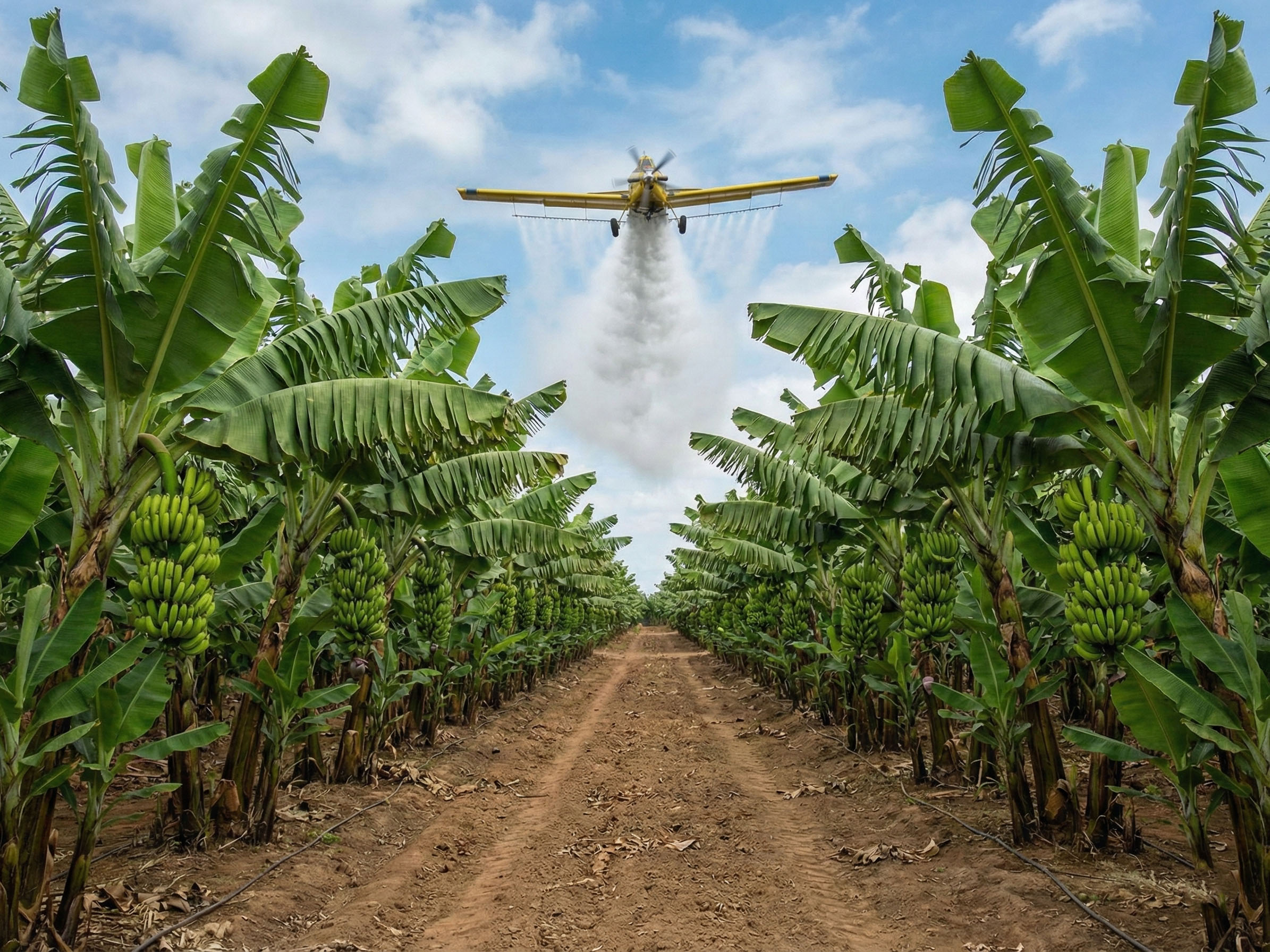
Tropical fruits, grown in warm and humid tropical and subtropical regions, include bananas, pineapples, mangoes, and dates, which are also generally very high in sugar. Their year-round international availability sometimes gives the impression that they are not subject to seasonality. In reality, the situation is more nuanced.
Certain tropical species, especially non-woody plants, have a relatively short vegetative growth and fruiting cycle, which makes it possible to keep them in continuous production throughout the year. This is the case for banana, pineapple, and papaya plants. By using irrigation systems and regularly replanting new plants to replace those that have already fruited, it is possible to schedule harvests and ensure a nearly continuous supply.
Conversely, most tropical fruit trees retain a seasonal flowering and fruiting cycle, even in warm climates. Mango, avocado, lychee, and date palm trees all have a flowering period followed by a ripening period, with a longer or shorter pause between two cycles. These rhythms are influenced by the rainy season, the dry season, and sunlight. Drought or water stress is often decisive in triggering flowering.
Thus, even though store shelves offer bananas year-round thanks to intensive farming methods, seasonality very much exists for most tropical fruits. Continuous production relies on staggered planting, efficient irrigation, and above all the constant, massive use of often hazardous pesticides, fungicides, and chemical fertilizers, at the cost of degrading tropical ecosystems that once sheltered a large proportion of wild plant and animal species.
For example, intensive banana farming has severely depleted and contaminated soils across several tropical regions.
In the French West Indies, the massive use of chlordecone between 1972 and 1993 left soils and groundwater persistently polluted, exposing populations to major health risks. (1) Contamination affects 1/5 of agricultural land in Guadeloupe and 2/5 in Martinique. Persistence in soils is estimated at several centuries depending on soil type (from 60-100 years for nitisols to 5-7 centuries for andosols). Documented health risks include a significant increase in prostate cancer risk (the highest rate in the world among men in Martinique and Guadeloupe) and an increase in premature births. In Central America, the nematicide DBCP caused sterility and organ damage in workers. (2) Moreover, the heavy use of fungicides and pesticides to control diseases such as black Sigatoka affects workers' health, soil microbial life, and adjacent aquatic ecosystems, notably by contaminating waterways through runoff in intensive plantation areas. (3)
Sources: 1) French Ministry of Health, 2021, Chlordecone Plan IV (2021-2027), and French Senate, 2023, The Impact of Chlordecone Use in the French West Indies, OPECST Report No. 360; 2) BBC Afrique, 2022, Pesticides and Health: How Banana Workers in Panama Are Fighting for Justice; 3) CIRAD, 2003, Strategies for Controlling Black Sigatoka in Banana Plants and Environmental Impact, Agritrop.
Most discussions focus on the health harm inflicted on human populations, yet the scale of the damage to wildlife and ecosystems is just as frightening.
Without these human interventions, even tropical regions would experience distinct periods with no fruit available. Vast fruit plantations create the illusion of permanent abundance. Without them, tropical forests would not be the paradise constantly overflowing with fruit that people often imagine.
Tropical fruit supply chains rely on a handful of major exporting countries whose agricultural calendars do not overlap, as tropical seasons vary greatly from one region to another. Bananas come primarily from industrial monocultures in Latin America and Asia, where differences in the onset of the rainy season, combined with controlled irrigation, make it possible to stagger planting and achieve nearly continuous harvests. Mangoes and pineapples have flowering cycles that are more sensitive to seasonal shifts, but because rainy periods neither begin nor end at the same time in India, Mexico, Thailand, West Africa, or the Philippines, each region enters production at a different time. Thus, when mango season draws to a close in one area, it begins elsewhere, and pineapples likewise follow staggered calendars depending on monsoon patterns, bimodal rainfall regimes, or drier seasons. This succession of production periods, all governed by distinct tropical rhythms, ultimately ensures nearly uninterrupted availability on international markets. As for dates, grown in the arid regions of the Middle East and North Africa, the harvest is very brief and concentrated during the hottest weeks, yet their naturally long shelf life and drying techniques guarantee a steady presence on store shelves all year long.
All of these fruits therefore end up on market stalls and supermarket shelves at a very high energy cost tied to shipping, refrigeration, storage, and artificial ripening. Indeed, most of them are harvested unripe to withstand the journey, then artificially ripened upon arrival to achieve their expected appearance, texture, and flavor, all to satisfy our demand for abundance and pleasure.
Bananas
Bananas are the most widely consumed tropical fruit in the world, valued for their sweetness, soft texture, pleasant flavor, and easy digestibility. They appeal to a broad audience, from children to adults, and are often seen as a filling, convenient snack to take on the go. Their global popularity is reflected in production figures exceeding roughly 140 million metric tons per year, making bananas a dietary staple in many countries and a fixture of culinary culture and everyday eating.
Bananas are therefore produced across vast expanses of monoculture, invariably at the expense of original tropical rainforests in equatorial zones, where wild plant and animal life is far more concentrated than anywhere else. These plantations have led to the massive destruction of natural habitats and the death of countless wild animals, from the smallest insects to large mammals. As a result, the banana has become a symbol of biodiversity loss and the destruction of life in these regions.
Compounding this environmental pressure is the vulnerability of banana plants to diseases such as the notorious Fusarium fungus (Panama disease), which threatens crops (including organic ones) and drives the heavy use of chemical treatments. These often highly toxic pesticides and fungicides not only affect soils and water, they also destroy wildlife and put human populations at risk.
The main banana-producing regions are located in India, China, the Philippines, Indonesia, Brazil, Ecuador (the world’s leading exporter), Colombia, Costa Rica, Guatemala, and Cameroon, whereas in Europe cultivation remains very limited, primarily to the Canary Islands.
Nutritional composition per 100 g:
- Sugars: 17 to 18 g (including 7 g of fructose, 5 g of glucose, 3 g of sucrose, and about 2 to 3 g of remaining starch) for a fully ripe banana.
- Fiber: 2 g.
- Vitamin C: 10 mg.
- Vitamin B6: 0.37 mg.
- Folate (vitamin B9): 14 µg.
- Potassium: 400 mg.
- Antioxidants: dopamine and catechins.
- Water content: about 75%.
It is important to note that a banana’s sugar composition changes depending on its degree of ripeness. A less ripe banana contains about 7 to 8 g of sucrose per 100 g, along with 3.5 to 4 g of glucose and 3.5 to 4 g of fructose. At this stage, a significant share of its carbohydrates is still present as starch, around 3.8 g per 100 g. As the fruit ripens, this starch gradually converts into simple sugars, while sucrose is hydrolyzed into glucose and fructose. This process profoundly alters the banana’s sugar profile: the riper it gets, the higher its glucose and fructose levels rise, eventually far surpassing sucrose. As a result, a very ripe banana becomes very sweet, more aromatic, and markedly richer in fructose.
Dried version per 100 g:
- Sugars: 60 g (including 25 to 28 g of fructose, 20 to 25 g of glucose, and 10 to 12 g of sucrose).
- Water: about 15%, making it essentially a candy with a very high fructose content.
Pineapples
After bananas, pineapples are among the most widely exported tropical fruits in the world, with over 25 million metric tons produced each year, the majority destined for international trade. They hold a major place in global markets thanks to their refreshing, delicious taste and their unique exotic sweet-and-tangy aroma evoking the tropics.
Pineapples are sold in many forms (fresh, canned, juiced, frozen, or dehydrated) and are also used to flavor numerous industrially processed products, such as desserts, ice creams, pastries, confectionery, cocktails, and ready-made meals.
While the pineapple fruit is prized for its exotic flavor, the plant (specifically its stem) is also harvested to extract bromelain, an enzyme used in the pharmaceutical and food supplements industries for its digestive properties.
Pineapples are grown in warm, humid tropical regions, most often in sprawling monocultures covering vast areas that required clearing forests rich in plant and animal life. To protect these plantations from pests, diseases, and weeds, chemical inputs are applied intensively and systematically. The most common treatments include fungicides, herbicides, and, depending on local practices, insecticides.
Costa Rica, Europe’s primary supplier of pineapples, faces particular criticism for its heavy use of these pesticides. These practices have major environmental impacts, contributing to soil and waterway contamination, ecosystem destruction, and the elimination of wildlife.
The leading pineapple-producing countries are Costa Rica, the Philippines, Thailand, Indonesia, India, Brazil, and Nigeria. In Europe, production remains marginal, limited mainly to certain parts of Andalusia.
Depending on the tropical region, pineapples can be harvested year-round. However, production peaks generally occur between December and July, corresponding to the periods most favorable for fruiting.
Nutritional composition per 100 g:
- Sugars: 10 to 12 g (including 2 g of fructose, 2 g of glucose, and 6 g of sucrose).
- Fiber: about 1 g.
- Vitamin C: about 20 mg.
- Potassium: around 110 mg.
- Antioxidants: bromelain 80 to 120 mg, total phenolic acids 40 to 80 mg.
- Water content: 85 to 87%.
Dried version (100 g):
- Total sugars: 70 to 80 g (including roughly 18 to 24 g of fructose, 18 to 24 g of glucose, and 28 to 34 g of sucrose).
Mangoes
Mangoes are a flavorful tropical fruit prized around the world for their sweetness and signature fruity aroma. Production, exceeding 49 million metric tons per year, is growing rapidly to meet ever-increasing demand on international markets. They are sold in many forms, fresh or dried, canned, frozen, and incorporated into industrially processed products such as juices, smoothies, dairy desserts, ice creams, and confectionery. Mangoes are also widely used in numerous desserts and a variety of exotically inspired recipes.
Global mango cultivation has undergone a profound transformation. Traditional low-density orchards, once the majority, now account for only a small share of output. To keep pace with steadily rising international demand, exporting countries have overwhelmingly shifted to high-density industrial plantations. This move toward intensive farming requires vast uniform tracts of land and has led to the destruction of numerous tropical forests, wooded savannas, and natural areas ranked among the most biodiversity-rich on the planet.
These modern mango plantations depart radically from the traditional model, in which fewer than 100 trees were planted per hectare. Naturally tall and majestic trees are now pruned into tight hedgerows reaching up to 1,600 plants per hectare. This extreme density enables mechanization and high yields, but it forces systematic reliance on chemical inputs.
Herbicides keep the soil bare, while insecticides wipe out not only pests but also all other insects, depriving birds of food and breaking the food chain, thereby driving the eradication of wildlife. High density also accelerates the spread of disease, requiring heavy fungicide applications. Moreover, trees are treated before harvest so the fruit can withstand intercontinental shipping.
High-density farming also demands far more fertilizer. Planted tightly together, the trees rapidly deplete soil nutrients. Root competition and high yields call for constant inputs, often delivered via fertigation, making the system dependent on soluble fertilizers. This farming model leads to progressive soil acidification, loss of natural fertility, and increased pollution of surrounding waters.
Compounding these practices is the use of growth regulators such as paclobutrazol. This compound suppresses the tree’s natural growth and forces flowering so production can be scheduled for the global market. The orchard thus becomes dependent on an artificial calendar that exhausts the trees and requires rapid replanting.
Water is another critical issue. In this ultra-dense system, trees constantly compete with one another and can only survive with continuous fertigation, a constant supply of water and chemical fertilizers. In already arid or vulnerable regions such as Peru and southern Spain, this excessive demand has contributed to groundwater depletion and soil degradation.
This intensive model leads to a wholesale artificialization of the landscape. Where tropical forests of exceptional ecological richness once stood, there are now rows of cloned mango trees dependent on chemicals, irrigation, and mechanization on destroyed, lifeless soils.
Today, the global mango industry relies almost exclusively on this intensive production model. The remaining traditional orchards carry very little weight in international supply. Store-bought mangoes therefore come primarily from an agricultural system whose impact on tropical ecosystems is particularly heavy and ecologically unsustainable.
The leading producing countries are India, which accounts for nearly half of global output, followed by China, Thailand, Indonesia, Pakistan, Mexico, Brazil, Egypt, and Nigeria. In Europe, production is marginal yet present, mainly in Andalusia and the Canary Islands.
Nutritional composition per 100 g:
- Sugars: 12 to 15 g (including 7 g of fructose, 6 g of glucose, and 2 g of sucrose).
- Fiber: about 1.6 g.
- Vitamin C: about 30 mg.
- Vitamin A (beta-carotene): around 540 µg.
- Potassium: 170 to 190 mg.
- Antioxidants: carotenoids and polyphenols.
- Water content: 82 to 84%.
Dried version (100 g):
- Very high total sugars: 70 to 80 g (including roughly 35 to 40 g of fructose, 30 to 35 g of glucose, and 5 to 10 g of sucrose).
Dates (Dried Fruit)
Dates are an iconic fruit of arid regions, particularly across the Maghreb and the Middle East, where they are cultivated in both traditional oases and larger-scale operations. Global production is substantial. According to the United Nations, more than 8.5 million metric tons of dates are produced each year across over 1.09 million hectares. Leading producers include Egypt (roughly 1.87 million metric tons according to recent data), Saudi Arabia, Algeria, and Iran.
For example, Tunisia exports more than 130,000 metric tons of dates every year. Production on this scale can no longer rely exclusively on the traditional model of subsistence palm groves. It now depends on vast intensive monoculture farms designed to maximize yields in response to global demand.
The date palm, a historical pillar of the oasis ecosystem, is now planted on a massive scale under productivist methods that break with ancestral agroecological balance. These agro-industrial systems place unsustainable water stress on fossil aquifers and, through their high density and genetic uniformity, promote the proliferation of pests such as the red palm weevil, which in turn demands heavy chemical control. While industrial drying and pasteurization (both highly energy-intensive processes) ensure that the fruit meets export standards, this systematic standardization comes at a steep environmental cost. It places a heavy burden on the fragile ecosystems of desert regions, where biodiversity and water resources are sacrificed for short-term profitability.
Dates are especially valued for their flavor. They have an intensely sweet taste with notes of honey and caramel, along with a signature soft, chewy texture. These qualities make them a staple of traditional cuisine, where they shine in Middle Eastern and North African confections and pastries. At the same time, the food industry and the wellness and nutrition sectors have embraced them. Dates have become the go-to alternative to white sugar in so-called “healthy” recipes (cereal bars, energy balls, cakes, and desserts). This practice mainly serves to maintain the illusion of “no added sugar” while preserving a high glycemic load and a very substantial sugar intake. Dates are indeed a dried fruit heavily concentrated in sugar and, unfortunately, very high in fructose.
As a dried fruit, dates keep very well, which simplifies their logistics (storage, transport, export, and retail). It is this shelf stability that enables massive exports, ensuring year-round availability on international markets. In 2023, the European Union imported 140,000 metric tons of dates worth 310 million euros. Among European nations, France stands out, accounting for roughly 25% of imports, illustrating both the fruit’s economic importance and its popularity on the continent.
Nutritional composition per 100 g:
- Total sugars: 64 to 70 g (including 34 g of glucose, 31 g of fructose, and <1 g of sucrose).
- Fiber: about 8 g.
- Potassium: about 700 mg.
- Magnesium: about 50 mg.
- Calcium: about 45 mg.
- Phosphorus: about 60 mg.
- Vitamin C: about 3 mg.
- Beta-carotene: about 90 µg.
- Folate (vitamin B9): about 18 µg.
- Antioxidants: carotenoids, flavonoids, and polyphenols.
- Water content: around 20%.
Conclusion
The desire for a year-round abundance of exotic fruits is not without consequences. Far from being harmless products, these fruits shipped from afar now embody an energy-intensive and destructive agricultural model. Their intensive cultivation demands considerable natural resources and energy, the massive use of pesticides and fertilizers, as well as long-distance shipping and resource- and energy-hungry refrigerated storage. The resulting environmental cost is alarming: the accelerated destruction of tropical forests, the depletion of groundwater reserves, and above all the brutal eradication of wildlife and the collapse of biodiversity in some of the planet’s last great reservoirs of life.
Added to this is a rarely highlighted nutritional paradox: these fruits are extremely high in sugar, and particularly in fructose, a sugar that, when consumed daily, poses real health problems (risk of excess weight, fatty liver disease, diabetes, and metabolic disorders). Behind the marketed image of “natural,” “healthy,” or “no added sugar,” the abundance of fresh, processed, or dehydrated tropical fruits actually fosters a problematic relationship with sugar.
Ultimately, virtually unlimited access to these fruits is only made possible at the cost of intense pressure on tropical ecosystems, growing artificialization of landscapes, and the irreversible disappearance of wildlife. The animal-plant symbiosis is broken: plant diversity vanishes, and the absence of ruminants and herbivores makes it impossible to maintain soil fertility in meadows and fields. Monocultures now form true biological deserts.
Tags:
FruitsMore articles

Fruits of Temperate Regions
Citrus Fruits
Citrus Fruits
Fruits of Temperate Regions
