
From the end of the Middle Ages to the aftermath of World War II, the history of fruit evolved alongside major intercontinental trade. Starting in the late 15th century, European explorers and navigators, first Spanish and Portuguese, then French, English, and Dutch, discovered the Americas and established the first colonies, while opening new routes to Africa and Asia. These exchanges introduced previously unknown species and varieties to Europe, while certain European fruits, such as grapevines and specific apple varieties, were exported to the colonies and acclimatized there.
The pineapple is a prime example. Discovered in the Caribbean, notably in Guadeloupe, by Christopher Columbus’s crews, it immediately became a symbol of luxury and prestige in European courts. Unable to withstand long sea voyages, it had to be grown locally in heated greenhouses, further reinforcing its prestigious, showpiece status. The prickly pear (Opuntia ficus-indica), native to the Americas, was introduced to Europe very early on by Spanish navigators, likely as early as 1493 or in the first years of the 16th century. Highly adaptable, it quickly took root across Mediterranean landscapes.
The modern strawberry offers another striking example of transatlantic hybridization. In the 18th century, the Virginia strawberry, prized for its fragrance despite its small size and imported from North America, was crossed with the larger white Chilean strawberry brought back by the engineer and explorer François-Amédée Frézier. This hybridization produced the pineapple strawberry, the ancestor of most large strawberries grown today, which gradually supplanted the small European wild strawberry.
As a result, Europe’s fruit supply was profoundly transformed. Citrus and exotic fruits gradually gained recognition, even though their consumption long remained limited to the elite. The banana, meanwhile, only truly spread across Europe in the late 19th century. Botanical and imperial gardens became essential centers of experimentation and study, where varieties best suited to European climates were observed, acclimatized, and selected. These institutions went on to play a key role in spreading plants and horticultural knowledge through colonial and commercial networks, enriching European markets and gradually expanding the diversity of fruit available to the general public.
Starting in the 17th century, knowledge about growing, tending, and storing fruit gradually became more accessible thanks to the proliferation of horticultural manuals, nursery catalogs, and specialized gardens. In the 18th century, techniques for pruning, grafting, and orchard management became standardized, while botanists and horticulturists made significant progress in identifying, selecting, and breeding new varieties, helping to structure horticultural practices more clearly and make them easier to share. From the mid-18th century onward, and especially in the 19th century, commercial nurseries expanded and standardized botanical curiosities from the colonies, attracting a growing urban bourgeois clientele eager to introduce diverse and sometimes exotic species into their gardens.
Fresh fruit consumption remained primarily seasonal
For the vast majority of the population, fresh fruit consumption remained primarily seasonal and local. Exotic fruits, expensive to transport and difficult to preserve, long stayed reserved for the most privileged social classes.
Across both the Mediterranean world and Western Europe, fruit formed part of a diet whose variety depended on social standing. Depending on the region, figs, grapes, olives, apples, pears, plums, and citrus fruits served as a valued addition, eaten fresh in season or dried, candied, or fermented during the rest of the year.
In Western Europe, dependence on the seasons remained strong through the 18th century. However, with urbanization, the establishment of more regular markets in the 18th and 19th centuries, and the professionalization of fruit growing, access to fruit gradually widened. Cities drew more produce from the countryside, distribution networks grew denser, and available variety increased. At the same time, physicians of the Enlightenment and later the 19th century promoted the health benefits of fruit, helping to strengthen its place in the daily diet.
These developments gradually broadened access to fruit across society, even though seasonal constraints persisted until the advent of modern preservation, transportation, and storage technologies.
Fruit specialization
In temperate regions, agricultural landscapes took shape around specialized orchards dominated by apples and pears, grown both for eating fresh and for making cider and perry. Grapes held a central place in southern regions, eaten fresh, dried, or turned into wine. From the Mediterranean basin, citrus fruits spread massively northward starting in the 16th century. Shipments of oranges and lemons arriving in Antwerp in 1570 bear witness to this trend, showing that consumption was quickly moving beyond purely aristocratic circles.
Stone fruits (peaches, plums, apricots, cherries) remained strongly seasonal, though certain specialized growing centers, such as the Murs à pêches (peach walls) of Montreuil, supplied large volumes of high-quality fruit to the urban market.
The rise of berries and small fruits
Berries and small fruits underwent remarkable development starting in the 18th century with the emergence of the modern garden strawberry, resulting from a transatlantic cross between the fragrant Virginia strawberry and the large white Chilean strawberry. In the 19th century, this strawberry rapidly conquered urban markets, appealing to a bourgeois city clientele seeking novel, refined produce. At the same time, other small fruits such as raspberries, blackberries, blackcurrants, redcurrants, and blueberries became the focus of intensive selective breeding. Specialized nurserymen and horticulturists developed new varieties tailored to commercial farming, disease resistance, and shelf life, making it possible to extend the harvest season and offer fruit of consistent quality.
This expansion of small fruits, and of fruit in general, was not limited to market farms. Both urban and rural residents began planting fruit trees and berry bushes in their private gardens and vegetable plots. In the countryside, apple, pear, cherry, and plum trees, along with a multitude of berries, supplemented household diets and occasionally provided a surplus for local sale. In cities, home and institutional gardens grew strawberries, raspberries, currants, and other berries, while the elite sometimes experimented with growing citrus in greenhouses. These domestic plantings allowed people to enjoy fresh fruit outside commercial channels, test new varieties, and spread horticultural know-how developed by nurseries. Market-garden belts surrounding major cities continued to play a central role, supplying urban markets daily. Experiments in grafting, crossbreeding, and varietal improvement multiplied in both professional and home gardens, gradually expanding the diversity of small fruits in terms of flavor, color, size, and early ripening. By the 19th century, this combination of urban, rural, and home production had turned berries and small fruits, long considered secondary, into everyday staples across Europe.
The rise of tropical fruits
In the 19th century, the trade in tropical fruits underwent a major transformation driven by technological advances, industrialization, and colonial expansion. Tropical colonies became large-scale production hubs for fruits that had previously been rare in Europe. The banana, grown on a massive scale in the West Indies, Central America, and South America, remained marginal until the late 19th century, but quickly became a mass-market fruit in the early 20th century thanks to fast ships, organized shipping lines, and ethylene ripening rooms operated by integrated companies. These innovations made long-distance preservation and regular transport possible, ensuring a steady supply to European ports and major cities. The pineapple, long a luxury symbol grown in European greenhouses, also benefited from these advances. Colonial plantations made it possible to produce larger volumes in the Caribbean, Madeira, and the Azores, while steamships and railways eased its transport to mainland Europe. It thus became more accessible to consumers, even though volumes remained lower than those of bananas.
The influence of growing sugar production on how fruit was used
The expansion of sugarcane cultivation in the colonies, followed by sugar beet farming in Europe from the 18th century onward, brought a major shift in how fruit was used. Jams, compotes, coulis, syrups, juices, candies, and fruit jellies became popular indulgences prized for their sweetness and fruity flavors.
Now more abundant and affordable, sugar made these preparations widely accessible to ever broader segments of the population. However, this shift triggered a rapid rise in the consumption of heavily sweetened foods, within a diet already heavily loaded with carbohydrates (grains, legumes, starches), especially among lower-income classes.
These fruit-and-sugar preparations met with immediate, widespread success, driving a daily increase in sugar intake that would reach extremely high levels by the late 20th and early 21st centuries. This transition profoundly reshaped eating habits and taste preferences. Paired with fruit across an ever-widening range of preparations and recipes, sugar became a primary driver of pleasure, to the point of creating a genuine addiction that gradually affected every social class in industrialized nations around the world.
Toward modern globalization
At the turn of the 20th century, improvements in rail transport, steam shipping, and early refrigeration systems profoundly transformed the movement of fresh produce, including fruit. These advances supported urban growth, where demand rose rapidly alongside population expansion and the spread of public-health movements encouraging a more varied diet richer in fresh produce. These technical innovations also drove the modernization of the countryside. Rural growers and their cooperatives set up specialized rail depots, organized shipments of fresh produce, and gradually integrated into regional and national trade networks. Rural areas steadily strengthened their specialized crops, while cities became hubs for consumption, processing, and redistribution to surrounding small towns, rural areas, and villages.
The two World Wars disrupted imports of citrus and tropical fruits, temporarily refocusing food consumption on local production. However, the logistical infrastructure built before 1914, such as warehouses, refrigerated rail stations, cooperatives, and commercial networks that survived destruction, remained operational and enabled trade to rebound quickly after 1945.
At the end of these five centuries of trade, innovation, selective breeding, and hybridization, industrialized countries had a dramatically enriched repertoire of fruit combining temperate, Mediterranean, and tropical species. Although geographic and economic inequalities persisted, access to this diversity had broadened considerably. Expertise in fruit growing, professional nurseries, and increasingly efficient distribution networks then laid the groundwork for the globalized supply chains that define the contemporary era.
The evolution of fruit in the modern diet, from the postwar era to today
Since World War II, both the role of fruit in our diet and the ways it is produced have undergone a radical transformation, driven by technology, globalization, and economic imperatives, consistently at the expense of nutritional quality, human health, and the environment.
The era of abundance and industrialization
In the 1950s, massive advances in technology, farming techniques, transportation, and preservation methods quickly gave everyone in industrialized countries access to a wide variety of fresh and processed fruits. On market stalls and later in supermarkets, abundance was unmistakable. This availability rested on the rapid rise of industrial food production and globalization. Thanks to efficient supply chains and vast fruit monocultures established across diverse climate zones around the world, it became possible to eat large quantities of fruit year-round, erasing traditional seasonality.
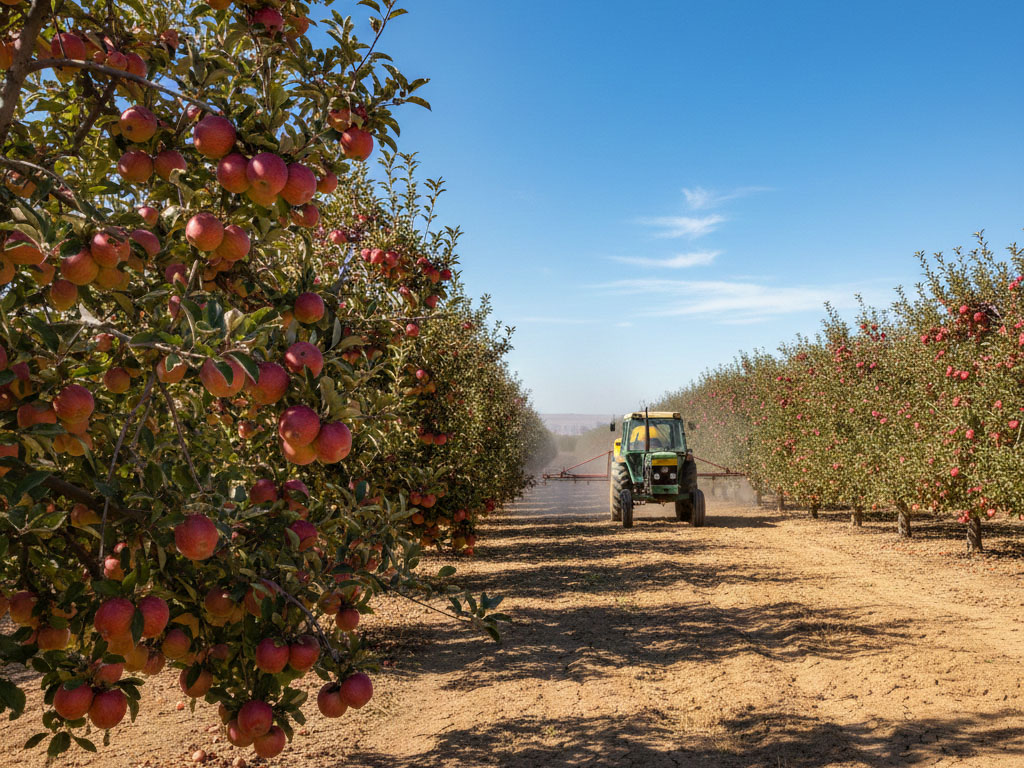
This abundance has come at a steep cost in terms of quality, health, and environmental impact. Fruit monocultures are particularly polluting and destructive to soils and ecosystems. Apple, grape, and banana farming stand out for the intensity of their treatments, though other fruits are hardly spared from these impacts. Even in organic farming, high-yield varieties remain fragile and require interventions against insects, diseases, and fungi. This involves plant protection products such as fungicides and insecticides that wipe out not only insects considered crop pests, but also indispensable pollinators without distinction. Fruit trees also demand large amounts of fertilizer and water, contributing heavily to pollution and the depletion of groundwater tables and waterways.
To maximize yields and produce uniform, visually appealing fruit for the mass market, agriculture has intensified pesticide use. These practices have led to the degradation and depletion of soils. They have also caused a systematic decline in essential nutrients in fruit, such as vitamins and minerals, compared with their counterparts from just a few decades ago. Selective breeding, rapid soil exhaustion, and the progressive destruction of soil life are the main causes of this loss of quality.
A landmark study on the nutrient depletion of fruit is that of Donald Davis et al., published in the Journal of the American College of Nutrition in 2004: comparing USDA (United States Department of Agriculture) nutritional data from 1950 and 1999 across 43 fruits and vegetables, they found significant declines in protein, calcium, phosphorus, iron, riboflavin, and vitamin C. Davis attributes this phenomenon to selective breeding for yield: newer varieties grow faster but lack the capacity to absorb or synthesize nutrients at the same pace (known as the "dilution effect").
Donald Davis et al., 2004, "Study suggests a decline in nutrients in garden crops over the past 50 years," Journal of the American College of Nutrition.
At the same time, the presence of chemical residues, even in products viewed as healthy, raises concerns for consumer health.
These practices have a major impact on biodiversity. Vast stretches of fruit monocultures simplify landscapes and reduce the diversity of natural habitats. Wild flora disappears, and along with it numerous insects, pollinators, birds, rodents, reptiles, and other species that once helped keep ecosystems in balance. This loss of natural diversity weakens the resilience of fruit crops and threatens the long-term sustainability of production.
Genetic selection, standardization, and packaging
To meet the demands of intensive production, mass consumption, global distribution, and extended shelf life, fruit has been subjected to intense selection and modification. Advances in cloning, grafting, hybridization, and genetics have made it possible to create a vast number of fruit varieties tailored to the expectations of the food industry.
Those expectations are extensive. Fruits are bred to withstand shipping, with tougher skins and firmer flesh to endure handling and long-distance transit.
Varieties whose natural ripening slows down after harvest are also favored in order to extend shelf life.
Uniform appearance is prioritized so that fruit displays a standardized size, color, and taste, often at the expense of aromatic richness and nutritional quality.
Varieties with a higher natural sugar content are also selected to deliver a sweeter flavor that boosts consumer appeal and encourages heavier, more addictive consumption.
To guarantee continuous availability all year round, controlled-atmosphere storage techniques have become widespread. They lower oxygen levels and strictly regulate temperature and humidity, sharply slowing the aging of the fruit so it can be stored for many months.
Added to this are numerous treatments applied directly to the skin. Fungicides, preservatives, and synthetic waxes are coated onto the surface to prevent fungal growth, limit moisture loss, and maintain a flawless look. These interventions build up layer after layer of chemicals that give the fruit a deceptive appearance.
In the iconic case of the industrial apple, the sheer accumulation of treatments required to produce a perfectly smooth, glossy, blemish-free fruit is especially striking. An ironic question arises: has Snow White’s poisoned apple become a reality? The metaphor highlights the stark gap between the fruit’s surface beauty and the volume of substances used to grow and preserve it, practices that raise real concerns for both human health and the environment.
Most fruit destined for export or sale through high-volume distribution channels like supermarkets is picked before natural maturity so it can better withstand handling and long journeys. It is then artificially ripened at its destination using controlled doses of ethylene. This is the case for apples, bananas, and many other fruits.
However, fruit picked too early has not had time to fully develop its flavor compounds or accumulate its full complement of nutrients. After artificial ripening, it may look perfect, yet its taste and nutritional quality remain incomplete.
This process yields visually flawless fruit, but it masks a far less flattering reality, as both flavor and nutritional value are diminished despite its appealing appearance.
The role of fruit in the food industry
The food industry has repurposed fruit into a heavily sweetening ingredient while manipulating the image of “no added sugar” or “natural sugar.” As a result, many fruit-based or dairy products contain very high levels of sugar through fruit concentrates, without having to add sugar directly. This practice is misleading and harmful to health, because fructose and glucose molecules are identical and just as harmful in excess whether they are natural or added. Consumers are misled into believing they are cutting back on sugar when they are actually ingesting large amounts of it.
These fruit purees and concentrates are used to heavily sweeten many processed foods, such as yogurts, pastries, fruit juices, compotes, dairy or fruit desserts, and commercial cereal bars, even when they are organic. All of these so-called natural, no-added-sugar products are actually massive sources of sugar, while projecting a misleading healthy image that can pose a major health risk over the medium term.
In November 2023, the consumer organization Foodwatch published a detailed analysis of misleading fruit juice labeling in Europe: the "no added sugar" claim had been banned since 2016, yet the European Commission gave in to industry pressure to reintroduce it in a reworded form ("contains only naturally occurring sugars"), which remains just as misleading. According to the EFSA, as soon as fruit is pressed and stripped of its fiber, its sugar is classified as "free sugar" with the same harmful effects as added sugar.
Foodwatch, 2024, "Misleading sugar labeling in fruit juices."
Moreover, since conventionally grown fresh fruit is heavily treated and contains numerous chemicals, it is reasonable to question whether eating it daily is truly risk-free. Worse still, many fresh tropical fruits are grown using plant protection products or chemical fertilizers that are banned in Europe.
Among recent examples is this study on Egyptian strawberries imported into the EU, which documents 11 violations of maximum residue limits (MRLs) between 2021 and 2024, involving substances unauthorized in Europe due to their carcinogenicity and neurotoxicity.
K.M. Sikorska-Zimny and A. Miszczak, 2025, "Pesticide Residues in Egyptian Strawberries Inspected at the EU Border (2021-2024)," Molecules.
Contradictions in nutritional guidelines
The history of fruit and its place in the human diet are largely shaped by the image it is given. Today, fruit is presented as a health-promoting food, despite all the transformations it has undergone since its origins. Official guidelines encourage eating fruit every day all year round, without any seasonal break and without warning about its sugar content or the chemical residues it may contain. Fruit is praised as essential to a healthy diet that protects against disease, with the focus placed primarily on vitamin C and antioxidants. Yet other foods provide these same nutrients without the negative effects of a high sugar intake. These messages are widely amplified by health institutions, nutrition campaigns, and food labels, which emphasize the importance of eating five servings of fruits and vegetables a day.
However, this messaging takes place within a dietary landscape already packed with sugars, processed foods, and refined starches, increasing the overall glycemic load of the diet and raising the risk of type 2 diabetes, cardiovascular disease, insulin resistance, liver overload, and weight gain. By uniformly encouraging people to eat more fruit, these guidelines fail to adequately account for the broader dietary context and the form in which fruit is consumed. The goal is not to stop eating fruit altogether, but to enjoy it in a more seasonal, measured way, favoring heirloom varieties as well as organic small fruits and berries grown in diversified market-garden systems.
Ecological collapse and the eradication of life in fruit monocultures
What is truly important to remember is that since the mid-20th century, intensive fruit farming has become deeply destructive to the planet.
Intensive orchards, even organic ones, when organized as monocultures, trigger a total collapse of ecosystems. Landscape simplification and the heavy use of pesticides, fungicides, and chemical fertilizers wipe out wildlife and destroy native flora. Soil organisms, essential to fertility and the cycling of organic matter, disappear, breaking the symbiotic chains between fauna and flora.
A review published in 2022 confirms that agricultural intensification is the primary driver of insect decline, through hedgerow removal, intensive pesticide use, and the simplification of landscapes into monocultures. Monocultures drastically reduce the diversity of pollinators, beneficial insects, and nutrient recyclers.
Abudulai et al., 2022, "Agricultural Intensification Causes Decline in Insect Biodiversity," IntechOpen, from the book "Global Decline of Insects."
This systematic destruction triggers a complete collapse of the food chain. Insects and pollinators vanish, depriving birds, reptiles, and small mammals of food and shelter. Larger predators are affected next, and the natural system unravels all the way up to the largest wildlife species. Every link in the web of life is impacted, from the soil to large mammals, leading to a true eradication of biodiversity (both flora and fauna) in intensive monoculture zones.
Added to this is the massive water demand of orchards, which require huge volumes of water, often in already fragile regions. High planting density leaves crops vulnerable to disease, forcing even heavier reliance on chemicals. These practices accelerate ecological collapse, destroy soil resilience, and undermine the very ability to grow fruit sustainably.
The outcome is catastrophic. Fruit monocultures cause a systemic collapse of natural life, driving the progressive eradication of flora and fauna and jeopardizing the long-term sustainability of fruit farming. And all of this for foods that, due to modern fruit varieties and their current composition, are often little more than sugar concentrates, contributing to the deterioration of our health.
Tags:
FruitsMore articles

The Ancient History of Fruits

Fruits of Temperate Regions
The Ancient History of Fruits
