
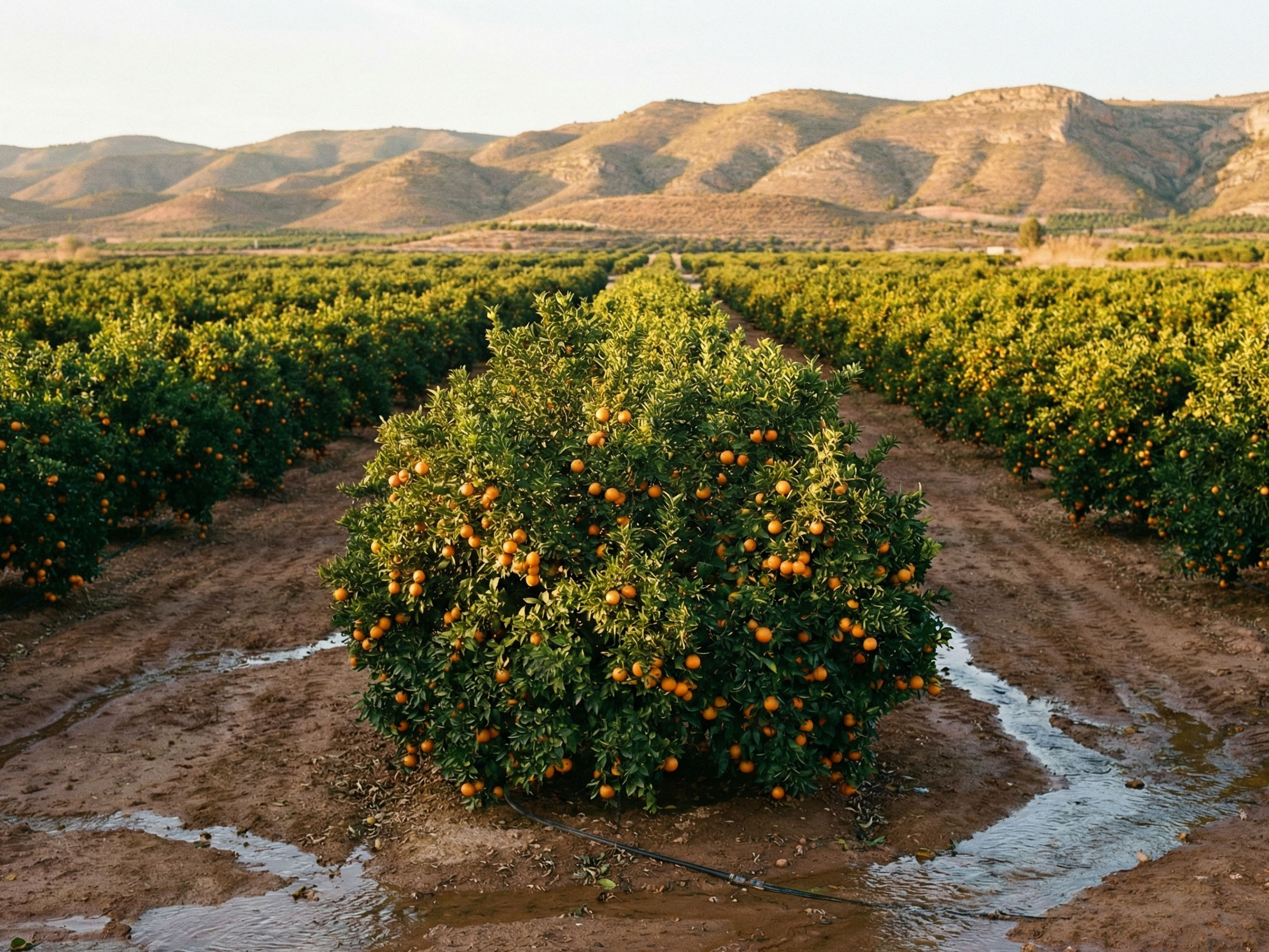
Citrus fruits are among the most popular fruits in the world, prized as much for their fresh taste as for their captivating aroma and vibrant colors. They evoke light, sunshine, vitality, and celebration. Their presence is inseparable from the culture and gastronomy of sun-drenched regions, whether Mediterranean, subtropical, or tropical. Oranges, mandarins, clementines, lemons, and grapefruits delight with their fruity, tangy flavor, their variety of textures, and their role in culinary traditions, celebrations, and the art of living. Their richness in vitamin C, minerals, and antioxidants further strengthens their appeal, cultivating an image of both health and pleasure. Simply peeling an orange or slicing a lemon is enough to be captivated by their fresh, invigorating scents that awaken the senses. Their flesh – juicy, sweet, or tangy – delivers a feeling of natural vitality with every bite.
Global production is concentrated in a handful of countries such as Brazil, China, the United States, Spain, Italy, and Morocco. These regions account for the bulk of harvests and meet consistently strong international demand. Italy is one of the major producers, notably thanks to Sicily, where oranges, lemons, and grapefruits are grown under ideal conditions. France holds a more modest position. It nevertheless stands out for a few renowned specialty crops, such as French Riviera lemons as well as Corsican mandarins and oranges, prized for their fragrance and quality.
Although closely associated with warm climates, citrus fruits have long traveled far beyond their native lands. Exported for generations, they have reached every latitude. They appear just as readily on tables in northern regions as in desserts across North Africa or Asia. They brighten up breakfasts in Northern Europe and accompany festive meals in southern countries, bringing freshness and zing.
The rapid expansion of citrus sales across every continent rests on a series of major technological advances: the development of agricultural machinery (tractors, planting and harvesting equipment), the evolution of chemical treatments (fertilization, crop protection), and improvements in international transport that allow fresh fruit to be shipped rapidly around the globe. Added to this are all the innovations of the food-processing industry: preservation techniques, refrigeration, packaging, and processing (juices, concentrates, derived products), ensuring year-round availability of citrus fruits far beyond their growing regions and natural seasons.
Citrus fruits are used in many ways depending on the variety. They are eaten fresh as is or juiced. Both in home cooking and in the food industry, they are turned into juices, ice creams, desserts, pastries, and confections. They also serve as an accompaniment to savory meat or fish dishes. They are found canned and frozen as well. Chefs use them to elevate dishes and desserts in every season.
A Bit of History
Citrus fruits originated in Southeast Asia, mainly in the foothills of the Himalayas, southern China, India, Malaysia, and Indonesia. The earliest cultivation appears to date back around 4,000 to 4,500 years, with ancestral species such as the citron (Citrus medica), the mandarin (Citrus reticulata), the pomelo (Citrus maxima), and the papeda (Citrus micrantha), grown for food as well as for their medicinal properties and ritual uses.
Today’s diversity of citrus fruits – whether sweet oranges, lemons, mandarins, grapefruits, or limes – is the result of natural hybridizations combined with millennia of human-guided crossbreeding and selection.
The westward spread of citrus fruits began in Antiquity and continued through the Middle Ages. Citron was cultivated in Greece 2,300 years ago for ritual and medicinal purposes. Citrus fruits then migrated to Mesopotamia and Egypt before entering the Mediterranean basin via ancient trade routes and caravans. The bitter orange and lemon trees were introduced to the Mediterranean between the 9th and 12th centuries by Arab, Genoese, and Portuguese traders, along with innovative irrigation and grafting techniques developed in Andalusia.
Between the 15th and 16th centuries, during the Age of Discovery, enthusiasm for citrus fruits began spreading far beyond their native regions. Christopher Columbus introduced them to the Caribbean around 1493, while Portuguese navigators brought the sweet orange back to Europe after their voyages along the sea route to India. The mandarin tree reached the Mediterranean later, in the 19th century, after a long journey from China.
During the 20th century, citrus fruits established themselves worldwide. Their reach expanded thanks to the selection of sweeter, seedless varieties. Improved transportation made distribution easier. The rise of fruit juices, particularly in the United States, turned them into everyday staples. Gradually, these fruits reached tables everywhere, crossed oceans, and became woven into the dietary habits of numerous cultures.
Citrus fruits were also long regarded as symbols of prestige and refinement. From the 16th century onward, they graced the orangeries of Europe’s great royal courts, such as the Palace of Versailles (1684-1686), and were used as gifts, decoration, or fragrance at aristocratic festivities. In Russia, citrus trees were grown in greenhouses as early as the 19th century and prized in imperial gardens and botanical collections.
Citrus trees are so beloved that since the 1970s, growing them in pots on patios, balconies, and in gardens outside their natural climate zones has experienced a genuine revival. In recent years, a large number of hardier new varieties have given enthusiasts, home gardeners, and small growers the opportunity to harvest lemons, grapefruits, mandarins, and oranges even in colder regions. These more cold-tolerant varieties can sometimes be planted directly in the ground in areas where these typically frost-sensitive fruits could never have grown before. Here are a few examples of citrus trees that tolerate brief frost spells relatively well:
- Satsuma mandarin trees, capable of withstanding down to -12°C and -14°C for short periods. Many varieties are available from passionate specialty nurseries (Okitsu -12°C, Changsha -15°C, Owari -13°C, Iwasaki -12°C, Sunburst -13°C, Robinson -13°C).
- Clementines (Keraji -14°C).
- Grapefruits and pomelos (Enzo -11°C, Bloomsweet -12°C, Dunstan -15°C).
- Yuzu (-12°C to -13°C, and even down to -15°C for certain varieties).
- Eremorange (-13°C).
- Lemons (Meyer -9°C).
- Limes, which are more acidic citrus fruits (Karna Khatta -13°C, Sudachi -14°C).
And for anyone who cannot overwinter a potted lemon tree in a cool, bright sunroom, the Pavlovo (or Pavlovsky) lemon tree, originally from Russia, can tolerate indoor home and apartment conditions without suffering.
Global Citrus Production in 2024
China is the world's largest producer of citrus fruits at 46 million metric tons. It directs the vast majority of its harvest to its own domestic market. Barely 3% of its production is exported, mainly to Southeast Asia and Russia, with very little going to Europe. It ranks #1 for mandarins and pomelos, and is the third-largest producer of oranges after Brazil and India. (1 and 2) Brazil is truly a massive orange juice factory. The vast citrus-growing region of São Paulo supplies most of the orange juice consumed around the world. Much of it is heavily processed industrial juice made from orange concentrate. The country produces between 14 and 17 million metric tons of oranges per year depending on the season, mostly destined for the food-processing industry. (3) Brazil also grows limes and lemons, though in more modest volumes (1.5 Mt). (4) Spain plays a major role in citrus production across Europe and the entire Mediterranean basin. It is one of the world's top exporters of fresh table oranges, notably the Navel and Valencia varieties. Its output of lemons, mandarins, and clementines is substantial, particularly in the regions of Murcia and Valencia. Spain plays an essential part in supplying European markets throughout the winter season: the EU produces around 3 million metric tons of small citrus fruits, two-thirds of which come from Spain. (2) Egypt has become a key player in the orange market and the world's third-largest citrus exporter behind Spain and South Africa. Highly price-competitive, it has now established itself as a major supplier of both table oranges and juicing oranges, to the point of directly rivaling Spain. Turkey is a major exporter of lemons and mandarins (1.55 Mt of production). It primarily supplies Eastern Europe and Russia. (1) India is the world's third-largest producer of citrus fruits and the leading global producer of lemons and limes (3.5 Mt). It grows large volumes of limes and oranges, though its harvest is mainly consumed on the domestic market. (1) Mexico is the great specialist in limes and the world's second-largest producer and exporter of lemons and limes (3.24 Mt). Fully 98.7% of its lime exports go to the United States. (5) South Africa, whose fruiting season is inverted relative to the Northern Hemisphere, plays a vital role in global citrus supply as the world's second-largest exporter. Mediterranean countries produce mainly from fall to spring. Starting in April, orange supply tightens and volumes drop sharply in early summer. South Africa then steps in. Its export season runs from April to October, during which it mainly supplies oranges and grapefruits. The United States remains a major player thanks to historic growing regions like Florida and California. Production has declined due to diseases such as citrus greening (cutting Florida's output by more than 50% over the past decade), yet the country remains a notable producer of oranges and grapefruits. (6) Morocco mainly produces clementines and mandarins (about 1.15 Mt), followed by oranges (around 970,000 metric tons), with more limited lemon production. It is the world's fourth-largest producer of clementines and mandarins, with a large share of its harvest exported to Europe. (7)
Sources: 1) AtlasBig - Total Citrus and Orange Production by Country; 2) CTIFL Mémento Fruits et Légumes; 3) USDA/FAS via Fructidor (January 2026); 4) Statista 2024; 5) Fructidor / Mexican Ministry of Agriculture (September 2024); 6) HortitecNews / USDA (December 2025); 7) Le Matin / USDA (January 2026) and Agrimaroc / FAO (2019).
Because of strong global demand for oranges, lemons, clementines, mandarins, and grapefruits, citrus farms around the world – whether organic or conventional – are predominantly farmed intensively. Citrus trees are water-hungry and require rich soils, which entails heavy use of fertilizers, mostly chemical, that eventually pollute groundwater and rivers. They are also highly vulnerable to diseases and pests, leading to massive use of pesticides and fungicides. Even in organic farming, growers still have to fight these diseases and pests, which can also harm beneficial insects. These intensive practices raise serious ecological concerns, especially in major producing regions, where they contribute to groundwater depletion and water-use conflicts in areas already hit by drought (Mexico, Spain, Morocco, or Turkey). These intensive monoculture plantations, regardless of size, cover vast areas and replace once biodiverse natural ecosystems whose native flora and fauna have been wiped out. On top of that, the energy costs tied to production, transport, cold storage, and processing result in a very high carbon footprint.
Organic Citrus Farming
While organic agriculture is clearly preferable to conventional farming because its inputs are less harmful to the environment and human health, assuming it is a flawless solution would be a mistake. The fundamental problem often lies in monoculture itself. Trees planted too densely in a single area become more vulnerable to diseases and predators while depleting the soil. In organic farming just as in conventional farming, insecticides, fungicides, and fertilizers are needed to protect harvests, which inevitably means killing pests.
It is therefore important to recognize that organic farming also kills wildlife, because no completely harmless miracle insecticide exists. Organic products such as pyrethrum or neem oil are broad-spectrum treatments that can kill bees and beneficial insects if misapplied. The key difference compared to synthetic chemicals lies in persistence. The major advantage of organic inputs is their short lifespan: natural molecules break down very quickly – within hours to a few days – under sunlight. By contrast, synthetic chemical molecules such as neonicotinoids persist for months or even years in the soil and inside the plant, poisoning the environment over the long term.
Another advantage is that most organic treatments stay on the surface of the fruit and can therefore be washed off, whereas many chemical products penetrate the plant’s sap – a phenomenon known as systemic action – making both the fruit and the pollen toxic from the inside.
However, the major downside of organic farming remains copper. Copper sulfate, or Bordeaux mixture, is the one organic input that does not break down. It accumulates in the soil and causes long-term toxicity issues for underground life, particularly earthworms.
Organic farming is therefore not perfect, but it remains far less persistent and invasive than synthetic chemistry. To protect biodiversity, spraying – even with organic products – must remain the exception, applied in the evening and only as a last resort, rather than the rule.
Ultimately, the real issue comes down to our consumption habits: if our demand for fruits and citrus remains excessive, producers will always have to grow more, inevitably putting mounting pressure on the environment.
The Orange
The orange is the most widely cultivated citrus fruit in the world. It is grown on a massive scale to be eaten fresh as a table fruit, but also to meet high demand for orange juice. Its sweet-tart taste and fragrance make it a favorite for a large portion of the global population. It is valued for its vitamin C content and used in cooking to accompany festive dishes or flavor countless desserts. Even its blossom is used to scent pastries thanks to its unmistakable aroma.
The food industry has heavily capitalized on this gold mine, turning oranges into every conceivable form: juices, ice creams, sorbets, confections, flavored chocolates, coulis, jams, marmalades, and candies. Quality, however, is often lacking. Industrial juices are largely made from ultra-processed orange concentrates that no longer contain any natural vitamins. Synthetic vitamins are then added back to make up for those losses. It is therefore much better to choose organic juices made from whole fruit rather than from concentrate.
Between 2024 and 2025, global orange production stood at around 45 to 49 million metric tons. To keep up with strong demand, orange trees are mostly grown in intensive orchards. Like all citrus trees, orange trees are fragile and highly demanding when planted en masse in a single area. Achieving satisfactory yields requires heavy applications of mostly chemical treatments. Even after harvest, a synthetic chemical wax is applied to keep the fruit from spoiling too quickly.
Nutritional Composition per 100 g:
- Total sugars: approx. 8 g (including 2 g glucose, 2 g fructose, and 4 g sucrose)
- Fiber: approx. 2.4 g
- Vitamin C: approx. 50 mg
- Potassium: approx. 160 mg
- Antioxidants: flavonoids (hesperidin, naringenin) and carotenoids
- Water content: nearly 86%
Oranges are best eaten fresh and whole to keep sugar intake in check, as their natural sugar content is moderate. When turned into juice, however – especially from concentrate – they rapidly deliver far too much sugar and fructose, which is best not consumed in excess. Eating an orange occasionally during its natural fall and winter fruiting season poses little issue if you remain moderate in your overall fruit intake. Yet it takes several oranges to make a single glass of juice, which immediately leads to excessive sugar consumption.
Mandarins and Clementines
The mandarin, along with its hybrid variety the clementine, is one of Europe’s signature winter fruits. Sweet, fragrant, and easy to peel, it appeals to children and adults alike. It is mainly eaten fresh, though it is also used in many desserts and pastries and can be pressed into juice. Spain and Morocco are among the main exporters to Europe, keeping these fruits steadily stocked on store shelves throughout the winter season.
Between 2024 and 2025, global production of mandarins and clementines hovered around 36 to 38 million metric tons. That is why these orchards, just like oranges, are mostly farmed intensively, with all the environmental problems that entails. The leading producing countries are China – which dominates global output – followed by Spain, Japan, Morocco, Egypt, Turkey, and the United States.
Nutritional Composition per 100 g:
- Total sugars: approx. 9 g (including 3 g glucose, 3 g fructose, and 3 g sucrose)
- Fiber: approx. 1.7 g
- Vitamin C: approx. 30 mg
- Potassium: approx. 140 mg
- Antioxidants: carotenoids and flavonoids
- Water content: approx. 86%
Mandarins belong to the category of moderately sweet fruits. Yet they are so easy to peel and so pleasant to eat that it is hard to stop, making it all too easy to eat several in a row purely for pleasure and unknowingly drive up your total sugar and fructose intake. Despite their vitamin C content, this excess sugar remains problematic because – whether natural in origin or not – a molecule of glucose or fructose is still sugar and adds to the total carbohydrates consumed over the day, regardless of the fiber present in the fruit. When we eat fruit, we tend to picture the benefits of its vitamins, and the pleasure of sweetness makes us forget that excessive fruit consumption is harmful to health. And that threshold is reached quickly if we are not careful.
The Lemon
The lemon is one of the most versatile and widely used fruits in the world. Thanks to its sharp acidity, refreshing fruity aroma, and abundant essential oils, it has become an indispensable staple of global gastronomy.
In the kitchen, it offers countless advantages. It seasons, brightens, tenderizes meat, and enhances fish. It also helps preserve several foods by slowing down oxidation, as with avocados or apples. It adds acidity, freshness, and zing to sweet preparations such as desserts, yogurts, tarts, sorbets, cakes, confections, pastries, and candies. It balances sauces, elevates marinades, and flavors a host of festive drinks like cocktails as well as health beverages such as infused waters, juices, teas, and herbal infusions. Finally, lemon zest – whether candied or fresh – is a highly aromatic ingredient used both in baking and in slow-cooked dishes like tagines or osso buco.
The food industry relies on lemon juice, zest, and the citric acid it contains as a texturizing agent, acidifier, and natural preservative.
Lemon is also an eco-friendly, highly useful, and effective ingredient for household cleaning. It cleans, descales, cuts grease, and deodorizes remarkably well.
Caution is warranted, however, because many industrial chemical cleaning and personal hygiene products use synthetic lemon scent to boost sales without containing the slightest trace of real fruit. Reading labels carefully is therefore essential to avoid being misled.
In cosmetics and perfumery, genuine lemon extracts are prized for their purifying, astringent, and brightening properties, as well as their crisp, energizing scent notes synonymous with cleanliness and vitality.
Between 2024 and 2025, global production of lemons and limes exceeded 22 million metric tons. Just like oranges, mandarins, and clementines, lemons are grown in heavily polluting intensive monocultures. Less than 5% of production is organic, even though lemon zest is frequently used in cooking, exposing consumers to chemical residues. Moreover, a chemical preservative wax is commonly sprayed onto lemons after harvest to extend shelf life.
The leading producing countries are India, which ranks first worldwide, followed by Mexico, Argentina, Spain (notably the Murcia region), the United States (California and Florida), Turkey, Italy, and Brazil.
Nutritional Composition per 100 g:
- Total sugars: approx. 2 g (including 0.5 g glucose, 0.5 g fructose, and 0.7 g sucrose)
- Fiber: approx. 2 g
- Vitamin C: 40 to 50 mg
- Potassium: approx. 140 mg
- Antioxidants: limonoids and flavonoids
- Water content: approx. 89%
Lemon has the clear advantage of being rich in vitamins while staying low in sugar, which is an undeniable plus. Its acidity level, however, is high and can cause digestive discomfort for more sensitive individuals. Watch out for tooth enamel as well.
Grapefruit and Pomelo
Did you know that in France, what is commonly called and sold as “pamplemousse” (literally pomelo) is actually a grapefruit (botanically called a pomélo in French)?
The true pomelo (Citrus maxima) is a giant fruit native to Asia, sometimes called the Chinese pomelo. Its rind is very thick (green or yellow), and its flesh is firm, not very juicy, and often mildly sweet, without the sharp acidity of grapefruit.
Grapefruit – the “false pomelo” sold in everyday grocery stores – is an accidental hybrid that emerged in the Caribbean (Barbados) in the 17th century from a cross between a sweet orange and a true pomelo. It is this fruit that possesses that signature bitterness and acidity.
The golden age of grapefruit consumption peaked in the 1970s and 1980s, driven by the wave of weight-loss diets, particularly the famous Hollywood diet (or pineapple-grapefruit diet). At the time, it was marketed as a miracle fat-burning food. People were advised to eat half a grapefruit before every meal to dissolve fats and reduce calories. Although this claim is of course scientifically false, it firmly anchored the fruit in English-speaking and European breakfast habits.
Why do people enjoy grapefruit? Above all, for its aromatic complexity. Unlike the orange, whose profile is simply sweet and tangy, grapefruit offers a unique balance on the palate. It blends fresh acidity, an often unsuspected sweetness – since it contains almost as much sugar as an orange – and a characteristic bitterness caused by naringin. It is precisely this bitterness that gives it body and its polarizing taste, so much so that you either love it or hate it.
Grapefruit is mainly eaten raw, cut in half with a spoon or segmented into supremes (wedges peeled free of membrane). Food manufacturers also offer it as fruit juice.
Many consumers find its bitterness too pronounced and have gotten into the habit of sprinkling it generously with granulated sugar. That overlooks the fact that despite its acidity and bitterness, grapefruit already contains a moderate amount of sugar. Adding table sugar turns the fruit into a carbohydrate bomb rich in fructose and glucose, canceling out its nutritional benefits.
Grapefruit is sought after as much for its aroma and fragrance as for its various properties. The food industry uses it in a wide variety of beverages, fruit juices, sodas, flavored waters, syrups, jams, confections, candies, cocktails, alcoholic drinks, ice creams, sorbets, and dairy desserts. Be careful, though: to cut costs, industrial products very often use or add artificial flavorings.
In the wellness field, grapefruit is renowned for its purifying, astringent, and cleansing properties for skin and hair. It is included in shower gels, facial cleansers, and shampoos for oily hair. In the slimming industry, it is added to anti-cellulite and firming creams, perpetuating the old myth of grapefruit as a supposedly fat-burning ingredient. It is also widely used in perfumery for its fresh, lively, and energizing notes. Here again, reading labels is essential, as a large proportion of these wellness, beauty, and personal care products rely on synthetic fragrances.
From its seeds, an extract known as GSE (grapefruit seed extract) is produced and used as a food supplement for its antimicrobial properties and its effect on immunity. This extract is also found in organic cosmetics and food supplements as a natural preservative.
The label “grapefruit” often appears on household cleaning products, though it is generally a synthetic fragrance with no actual cleansing properties.
It is also important to know that consuming grapefruit can pose medical problems, as it can interact with certain medications due to its furanocoumarin content.
Global production of grapefruit (Citrus paradisi) is in sharp decline, now estimated at around 2.5 million metric tons (far behind the Chinese pomelo, Citrus maxima, the true pomelo). This decline is mainly due to the collapse of production in Florida, devastated by yellow dragon disease (citrus greening). To fill this gap, South Africa with its red-fleshed varieties and Mexico have become the new export leaders, while global demand now focuses almost exclusively on these red-fleshed varieties, which are sweeter and more visually appealing.
Nutritional Composition per 100 g:
- Total sugars: approx. 7 g (including 2.3 to 2.8 g glucose, 2.3 to 2.8 g fructose, and 2.3 to 2.8 g sucrose)
- Fiber: approx. 1.6 g
- Vitamin C: approx. 32 mg
- Potassium: approx. 170 mg
- Antioxidants: naringin, limonoids, carotenoids
- Water content: approx. 88%
The Wild Botanical Origins of Citrus Fruits
The citrus fruits we know today – juicy, sweet, and easy to eat – bear almost no resemblance to their wild ancestors. Their story is one of a long transformation built first on natural hybridizations, and then on targeted human crossbreeding and selection. Modern genomic research, notably the landmark 2018 study by Wu and colleagues published in the journal Nature, has made it possible to trace this evolution and identify the true founding species.
The remarkable variety of citrus fruits we see today actually descends from just three major ancestral species, plus a fourth for the lime lineage. The citron, Citrus medica, is a fruit with an enormous rind and almost juiceless pulp. The ancestral pomelo, Citrus maxima, is an imposing fruit with a very thick skin and intense bitterness. The wild mandarin, Citrus reticulata, is a small fruit packed with seeds and high acidity. Finally, papedas, Citrus micrantha, are particularly bitter fruits from which several modern limes descend. These species, still found in wild or semi-wild states, form the foundational genetic heritage of all our modern citrus fruits.
Primitive citrus fruits were far removed from what we know today. Their bitterness and acidity were often extreme, driven by various flavonoids such as poncirin – an intensely bitter compound found in Poncirus trifoliata and certain ancient lineages – or naringin, responsible for the bitterness of the ancestral pomelo. The peel was often very thick, sometimes making up most of the fruit, as in the citron whose rind accounts for up to four-fifths of the whole fruit. Their flesh was far less abundant, often acidic, bitter, astringent, and dry. As for the seeds, they were numerous and large, especially in wild mandarins, making the fruit difficult and unappealing to eat. Just like all fruits reshaped by human selection, they were originally neither as juicy nor, in many cases, as high in sugar and fructose. The sweet orange thus emerged from a complex blend of mandarin and ancestral pomelo. The lemon was born from a cross between a citron and a bitter orange. Modern grapefruit, meanwhile, arose from an accidental cross between a sweet orange and a pomelo.
Tags:
FruitsMore articles

Tropical Fruits

Berries and Small Red Fruits
Tropical Fruits
