The history of berries and small fruits
Wild berries and small fruits have been part of our ancestral diet for hundreds of thousands of years, and even longer. Still, we should not overstate their role in our diet. Wild berries were not a vital, abundant, year-round resource over the course of human evolution. Rather, they were a seasonal, unpredictable treat. Nor were we the only ones after them, as many animals also sought to take advantage of these short-lived fruits, especially during the very long ice ages. Those cold periods lasted far longer than milder eras, and during them fruit was even scarcer and available for an even shorter window, whether in cold, temperate, or even warmer regions, which were drier and less lush at the time.
Most wild berries were low in sugar and often bitter, tart, or sour. The few sweeter species, such as wild bilberries or blackberries, had a very short season. When you look at a tiny wild strawberry or the few drupelets of a wild raspberry, it is hard to imagine our ancestors getting an adequate supply of nutrients from them. Nor could those berries provide all essential vitamins, including vitamin C, which people often assume our ancestors needed in the same amounts we do today. Fresh meat and organ meats supply all the necessary vitamins. Moreover, the fewer carbohydrates, sugars, starches, and grains a diet contains, the lower the body’s vitamin C requirements. As a result, with our modern diet heavily loaded with sugar and carbohydrates, our vitamin C needs are far greater than in a healthy diet balanced with animal foods and low in carbs. In that context, foraging wild plants and a handful of berries was more than enough.
With the shift to settled agriculture, the sweetest wild berries, such as blackberries and raspberries, were preserved and favored around the edges of fields because they offered a welcome sweet treat in late summer. Humans have thus consistently selected the sweetest, juiciest strains over thousands of years, which gradually led to the disappearance of less flavorful varieties. For more than ten thousand years, settled populations have removed species they disliked or considered harmful from their surroundings while encouraging the spread of useful or prized species, whether fruits, berries, trees, plants, or animals. Humans have been reshaping their environment and reducing species diversity for a very long time. Naturally, this trend has escalated to an unprecedented scale over the past century.
In the Middle Ages, monks and aristocrats began planting raspberry and currant bushes in walled gardens, mainly for culinary enjoyment but sometimes for medicinal purposes as well. The earliest selections of these small fruits still closely resembled their wild ancestors and were, in most cases, far more acidic, tart, bitter, or even astringent than the varieties cultivated today. Through targeted hybridization, however, small fruits evolved over time and developed the flavors and sizes we know and enjoy today.
Starting in the 18th century, hybridization made it possible to breed larger, more flavorful varieties such as the modern strawberry. In 1714, the French officer Frézier brought back a large white strawberry from Chile, which hybridized with a small red strawberry imported from Virginia. That cross gave birth to the large, red, high-yielding modern strawberry. Many other berries were subsequently bred and refined, giving rise to a wide array of regionally adapted varieties throughout the 18th and 19th centuries.
Twentieth-century hybridization focused primarily on making these often delicate little berries better suited to intensive farming and long-distance shipping. They became increasingly standardized. The result was a loss of biodiversity and a decline in nutritional quality to meet the demands of the agri-food industry. Modern hybrid varieties must satisfy strict commercial requirements for shelf life, size, firmness, color, acidity, sugar content, and aroma.
A very telling example of this drop in flavor and nutritional quality is the bilberry (European wild blueberry). Wild bilberries grow on low shrubs high in the mountains and have an incomparable sweet taste and aroma. Like other small fruits, this group also underwent selective breeding programs in the 19th and 20th centuries, including hybridization to develop taller, hardier, more productive plants yielding larger, firmer berries suited to intensive cultivation, processing, and transport. However, these cultivated blueberries have lost a large share of their flavor and appeal. Their cousin from the same family, though a different species – the wild lowbush blueberry grown in North America – has gone through the exact same story.
Strawberries, raspberries, blackberries, blueberries, and blackcurrants are among the public’s favorite berries and red fruits. Traditionally, they are eaten fresh or turned into jams, compotes, sorbets, purees, or coulis. Processing – most often with large amounts of added sugar – certainly extends their shelf life, but above all it creates indulgent, sweet preparations designed for pleasure that concentrate their aromas.
Global production of berries and small red fruits
The food industry makes extensive use of these small red fruits and berries, no longer in their natural, artisanal form, but on an industrial scale. They are used to make juices, jams, coulis, sorbets, flavored yogurts, pastries, frozen foods, candies, and other confections. Quality is frequently degraded, and preservatives, texturizers, flavorings, and colorings are added to mimic the original taste.
Strawberries remain, by far, the undisputed leader in the berry sector, with global production ranging between 9 and 10 million metric tons. (1) This market is overwhelmingly dominated by China, which alone accounts for nearly half of global output, followed by the United States, Egypt, Mexico, Turkey, and Spain. Far behind, yet booming rapidly, are blueberries. With roughly 2 million metric tons produced in 2024 (a historic milestone surpassed for the first time), they are the standout star whose output has more than doubled over the past decade. (2) The United States, long the top producer, has now been overtaken by China, while Peru has established itself as the world's leading exporter. Canada, for its part, focuses on promoting its wild lowbush blueberries. Raspberry production has stabilized at around 800,000 to 900,000 metric tons per year. This global market is anchored by Russia (a major producer and consumer, at roughly 200,000 metric tons), Mexico (a key supplier to North America), and Europe, where Spain and Morocco dominate the market for fresh raspberries in clamshells, while Serbia and Poland remain the leading producers for the food-processing and frozen-fruit industries. (1 and 3) Blackcurrants and redcurrants together account for roughly 700,000 to 800,000 metric tons. Production is heavily concentrated in Eastern Europe, primarily in Russia and Poland. (3) Unlike other berries often eaten fresh, these two berries are mainly destined for the processing industry, notably for juices, jams, and liqueurs. Blackberries grown for fresh consumption come mainly from modern hybrid varieties that are much larger than wild blackberries. Less fragile for shipping and export, yet also less aromatic, these hybrids are grown in Mexico, the United States, and Southern Europe (Spain, Italy, and Portugal). Global annual production is estimated at 200,000 to 300,000 metric tons. Wild blackberries barely appear in global statistics, as they are harvested locally in small quantities and rarely enter international trade. By contrast, blackberries used for industrial processing (jams, yogurts, pastries, candies, syrups, coulis, purees, confections, and frozen products) come predominantly from China and Eastern Europe - notably Poland, Serbia, and Romania - as well as South America, primarily Chile and Argentina.
Sources: 1) AtlasBig - World Strawberry Production by Country; 2) Blueberries Consulting, 2025, "Global Outlook for Fresh Blueberries 2025-2030"; 3) CTIFL, 2025, "The Red Berry Market Continues to Grow".
Environmental impact of berries and small fruits
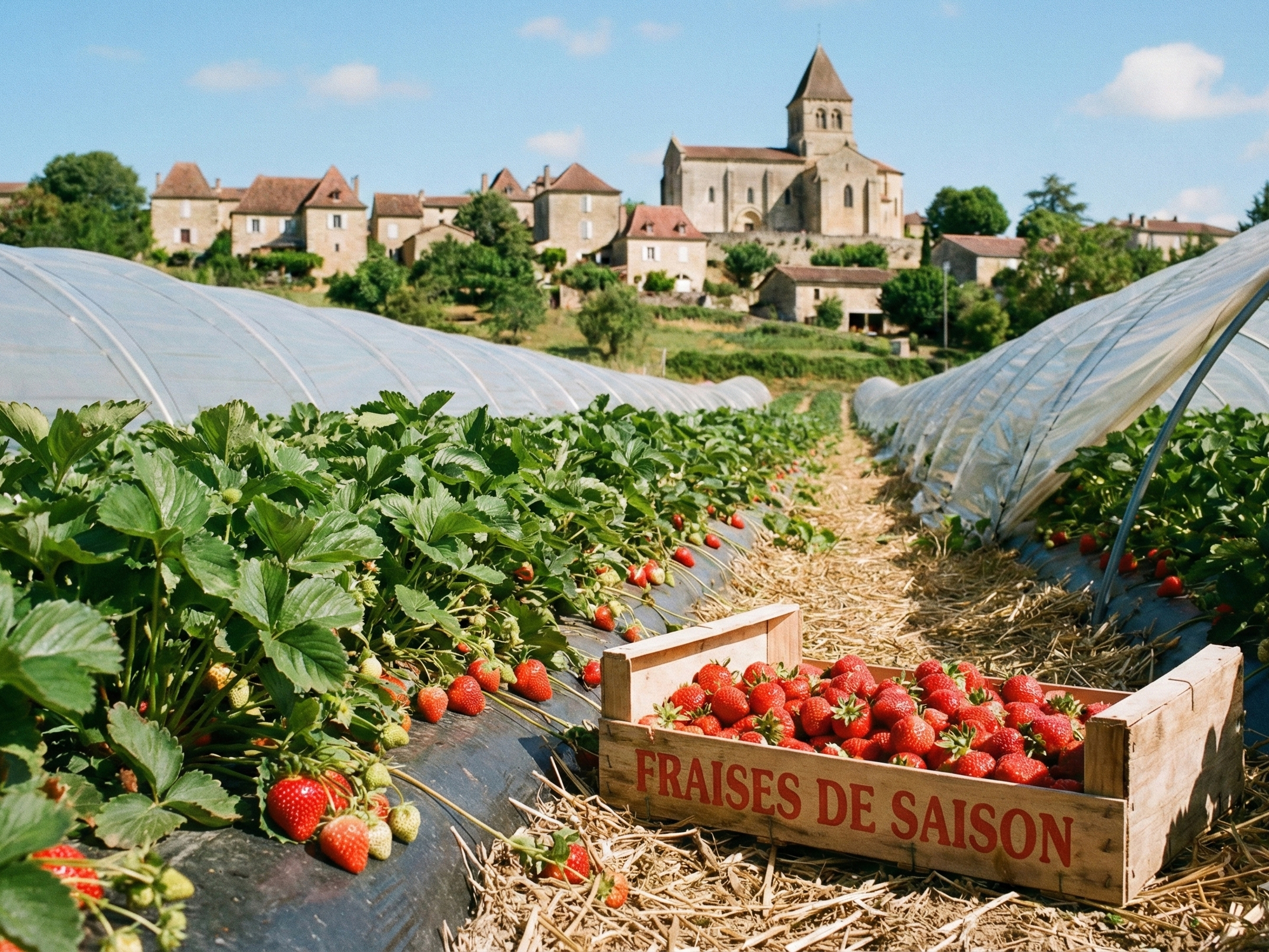
Unfortunately, berry farming has followed the same model as other fruit crops and become intensive. Worse still, some species lend themselves to soilless cultivation, such as strawberries and raspberries, which poses a problem not only for nutritional quality, but also for the environment. This production relies heavily on intensive systems using plastic tunnels, raised beds, and drip irrigation to maximize yields. Moreover, these intensive operations – which resemble a literal sea of plastic – are often located in arid regions where water is scarcer, depleting increasingly deep aquifers.
Globalization and technological advances in transportation – air freight for fresh berries and sea freight for refrigerated shipments – along with storage and refrigeration have made it possible to grow berries in both the Northern and Southern Hemispheres. This ensures supply from the south during the Northern Hemisphere’s winter. As a result, supermarkets now offer berries year-round by alternating harvests between the two hemispheres.
Berries, small red fruits, and health
Aside from the steep environmental cost of this year-round availability, even though berries and small red fruits are less problematic and far healthier than conventional high-fructose, high-sugar fruits (apples, grapes, melons, mangoes, bananas, figs, etc.), there is no need to eat them continuously all year long. Taking breaks from fruit is beneficial, as it allows the body to burn off fat reserves built up from fruit fructose and added sugar, which accumulate in the liver as well as around internal organs. This happens naturally when you eat only seasonal fruit, picked locally at full ripeness straight off the plant or tree, without having sat in cold storage.
We should remember that wild fruits, which typically appear in mid- to late summer, help animals and humans build up fat reserves for the cold season – which is why sugar is stored as body fat so easily. The ideal approach is therefore to enjoy berries and small fruits when they ripen naturally in the country or region where you live.
First and foremost, it is important to remember that the sweeter a fruit is, the more it drives fat storage. Daily fructose intake promotes fat accumulation in the liver and around the organs, while excess glucose is stored as fat in adipose tissue. If our diet is already overloaded with carbohydrates, grains, and starches, there is a very high chance that all the sugar from fruit will end up stored as fat. By contrast, within a healthy, balanced, lower-carb diet and eaten strictly in season, berries and small fruits are a much healthier choice than larger conventional fruits, which – unlike berries – are true concentrates of sugar and fructose.
Berries and small red fruits: a healthy, eco-friendly alternative to conventional fruit worth expanding
Growing berries is more flexible than growing fruit trees, which stay in the ground for 15 to 30 years of production and are typically replanted in the same spot until the soil is completely depleted. Small fruits can be integrated into rotational systems alternating diverse crops and pastures, which restores and enriches the soil with the help of grazing herbivores such as steers, cows, horses, sheep, ewes, and lambs. They offer major benefits both for health – being richer in nutrients and lower in sugar – and for the environment. They provide a compelling ecological alternative to traditional orchards because they fit easily into diversified systems such as market gardening, permaculture, or agroforestry, where the symbiosis between animals and plants is restored.
A truly healthy and eco-friendly diet respects this balance between the nutrient density of meat and fat from grass-fed animals and the nutritional richness of a varied intake of berries and vegetables. A diet overly high in carbohydrates requires far greater production volumes and relies on monocultures of grains, fruit, oilseed crops, and legumes that are especially destructive to ecosystems.
Berries and small red fruits fit naturally into agroforestry and food forests, where raspberry bushes, blackberry brambles, redcurrant, blackcurrant, and blueberry bushes form an ideal low understory layer along plot edges. Strawberry plants are grown more like vegetables. These systems rely on the complementarity between grazing animals that rebuild the soil and rich biodiversity of flora and fauna, paired with highly diversified cultivation of vegetables and berries that provides abundant plant life for insects, thereby restoring the natural food chain. In these biodiverse environments, life returns quickly, birds and small wildlife move back in, and ecological balance is rebuilt. These systems curb soil erosion and help the ground retain water, because living soil holds moisture.
It is worth keeping in mind that eating too many animal products from crop-dependent farming systems – such as poultry, dairy, eggs, and pork – carries a heavy environmental footprint. Yet a predominantly plant-based diet that likewise depends on monocultures of grains, oilseed crops, fruit, starches, and legumes is ultimately no more virtuous. That kind of diet lacks nutrient density and demands massive production volumes, which also places severe pressure on the environment.
It remains essential, however, to eat locally grown, seasonal vegetables and berries harvested at peak ripeness. It is year-round, nonstop demand that has made this industry so environmentally destructive. Berries are meant to be eaten fresh right after picking, not held in cold storage, frozen, or turned into concentrated, sugary products that end up harming our health. There is no need to eat fruit continuously. Taking a break is beneficial, especially since vegetables – even in winter – already provide all the vitamins (including vitamin C), minerals, carbohydrates, and fiber we need. People often forget that there is no reason to eat grains, fruit, or starches in such large amounts, because many vegetables supply the necessary carbohydrates without risking the carb overload driving today’s epidemic of metabolic disorders, inflammation, and excess weight. Small fruits, berries, and vegetables form an ideal foundation for a healthy, lower-carb diet balanced with high-quality animal proteins and fats.
Nutritional quality of berries and small red fruits
Berries and small red fruits often offer greater nutritional value than conventional fruits. They have a high water content (around 85%) and are low in calories. Even so, they deliver a valuable supply of micronutrients, vitamins, and fiber:
- Polyphenols, including anthocyanins and flavonoids: these compounds give berries their red, blue, or near-black hues. They protect cells by neutralizing free radicals and thereby limit oxidative stress. They also help reduce inflammation, supporting both metabolic and cardiovascular health. Polyphenols improve blood vessel elasticity, promote healthy circulation, and help protect the brain against premature aging.
- Vitamin C: red berries are rich in vitamin C, which boosts immune defenses and supports collagen synthesis. Gram for gram, they often surpass conventional fruits and sometimes even citrus fruits. For example, blackcurrants provide about 200 mg of vitamin C per 100 g, whereas oranges contain under 60 mg. Moreover, the fruits richest in vitamin C are wild berries such as acerola, with 2,800 mg, and sea buckthorn, with up to 1,500 mg of vitamin C, all with far less sugar than conventional fruits. You certainly do not need to load up on sugar to get plenty of vitamin C. In fact, relying on sugary foods to raise your vitamin C intake is not a great idea, because sugar and vitamin C do not get along well inside the body. Modern fruits, bred to be intensely sweet, are therefore no longer the best sources of vitamin C. It is crucial to understand that the more sugar we consume, the higher our vitamin C requirements become.
- They also provide vitamin K, which plays a role in bone mineralization, and vitamin B9 (folate), which is essential for cell production and renewal.
- Essential minerals: manganese supports the activity of antioxidant enzymes and participates in connective tissue formation. Potassium helps maintain stable blood pressure and supports proper muscle and nerve function. Small red fruits also supply calcium, needed for strong bones, and iron, essential for oxygen transport in the blood.
Unlike modern fruits, which selective breeding has turned into virtual sugar concentrates, berries and small red fruits are lower in both total sugar and fructose – a clear advantage. Their glycemic impact is smaller, and they fit easily into a healthy lower-carb diet when eaten in moderation during their harvest season.
Weight for weight, most berries contain less total sugar and less fructose than very sweet fruits like grapes, apples, peaches, bananas, mangoes, or figs. They therefore help keep sugar intake in check while still delivering genuine flavor enjoyment.
Heirloom or less heavily bred varieties are even better, as they remain closer to their wild ancestors and are naturally lower in fructose.