• FrançaisFR
  • EnglishEN
  • DeutschDE
DJFORM Information Blog

Type and hit Enter to search

  • Home
  • Our Supplement Courses
    • Seasonal Supplement Courses
      • Spring Supplement Courses
      • Summer Supplement Courses
      • Autumn Supplement Courses
      • Winter Supplement Courses
    • Supplement Courses for Nutritional Deficiencies
  • Nutrition
    • Our Nutritional Principles
    • Processed and Industrial Foods
    • Organic vs. Conventional Food
    • Nutritional Balance
  • Our Brand
    • DJFORM Food Supplements
    • DJFORM Food Supplement Formulas
    • Capsule Quality and Selection
    • Our Story
    • Our Packaging: Ecology & Recycling…
  • Our Reading List
  • DJFORM Shop
  • Contact
Sugar

Sources of Natural Sugars – Meat and Protein

23 July 2025
1 Views
0 Comments

Proteins: A Fundamental Role

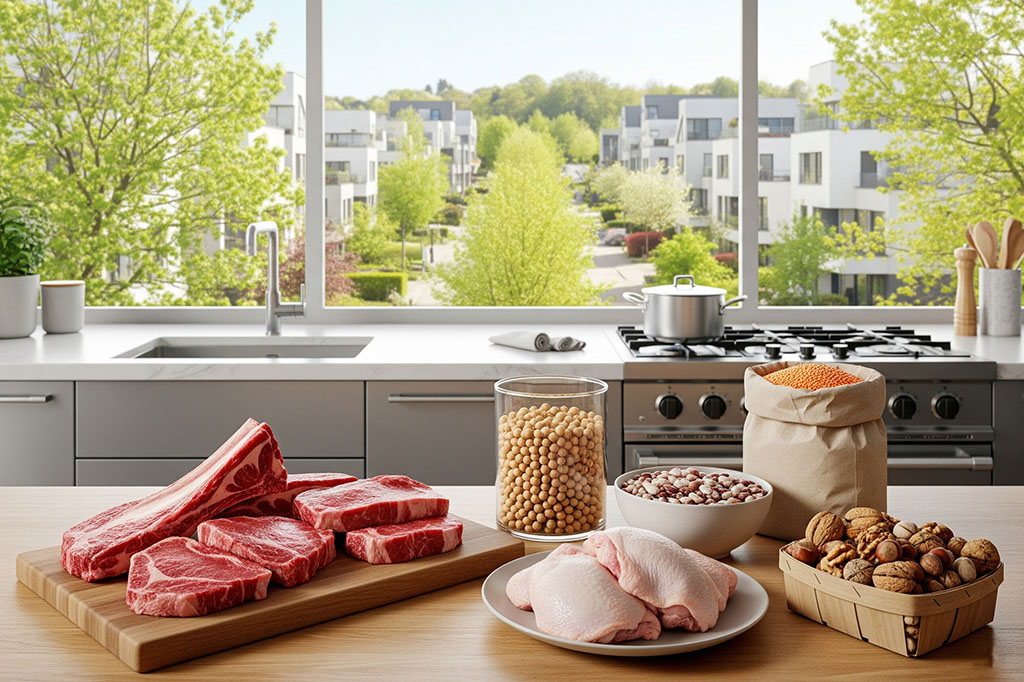
Meat is an ideal source of high-quality protein, readily assimilated and well suited to our nutritional needs. Made up of amino acids, these proteins are the building blocks of our body, essential for maintaining, growing, and renewing our tissues: muscles, bones, cartilage, tendons, skin, as well as connective tissues. They play a key role in immunity, digestion, oxygen transport, and numerous metabolic functions.

Although meat contains no sugars, it can indirectly contribute to glucose production through a mechanism called gluconeogenesis. This metabolic process enables the body to manufacture glucose from non-carbohydrate sources, particularly amino acids (derived from proteins). It takes place primarily in the liver.

This mechanism is a remarkable human adaptation that, for millions of years, enabled our species to survive extreme climates and long cold periods without direct sources of carbohydrates. Hominids evolved largely thanks to the consumption of animal products. This ability to produce glucose from protein is particularly useful during fasting, prolonged physical exertion, or as part of a healthy low-carbohydrate diet (such as the ketogenic diet).

That said, the goal is not to eat meat for the purpose of producing glucose. Doing so is neither ethical nor necessary, since vegetables and berries can provide the small amounts of glucose the body actually needs when fats are prioritized as the primary fuel, without harming the environment.

When we consume more protein than we need, the excess amino acids are converted into glucose. The body then triggers insulin production, which raises blood sugar levels and promotes fat storage. Meat therefore remains a foundational food for our overall balance, provided we eat it according to our individual needs (age, weight, muscle mass, etc.), neither too much nor too little. It is all a matter of balance.

Unlike carbohydrates (stored as glycogen) and fats (stored in adipose tissue), the body cannot store proteins or amino acids. It is therefore best to spread protein intake across two or three meals a day. This helps avoid temporary excesses as well as shortfalls between meals. While the body does maintain a “circulating pool” of amino acids, a steady intake is optimal for tissue repair and growth.

Plant Proteins: A False Alternative

Contrary to popular belief, plant proteins are neither a serious nutritional alternative nor a sustainable environmental choice. Derived mainly from legumes, grains, and oilseeds, they are less effectively assimilated by the body. These seeds contain antinutrients (phytic acid, lectins, enzyme inhibitors) that disrupt digestion and limit the absorption of minerals and amino acids.

A study conducted by Ohio State University showed that proteins from plant-based meat substitutes (made from soy or wheat gluten) are less effectively broken down into peptides and less well absorbed by human cells than those from a simple piece of chicken. They yield larger, less soluble peptides that are therefore less bioavailable.

Furthermore, manufacturing these vegetarian or vegan substitutes (often promoted as healthy, which makes sense when you consider how excessively profitable plant-based meats are for food manufacturers) relies on heavy industrial processing: dehydration, extrusion, high-temperature cooking, added additives, and more. These are ultra-processed products, far removed from a natural, living diet. From a nutritional and health standpoint, these vegetarian and vegan imitation meats are genuinely best avoided.

On the ecological front, the situation is just as concerning: large-scale crops of soy, peas, or wheat deplete the soil, require chemical inputs, destroy wildlife (insects, earthworms, birds, small mammals, etc.), and contribute to the collapse of biodiversity. Conversely, pasture-raised animals regenerate soils, restore microbial life, and allow flora and fauna to thrive.

With this in mind, it makes more sense to choose high-quality red meats from grass-fed ruminants (beef, lamb), while limiting meat from grain-fed animals (poultry, pork). Finally, the claim that red meat is carcinogenic rests on weak, often biased epidemiological studies that fail to prove causality. Rigorous meta-analyses do not support the conclusion that red meat is harmful when consumed as part of a balanced diet.

These studies generally include processed meats, such as dried meats or cured meats (charcuterie), and even reconstituted meats like ham, which are often loaded with additives, harder to digest, and likely to cause more serious issues over the medium or long term. Even without additives, these foods remain processed products that are less digestible than whole, high-quality, unprocessed meat eaten fresh.

It is worth remembering that dried meats and cured meats were originally preservation foods, intended to make up for a lack of fresh meat during lean times. They were never meant for daily or regular consumption.

Highly concentrated, these meats are intensely palatable, making it easy to overeat them. As with many concentrated foods, such excess can disrupt digestion and metabolism. In fact, it is not uncommon for excessive consumption of cured or dried meats, much like an excess of sugars or carbohydrates, to contribute to elevated blood sugar, which can become problematic over the long term.

Yet among the studies that led to the conclusion of a cancer risk, none truly examined meat consumption as it ought to be practiced. High-quality meat from pasture-raised animals is a valuable source of essential nutrients, well-assimilated proteins, and healthy fats necessary for the proper functioning of our body.

PrevPreviousSources of Natural Sugars – Dairy Products

NextSugars Concentrated Through Natural or Industrial ProcessesNext

Tags:

Natural Sugars

More articles

Previous

Sources of Natural Sugars – Dairy Products

Next

Sugars Concentrated Through Natural or Industrial Processes

Next
23 July 2025

Sugars Concentrated Through Natural or Industrial Processes

Previous
22 July 2025

Sources of Natural Sugars – Dairy Products

No Comment! Be the first one.

Leave a Reply Cancel reply

Your email address will not be published. Required fields are marked *

DJFORM natural food supplements banner
  • About Us

Copyright © 2026 DJFORM

  • Home
  • Nutrition: Our Advice
    • Nutritional Principles
    • Processed Foods
    • Organic Food
    • Nutritional Balance
  • Seasonal Supplement Courses
    • Spring Supplement Courses
    • Summer Supplement Courses
    • Autumn Supplement Courses
    • Winter Supplement Courses
  • Our Brand
    • DJFORM Supplements
    • DJFORM Formulas
    • DJFORM Quality
    • About Us
    • Our Eco Packaging
  • Our Reading List
  • DJFORM Shop
  • Contact