A Brief Reminder of What Milk Is
Milk is a biological secretion produced by the mammary glands of female mammals after giving birth. It serves as the exclusive food for an infant or newborn animal during the first weeks or months of life. Rich in essential nutrients (fats, sugars, proteins, vitamins, enzymes, and antibodies), it is perfectly tailored to the specific needs of the species that produces it. Thus, the milk of a goat, a cow, a monkey, or a human differs in composition to meet the growth and developmental requirements of its own offspring.
In other mammals, milk consumption stops naturally at weaning, a stage that in humans generally occurs between ages 2 and 4, and sometimes up to 6 or 7 depending on the culture. Yet humans are the only species that continues consuming milk past this stage, and even more remarkably, consumes the milk of other species, primarily from cows, but also from goats, sheep, buffaloes, or camels.
In some parts of the world, this animal-derived milk is even introduced early into the diets of young children in place of breast milk. This is problematic because all animal milks are, in reality, maternal milks designed for other species. Cow’s milk, for example, is meant to double a calf’s weight within a few weeks, not to nourish a human infant whose neurological and immune development requires an entirely different nutritional composition.
A Very Recent Practice in Human History, Dating Back No More Than About 10,000 Years
For as long as humans lived as hunter-gatherers, they did not consume milk from other species. Even after the transition to settled life, which occurred less than 11,000 years ago and sometimes much more recently depending on the regions inhabited by humans, this practice remained marginal for millennia. Not all human populations adopted it to the same extent, which explains the wide disparity in lactose tolerance seen today.
Regular consumption of animal milk is therefore extremely recent on an evolutionary timescale. For more than 99% of its history, Homo sapiens, let alone its ancestors, did not consume milk after weaning. As in other mammals, breastfeeding was a transitional developmental phase, and once weaned, the child could no longer digest lactose, the primary sugar in milk. Humans were no exception to this universal biological rule.
It was only with the emergence of agriculture, around 10,000 years ago, that things began to change. The gradual domestication of animals such as goats, and later cattle, paved the way for dairy consumption. Even in that context, however, direct milk consumption was neither immediate nor widespread: it involved only a minority of human groups, before spreading at varying speeds among certain populations.
The Domestication of the First Dairy Animals
The Neolithic Revolution marked a turning point in the human diet. In the Fertile Crescent (present-day Iraq, Iran, Syria, and Turkey), humans began domesticating certain animal species. The first animals to supply milk for human consumption were goats and sheep. Their small size, hardiness, ability to thrive in arid environments, and herd behavior made them easier to raise and milk than cattle.
Cattle were integrated into livestock farming later, valued for their meat, draft power, and hide. Using their milk as food developed gradually. Milking was not systematic at first, since females only produce milk after giving birth, and that milk was initially reserved for their calves.
Processing Before Consumption
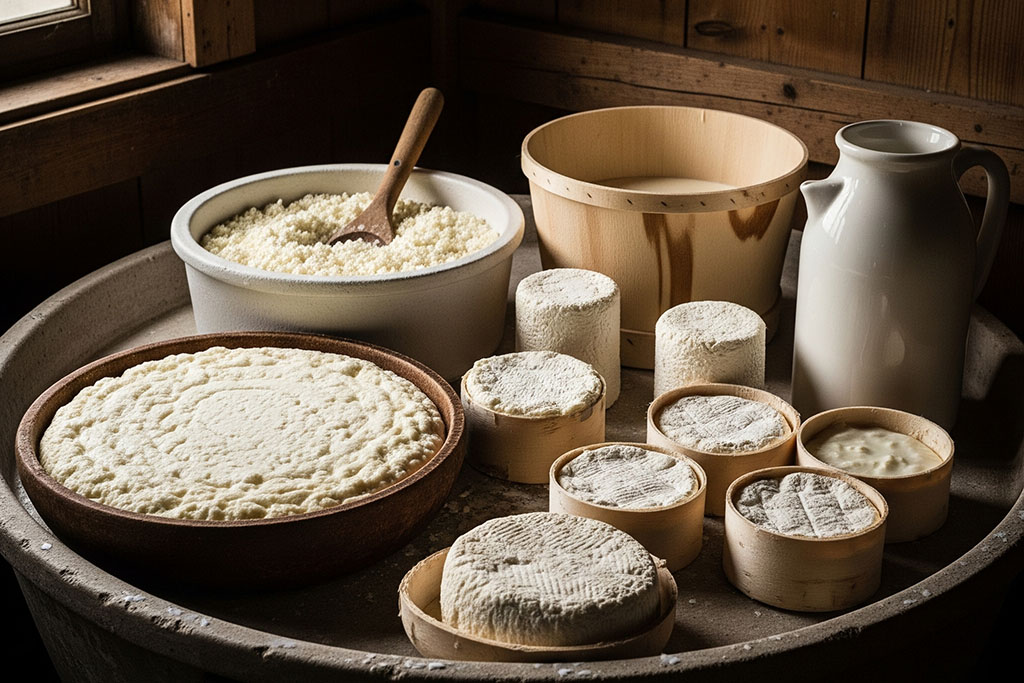
The earliest evidence of milk processing dates back roughly 6,000 to 7,000 years, notably across the Mediterranean basin, the Balkans, and the Fertile Crescent. Milk residues have been found in pottery vessels, but they do not point to the direct consumption of fresh milk. They were most likely processed dairy foods such as fresh cheese, yogurt, kefir, or other fermented products.
These fermentation techniques significantly reduced lactose content, making such foods somewhat easier to digest for populations that, for the most part, remained lactose-intolerant in adulthood.
A Decisive Yet Non-Universal Genetic Mutation
Digesting lactose in adulthood requires a genetic mutation that maintains the production of lactase (the enzyme that breaks down lactose) beyond childhood. This mutation, known as “lactase persistence,” appeared only around 7,500 years ago, likely in Northern Europe (present-day Baltic region or Scandinavia), and spread gradually.
It offered an evolutionary advantage in environments where food resources fluctuated: milk became a source of protein, fat, and calcium. However, this mutation did not spread everywhere. Even today, roughly 65% to 70% of the world’s population is lactose-intolerant to varying degrees.
It is likely that the frequent digestive symptoms (bloating, abdominal pain, diarrhea) discouraged people from drinking fresh milk, prompting them to favor fermented products that contained less lactose and kept longer.
Dairy Products in Antiquity
In ancient civilizations, dairy products played varying roles depending on the region. In Mesopotamia, Egypt, and Persia, people made and ate cheese, particularly fresh or fermented varieties, while milk itself remained a perishable food that was difficult to store.
In ancient Greece, milk was viewed as a rustic food reserved for shepherds and peasants. It was rarely consumed by the elite, who preferred wine, honey, and fruit. Cheese, on the other hand, was highly regarded.
In Rome, milk was not particularly prized, though butter began to be used, especially in the colder regions of the Empire, and cheese was traded throughout the Mediterranean basin.
Dairy Consumption in the Middle Ages
During the Middle Ages, milk was regarded as an unstable, fragile, and even impure food unless quickly processed. As a result, it was mainly consumed as cheese, which became a staple of peasant and monastic diets. Butter was more common in Northern Europe (particularly in Flanders and Normandy), while buttermilk and fermented milk were mostly consumed by rural populations.
Monks played a vital role in advancing cheesemaking techniques. Abbeys developed aging, draining, and preservation methods that laid the foundations for the great European cheeses.
The Renaissance and Early Modern Period
Between the 16th and 18th centuries, dairy production became more refined. Yet milk remained primarily a local product, largely confined to rural areas and livestock-farming regions. In cities, milk was scarce, expensive, often poor in quality, and posed health risks (such as the transmission of diseases like tuberculosis and brucellosis).
Butter became a luxury item in certain regions, used in fine cooking or given as a prestigious gift. At the same time, cheeses grew increasingly diverse, with distinct regional varieties emerging.
The 19th Century: Food Safety and Industrialization
The major turning point in the history of dairy products and their accessibility to the general population came in the 19th century, with Louis Pasteur’s discovery of pasteurization in 1865. This process made it possible to destroy pathogenic bacteria in milk without altering its taste or nutritional qualities.
The expansion of new transportation networks, combined with better control of the cold chain, made it possible to ship milk over long distances while preserving its freshness.
At the same time, the mechanization of dairy farming and the rise of intensive agriculture drove a substantial increase in output. From this period onward, fresh milk became accessible in urban areas, and dairy products began spreading widely across all social classes.
The Central Role of Dairy Products in the 20th-Century Western Diet
Through the industrialization of food production and processing, dairy products underwent gradual manufacturing standardization. This made them widely available on a mass scale and encouraged their promotion as universal staple foods.
Both World Wars played a decisive role in this shift by heightening the need to feed populations, especially children, quickly and efficiently with nutrient-dense foods to combat malnutrition.
Powerful advertising campaigns then promoted milk as a complete, natural food essential for growth.
The introduction of strict sanitary standards (veterinary inspections, hygiene regulations, and production oversight) strengthened consumer confidence.
In industrialized countries, milk became a symbol of health and abundance. It was distributed in schools and incorporated into every meal (coffee with milk, breakfast cereals, desserts, and sauces). Butter, cream, and cheese became defining culinary markers of European identity.
Yet this widespread adoption masks a biological reality: most of the world’s population remains lactose-intolerant. Across Africa, Asia, and South America, milk has never held such a central place in the diet. Instead, more digestible fermented products have traditionally been favored.
Questioning the Dairy Model
Over the course of the 20th century, the intensive dairy farming model came under growing scrutiny. Criticism focuses on several major issues:
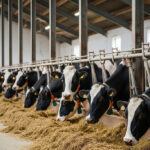
- On ethical grounds: the living conditions of dairy cows raise serious concerns. Intensive farming frequently involves early separation of calves from their mothers, repeated pregnancies, continuous milking, and living conditions reduced to sheer productivity targets. Animal suffering lies at the heart of these criticisms.
- On ecological grounds: dairy products are neither essential nor nutritionally optimal. Every nutrient they provide can be obtained from other food groups without the drawbacks associated with lactose tolerance. Large-scale dairy production relies on industrial livestock farming, which requires vast expanses of agricultural land to grow grain for animal feed. This model contributes to deforestation, soil depletion, biodiversity loss, and greenhouse gas emissions.
- On health grounds: numerous studies highlight links between excessive dairy consumption and certain health conditions, including acne, chronic inflammation, digestive disorders, and increased insulin resistance. As a result, the image of milk as a healthy and indispensable food is increasingly being called into question.