The Origins and Domestication of Poultry
The domestication of poultry followed in the footsteps of animals such as cattle, horses, goats, sheep, and pigs, a process that accompanied human sedentarization more than 10,000 years ago. Chickens, ducks, turkeys, and geese gradually enriched community livestock and supplemented the human diet with protein and fats, while also providing feathers and cultural symbols. Every domesticated bird has its own distinct history. Some originated in the tropical forests of Asia, others in the marshes of Europe, and still others on the plains of the Americas. Their gradual spread along trade routes, through conquests and exchanges, has made these animals familiar companions across the entire planet.
The Duck
The domestic duck descends primarily from the mallard (Anas platyrhynchos), domesticated in China around 3,000 years ago, with more sporadic evidence of domestication in ancient Egypt around 1500 BCE. The mallard still lives in the wild today across many regions. Another species, the Muscovy duck (Cairina moschata), native to South America, was domesticated by pre-Columbian civilizations, notably the Maya and the Aztecs, several centuries before Europeans arrived on the American continent. Following the European voyages of exploration in the early 16th century, which led to the discovery and colonization of the Americas, the Muscovy duck was introduced to Europe and crossed with the domestic mallard, producing “mule” ducks (mulards), sterile hybrids widely used in farming for their hardiness and yield.
Over time, each region developed its own duck breeds. They were adapted to the local climate, available resources, and culinary preferences. In China, the Pekin duck was selected for its rapid growth and tender meat. This meat was highly prized in traditional cuisine. In Europe, the Barbary duck became particularly valued for its ability to produce quality foie gras and fat. The hardier Rouen duck adapted well to local wetlands and ponds. It offered flavorful, firm meat.
Some breeds were favored for their meat, others for their liver or fat. Still others were selected for their hardiness and their ability to forage on available natural resources. This diversity gave rise to a multitude of traditional breeds, each with its own distinctive traits. Industrialization then led to a drastic narrowing of that choice. Only a few standardized lines were retained. They were selected primarily for growth speed and yield in meat, foie gras, or fat, at the expense of both genetic diversity and the animals’ robustness.
Hens and Chickens
The domestic chicken descends from the red junglefowl (Gallus gallus), a gallinaceous bird native to Southeast Asia that lives primarily along forest edges. Its domestication dates back roughly 8,000 years, likely in the Indus Valley and Thailand. Archaeological evidence in China dates to around 5000 BCE, pointing to an early and gradual domestication process. From there, the chicken spread to the rest of Asia, notably China and India, before reaching the Middle East and Europe. This movement was facilitated by trade routes and conquests, particularly those of the Persians and the Greeks. The Romans incorporated it into their livestock around the 1st century BCE, and it subsequently became established throughout medieval Europe. With the great voyages of exploration of the 15th and 16th centuries, chickens spread around the entire world.
Over the centuries, local breeds emerged across different regions, shaped by the environment and human nutritional needs. Notable examples include the Bresse chicken in France, renowned for its delicate, flavorful meat; the Sussex in England, versatile and hardy; and the Brahma in Asia, prized for its size and egg production. Some breeds were selected to lay eggs regularly, others to yield abundant meat, and still others for their hardiness and ability to adapt to harsh conditions. This rich diversity formed a valuable heritage, reflecting the variety of local farming and animal husbandry practices.
With the advent of industrial farming in the 20th century, this diversity began to decline. Modern lines became specialized, separating laying hens from broiler chickens. This standardization prioritized productivity and rapid growth at the expense of versatile heritage breeds and their robustness.
The Turkey
The domestic turkey descends from the wild turkey (Meleagris gallopavo), native to North America and raised by Indigenous peoples for more than 2,000 years. The Aztecs and other Mesoamerican peoples regarded it as a valuable resource, used as much for its meat as for its feathers. Following the conquest of Mexico in the early 16th century, the Spanish introduced the turkey to Europe between 1519 and 1525. It was quickly adopted as a delicacy at aristocratic banquets, spread across the entire continent, and was later reintroduced to America by European colonists in its domesticated form.
Over the centuries, distinct local breeds developed according to region and culinary preferences. In France, there is the Noir du Gers turkey; in England, the Norfolk turkey; and in North America, the Bronze turkey. These traditional breeds were relatively small compared to modern industrial lines. They were hardy, adapted to local conditions, and able to feed partially on what their environment offered, which gave them robustness and longevity. Some were bred for their meat, others for their ability to withstand harsh winters or thrive outdoors, as on farms of the past where poultry lived in semi-free-range conditions and found part of their food in the farmyard and surrounding fields.
With industrial farming, selection has focused on growth speed and final body weight. Modern lines are much larger and heavier than traditional breeds, reaching their full size in just 3 to 5 months: roughly 7 to 10 kg for females and 15 to 20 kg for males. In the past, a hardy turkey required at least 6 to 7 months of raising to reach a far more modest weight, typically 4 to 8 kg. This accelerated growth carries physiological consequences (fragile bones and joints, difficulty moving properly, and heightened vulnerability to disease). Today, the majority of turkeys are raised in intensive systems, often in overcrowded barns with limited outdoor access. Organic and extensive farms exist, but they are rare and represent a marginal share of production. These farms, which better respect animal welfare, require more time, space, and quality feed. They are therefore more costly to operate, and their availability remains limited.
The Guinea Fowl
The guinea fowl, or Numida meleagris, is native to sub-Saharan Africa, more specifically the savannas and open woodlands of West Africa. In its natural habitat, it lives in flocks, feeds on insects, seeds, and small plants, and proves very hardy and resistant to disease. Its domestication occurred relatively late compared to the chicken: archaeological and genetic research suggests it was domesticated roughly 2,000 to 3,000 years ago, mainly for its meat and its ability to naturally control insects in crops. Unlike the chicken, the guinea fowl has retained many behaviors close to its wild state, which explains its hardiness and adaptability to extensive farming systems.
Over time, certain varieties were selected to improve meat or egg production. The main domestic subspecies differ in size, plumage color, and laying capacity, yet the guinea fowl remains broadly close to its wild ancestors.
The guinea fowl was introduced to Europe in the 16th century following Portuguese and Spanish explorations in Africa. It was first welcomed into royal courts and aristocratic gardens for its delicate meat and ornamental value. During the 17th and 18th centuries, it gradually spread to farms and villages, integrated into rural flocks to complement traditional domestic poultry.
In the 19th century, with the expansion of European poultry farming, the guinea fowl began to be raised more systematically and exported to the Americas and other continents, becoming a recognized and valued domestic poultry species worldwide. Today, it is raised in diverse systems: in extensive farming, it lives free-range and forages in its environment, a system common in Africa and on small family farms; in semi-intensive farming, it has limited outdoor access and receives supplemental feed; in intensive farming, it is raised in large numbers inside enclosed buildings with little or no outdoor access, a practice more widespread in developed countries such as France, where around 70% of guinea fowl are raised this way.
Its main drawback is that it is a poultry meat low in fat. Nevertheless, it provides a worthwhile source of protein.
The Goose
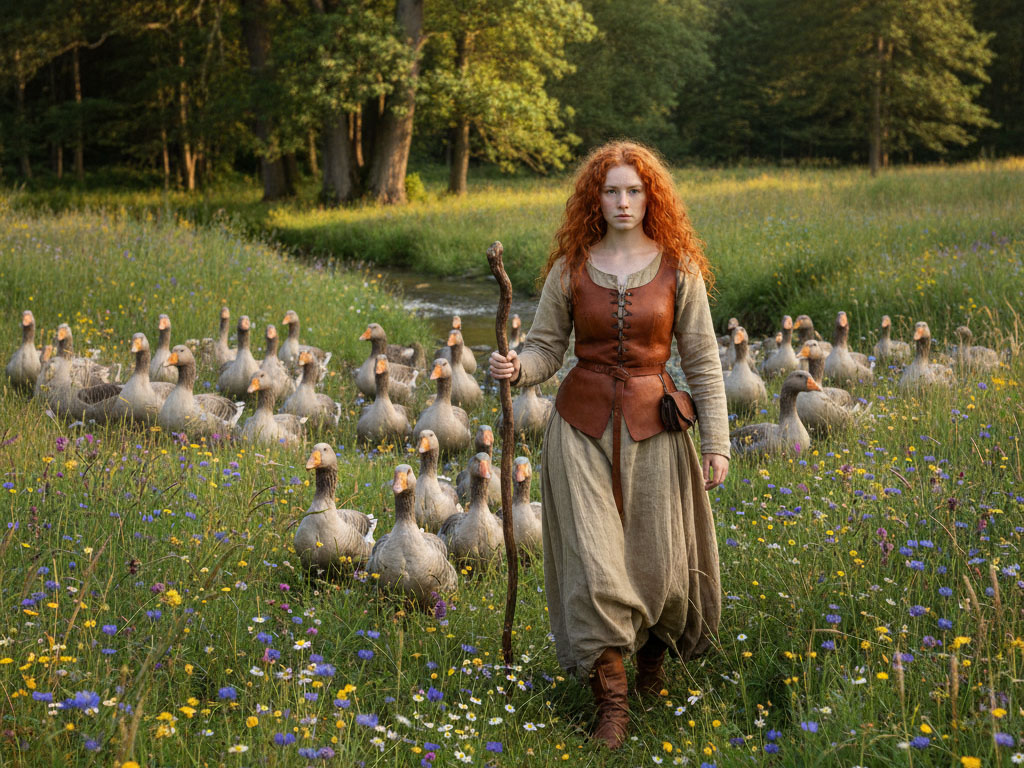
The domestic goose has two distinct ancestors. In Europe, it descends from the greylag goose (Anser anser), already domesticated in antiquity by the Greeks and Romans, who raised it for its meat, its liver (to make foie gras), and its feathers. In Asia, the swan goose (Anser cygnoides), native to China, was domesticated around 3,000 years ago. Successive crossbreeding and selection gave rise to a wide variety of breeds, some of which became iconic, such as the Toulouse goose, renowned for foie gras, or the Chinese goose, lighter and noisier, used as a guard bird.
Each region shaped its lines according to its needs. Fat and foie gras production, cold resistance, grazing ability (since unlike other poultry, a goose’s diet should consist primarily of grass). However, as with other poultry, traditional diversity shrank dramatically with the emergence of standardized industrial lines, which sidelined many local breeds.
Breeding for High Productivity and the Standardization of Flavor
The history of poultry demonstrates its role in the human diet since sedentarization. These birds provided an easy-to-raise supplement supplying protein, eggs, and fats. They require little space, can make use of food scraps, and are able to forage for part of their food independently. They were robust, versatile, and well adapted to local conditions.
Industrialization has deeply disrupted this traditional balance. Modern breeding has prioritized immediate productivity at the expense of diversity, natural behavior, and animal robustness. Chickens, ducks, turkeys, and geese have become fragile and vulnerable, dependent on veterinary treatments and non-physiological diets. Suffering linked to farming conditions and genetic standardization are direct consequences of this shift. Once a valuable asset in the household economy, poultry today is an emblematic example of the excesses of industrial farming, which weakens animals, ecosystems, and the nutritional quality of food alike.
Industrial selection, centered on meat or egg production, has reduced the genetic diversity of all domestic species and limited their ability to live in open spaces. Poultry raised outdoors using traditional methods offer firmer, more flavorful meat, though less tender than meat from intensive farms. These heritage breeds are now rare and difficult to find in stores.
Changing human preferences have accentuated this phenomenon. Modern consumption favors tenderness and a standardized taste at the expense of original flavor. To meet these demands, current lines are bred to grow very rapidly. They do not develop firm meat, are unable to fly or travel long distances, and remain very inactive. This forced sedentariness, combined with diets high in carbohydrates and plant proteins, renders them unable to survive in a natural environment or even in semi-free-range conditions.
Intensive farms rely on vast tracts of monoculture cereals, legumes, and oilseeds (mainly corn, wheat, sorghum, and triticale, as well as sunflower, rapeseed, and soybean in the form of seed meal). These crops, essential for poultry feed, require substantial water resources, particularly corn, which is heavily used in intensive operations. These monocultures cause progressive soil depletion and destroy the underground soil life that maintains fertility. The systematic, aggressive eradication of crop pests through massive chemical use triggers a chain reaction wiping out much of the local wildlife (insects, birds, amphibians, small mammals…) and wild flora. Not to mention that large wild herbivores are no longer welcome in these biodiversity-depleted landscapes. The intensive use of synthetic fertilizers, pesticides, and herbicides further worsens this degradation, contributing to ecosystem collapse and lasting biodiversity loss. Their overall ecological impact is deeply concerning today. The animals, made fragile by intensive selection, live in overcrowded conditions that foster the spread of disease. Keeping them alive then depends on regular treatments, particularly antibiotics and constant veterinary care.
Fast-growing broiler chickens show reduced welfare, with mobility disorders, health problems (legs, skin, heart), and increased mortality compared to slower-growing genotypes. (1) A review on poultry robustness and welfare even details how selection for a small number of productive traits has increased leg problems, metabolic diseases, stress sensitivity, and abnormal behaviors, while reducing the ability to live in more "natural" environments. (2) A review of intensive poultry production shows that these systems generate large quantities of litter and manure containing drug residues (notably antibiotics), carrying a risk of antimicrobial resistance and soil and water contamination. This review also examines the environmental impact of industrial animal production, highlighting that feed relies largely on monoculture grains and oilseeds (corn, wheat, soy, rapeseed, etc.), often grown in regions or countries other than where the poultry are raised, and that these monocultures require large amounts of water and chemical inputs (fertilizers, pesticides, herbicides), causing erosion, soil and water pollution, and biodiversity loss. (3)
Sources: 1) Kontos V. et al., 2024, "Impact of Growth Rate on Broiler Chicken Welfare", Animals. 2) Muir WM. and Cheng HW., 2014, "Methods to Improve Poultry Robustness and Welfare Through Selection and Associated Ethical Considerations", Frontiers in Genetics. 3) Garske B. et al., 2023, "Intensive Poultry Farming: A Review of Its Impact on the Environment and Human Health", The Science of the Total Environment.
A Very Different Ancestral Diet
Before domestication, poultry lived in rich, balanced ecosystems where they helped regulate insects and naturally fertilize the soil. The wild chicken, for instance, did not merely peck at a few seeds. It fed primarily on insects, larvae, worms, small invertebrates, and sometimes even small rodents. The wild duck found its nourishment in a varied mix of aquatic plants, seeds, insects, mollusks, and small crustaceans. The wild goose, more herbivorous, alternated between young shoots, grasses, roots, and small invertebrates. As for the American wild turkey, it fed on a wide array of foods (acorns, berries, seeds, fruit, grasses, insects, and occasionally small amphibians).
Before sedentarization and domestication, wild poultry provided our distant hunter-gatherer ancestors with an occasional source of high-quality eggs, protein, and fats. Their natural diet, both varied and nutrient-dense, ensured meat and fat rich in micronutrients and beneficial fatty acids. This natural diet contrasts sharply with that of modern farms, centered on grains (carbohydrates) and plant proteins that do not meet their fundamental needs. This imbalanced feed profoundly alters their metabolism, impoverishes their meat, and negatively disrupts the nutritional balance of their fats. Their flavor is now standardized and far less rich than in the past.