• FrançaisFR
  • EnglishEN
  • DeutschDE
DJFORM Information Blog

Type and hit Enter to search

  • Home
  • Our Supplement Courses
    • Seasonal Supplement Courses
      • Spring Supplement Courses
      • Summer Supplement Courses
      • Autumn Supplement Courses
      • Winter Supplement Courses
    • Supplement Courses for Nutritional Deficiencies
  • Nutrition
    • Our Nutritional Principles
    • Processed and Industrial Foods
    • Organic vs. Conventional Food
    • Nutritional Balance
  • Our Brand
    • DJFORM Food Supplements
    • DJFORM Food Supplement Formulas
    • Capsule Quality and Selection
    • Our Story
    • Our Packaging: Ecology & Recycling…
  • Our Reading List
  • DJFORM Shop
  • Contact
La graisse de canard, d’oie et de chapons
Animal Fats

Duck, Goose, and Capon Fat

27 February 2026
2 Views
0 Comments

Physiological Fat Storage in Poultry

If humans have prized the fat of ducks, geese, and fattened chickens (such as capons) for millennia, and if foie gras remains such a sought-after delicacy, it is because these birds possessed an exceptional natural ability to store fat reserves. In migratory ducks, for example, the liver and adipose tissues play a vital role. As winter approaches, the bird increases its food intake and accumulates fat in its liver and tissues, a physiological mechanism essential for surviving long migratory journeys.

This ability of poultry to produce eggs, and above all to store such flavorful fat, played a decisive role in selecting these animals for domestication at the dawn of sedentary settlement. Our ancestors learned to harness and amplify this trait, as they particularly valued these fats for their energy density and nutritional richness. Neither pathological nor permanent, this fat storage was leveraged in specific culinary traditions, giving rise to foie gras and fattened poultry. The value of these fats lies as much in their energy supply as in the fact that the animal could accumulate them naturally, which inspired targeted farming methods to maximize these reserves in line with human dietary preferences. Unfortunately, here too, the feed chosen to promote fattening no longer yields fat, meat, and eggs of the same quality as in the past.

The Example of Duck Fat

Duck fat is often regarded as a “noble” fat.

Its typical lipid composition is as follows:

  • 1. Saturated fatty acids (SFA): about 33%, including:
  • Palmitic acid (C16:0): 25%.
  • Stearic acid (C18:0): 8%.
  • Other saturated fatty acids (myristic, arachidic, etc.): 0-1%.
  • 2. Monounsaturated fatty acids (MUFA): about 49%, including:
  • Oleic acid (omega-9): 44%.
  • Palmitoleic acid (C16:1 ω-7): 5%.
  • 3. Polyunsaturated fatty acids (PUFA): about 13%, including:
  • Linoleic acid (omega-6): 12%.
  • Alpha-linolenic acid (omega-3): 1%.
  • 4. Other lipids / trace components: about 5%.

The ratio between saturated and monounsaturated fatty acids is uneven, yet remains broadly favorable for health. On the other hand, the proportion of polyunsaturated fatty acids is far too high for an animal fat. This reflects the fact that modern poultry feed is no longer physiologically appropriate. Relying mainly on grains and plant proteins, it severely disrupts the omega-6 to omega-3 ratio, an imbalance well known to promote inflammation in the human body.

There is no doubt that in the past, duck fat, and even goose fat, was an excellent source of nutrients and of high quality in every respect. Although the fattening process was driven by carbohydrate intake even in the wild and naturally led to a higher percentage of omega-6, modern changes to animal feed have amplified this accumulation to very high levels. Whether in conventional or organic farming, the feed base remains very similar, diminishing the original quality of these fats.

The Case of Foie Gras

While foie gras originates from a natural mechanism, today it is produced through force-feeding practices (gavage) that artificially amplify its effects. In migratory geese and ducks, the fattening of the liver and adipose tissues is a normal physiological process. The bird increases its food intake and naturally stores fat reserves in its liver to survive migration. Modern force-feeding replicates this mechanism, but in a forced and excessive manner. Ducks and geese are fed large quantities of starchy corn, triggering fat accumulation in the liver far more rapidly and extensively than their physiology naturally intended. This results in massive hepatic steatosis, meaning an almost pathological fattening of the liver, whereas originally it was an evolutionary adaptation.

Some producers are exploring alternatives to traditional force-feeding, referred to as natural fattening. They strive to respect the animal’s biological cycle. Forced feeding is limited, and fat accumulates gradually through the bird’s natural feeding behavior. These practices aim to replicate a fattening process closer to what occurs in nature. They rely on adapted feed rations and provide more space, natural light, and conditions conducive to instinctive behaviors. However, these farms remain marginal. They require more time, land, care, and resources. As a result, output is lower and profitability is limited, preventing them from competing with the industrial sector, which is far more standardized, faster, and volume-driven.

Lipid composition of foie gras:

  • 1. Saturated fatty acids (SFA): about 42%, including:
  • Palmitic acid (C16:0): 25 to 30%.
  • Stearic acid (C18:0): 7 to 10%.
  • Other saturated fatty acids (arachidic, myristic, etc.): 1 to 2%.
  • 2. Monounsaturated fatty acids (MUFA): about 45%, including:
  • Oleic acid (omega-9): 40 to 45%.
  • Polyunsaturated fatty acids (PUFA): about 13%, including:
  • Linoleic acid (omega-6): 8 to 12%.
  • Alpha-linolenic acid (omega-3): < 2%.
  • 3. Other lipids / trace components: about 0 to 1%.

Here again (just like duck fat), the lipid profile is imbalanced, with a significant excess of omega-6 coming from their fattening feed.

The Fat of Caponized Poultry

Caponized poultry, such as chicken, guinea fowl, and turkey, are males castrated before puberty to promote fattening and yield particularly tender, marbled meat. This castration triggers a major hormonal upheaval, reducing the activity of sex hormones that normally keep fat storage in check. As a result, the animal is metabolically forced to accumulate body fat, altering its natural metabolism to expand adipose tissue volume. From a culinary standpoint, rather than a health one, this enhances the texture and flavor of the meat.

To stimulate this weight gain, caponized birds are fed carbohydrate-rich grains, primarily corn, as well as wheat or barley, combined with vegetable fats (soybean oil, sunflower oil, etc.). The goal is to supply an energy-dense diet that promotes fat storage. Energy intake is gradually increased over several weeks to maximize fattening and force the metabolism to store fat in the tissues.

However, this diet high in carbohydrates and vegetable fats leads to an imbalance in the lipid composition of the meat, as well as in the health of the animal, which fortunately will be slaughtered before suffering its full consequences. Fats derived from this type of feed concentrate high levels of omega-6 polyunsaturated fatty acids at the expense of saturated fats, monounsaturated fats, and omega-3s, even though the latter are far more beneficial nutritionally and for human health.

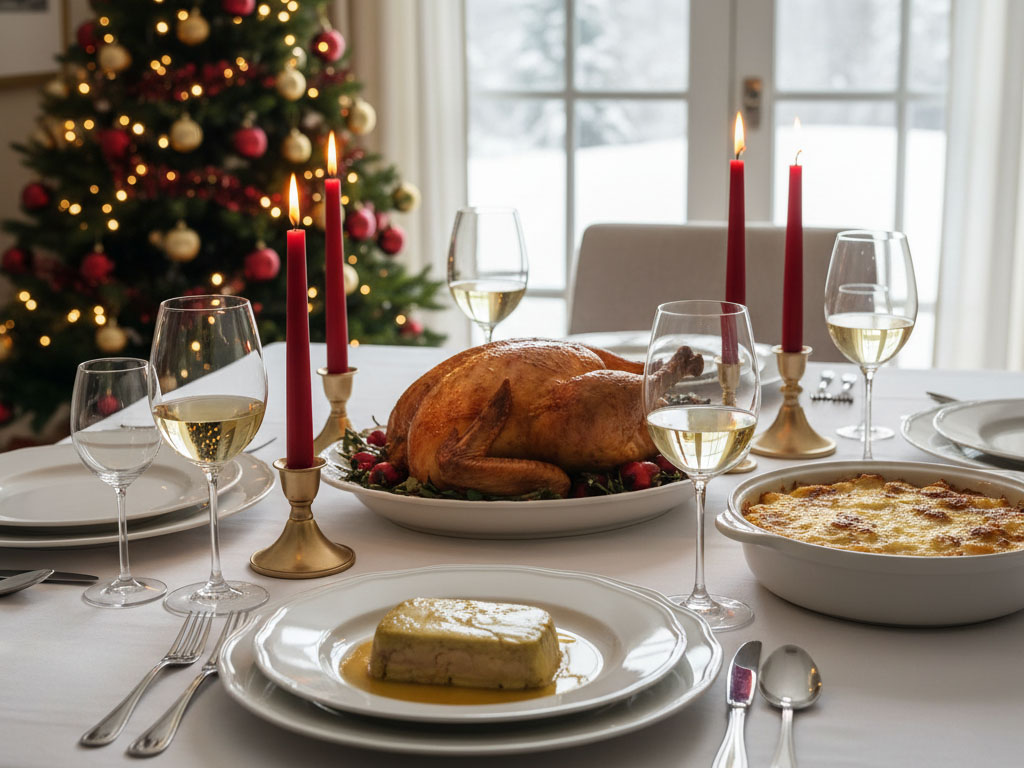
Fortunately, caponized poultry remains a treat or culinary indulgence reserved for festive occasions. Even so, is it truly reasonable to raise poultry just to fatten them this way? Any livestock farming dependent on monocultures of grains, plant proteins, and vegetable fats already carries a very high ecological and environmental cost. In the case of capons, feed volumes are amplified to fatten the bird almost to the point of making it sick.

The Excesses of Modern Poultry Farming

Since the onset of sedentary agriculture, poultry has held an important place on farms and in households. These birds were valuable for supplying eggs, meat, and fat, recycling food scraps, and keeping crop pests in check. Industrialization has profoundly transformed this relationship. Today, the broiler chicken, turkey, duck, goose, and laying hen industries have become dysfunctional.

Poultry are often raised in conditions that severely restrict their welfare. They live crammed into overcrowded barns or pens with limited space, unable to express their natural behaviors. This lack of freedom causes chronic stress, weakens their immune systems, and necessitates the routine use of veterinary treatments.

Even so-called free-range or organic farms, although they suggest that birds can express natural behaviors, do not truly meet the animals’ fundamental needs. The chicken, for instance, descended from a forest-edge gallinaceous bird, needs to roam freely, with shaded areas, trees, and shrubs for shelter from predators, as well as rich soil to scratch through in search of seeds and insects.

Given these facts, it becomes essential to scale back and rethink our relationship with poultry consumption.

In 2023, EFSA published a detailed scientific opinion on the welfare of broiler chickens, describing current European farming systems and their main limitations. It identifies 19 highly relevant "welfare consequences" in current systems: locomotion disorders, bone lesions, inability to perform comfort, exploratory, and foraging behaviors, heat stress, prolonged thirst or hunger in some birds, gastrointestinal disorders, and more. EFSA concludes that the stocking densities currently used in the EU significantly impair welfare: above 11 kg/m², there is an increase in footpad dermatitis, reduced walking ability, and restricted expression of natural behaviors. The report also emphasizes that the lack of environmental enrichment (platforms, elevated areas, friable litter) and poor air quality (ammonia > 15 ppm, dust) severely limit chickens' ability to rest, perch, scratch, and forage, while increasing stress.

EFSA Scientific Opinion, 2023, Welfare of Broilers on Farm.

Across all types of farming, whether intensive indoor operations or organic free-range systems, living conditions, non-physiological diets, and lack of space negatively affect both the lipid composition of the fat and the quality of the meat. Organic free-range farms remain less problematic than intensive operations, yet industrial production cannot provide animals with satisfactory living conditions.

Can Poultry Farming Become Sustainable, Ethical, and Ecological?

Fortunately, innovative initiatives are emerging to make poultry farming more ecological and integrated into sustainable agricultural systems. These approaches aim to reconcile livestock production, biodiversity, and respect for natural cycles.

Among notable examples is Canard des Rizières (“Rice-Paddy Duck”) in the Camargue region of France, which pairs organic rice cultivation with duck farming. Inspired by ancient practices still widespread across Asia, including Japan and China, this model relies on complementarity between animals and plants. The ducks naturally weed the paddies, control insects, and fertilize the soil with their droppings. In return, they feed in a physiologically appropriate way without relying on concentrated feed. At the end of the cycle, the ducks are harvested for meat, closing the loop on a self-sustaining, virtuous agricultural ecosystem. This approach reduces dependence on herbicides and fosters a more balanced, environmentally respectful form of agriculture.

At the same time, agroforestry opens up particularly promising avenues for reinventing poultry farming in a way that is both ecological and aligned with natural cycles. Farmers like Sylvie and Vincent Blagny, in the Gers department of southwestern France, have developed wooded ranges where poultry coexist with fruit trees, hedgerows, and sometimes even crops. This model draws inspiration from traditional mixed crop-livestock farming, where every component of the ecosystem plays a complementary role.

The trees provide shade, shelter, and coolness, promoting animal welfare while reducing heatstroke and stress-related diseases. Their roots stabilize the soil, retain moisture, and improve fertility. In return, the poultry naturally weed the land, keep insect populations in check, and fertilize the soil with their droppings, thereby reducing the need for chemical inputs.

This philosophy is rooted in a holistic vision of livestock farming: putting animals back at the heart of living systems by reintegrating them into natural, productive cycles. Its goal is to produce higher-quality meat and fat from animals that feed, move, and live in accordance with their biology. Beyond animal welfare, this form of farming contributes to soil restoration, carbon sequestration, and agricultural resilience, while restoring meaning to the relationship between humans, animals, and the land.

These practices show that it is possible to integrate poultry farming into truly sustainable agricultural systems that respect the environment, animal welfare, and natural balances. They pave the way for more responsible eating habits and a form of agriculture better aligned with the rhythms and intrinsic needs of living organisms.

As another example, La Basse Cour du Bois Gourmand, located 20 km southeast of Toulouse in the Lauragais region, is an ecological farming initiative designed to recreate a true symbiosis between animals and plants. On this farm, chickens, ducks, and other poultry roam freely within a diverse ecosystem where plants, trees, and crops coexist in harmony. The birds naturally contribute to soil fertilization and pest control, while the vegetation provides them with food and shelter. The whole system operates in balance with the rhythms of nature, fostering biodiversity and animal health without resorting to chemical inputs or intensive methods. This project illustrates a sustainable approach to livestock farming, where every element (animal or plant) contributes to the vitality of the whole and to the production of wholesome food, while strengthening the connection between humans and their environment.

The Special Case of the Goose: Poultry Suited to Environmentally Friendly Farming

The goose holds a special place among poultry because of its natural diet and strong grazing ability. Just like oxen, cows, sheep, lambs, or goats, it can thrive in an ecological and resilient system by making use of grass, leaves, and aquatic plants. Fed this way from what it forages in nature, it yields meat and fat of exceptional quality, far superior to those from intensive farms.

Of course, this type of farming cannot be used to produce foie gras. Traditional foie gras relies on a period of heavy carbohydrate feeding, primarily corn-based, which causes substantial fat buildup in the liver and produces a lower-quality fat richer in omega-6. By contrast, the natural fat of a pasture-raised goose has a much more balanced lipid profile that is far more beneficial for health.

Integrated into agroforestry or extensive grazing systems, the goose helps maintain pastures, fertilize the soil, and preserve biodiversity. Under these conditions, it retains its natural behavior, hardiness, and vitality, becoming a true ecological asset for sustainable agriculture that respects living systems.

As an example of what is possible, Ridgedale Farm, located in Västra Ämtervik, Sweden, is a model of regenerative agriculture and permaculture. Run by Richard Perkins, it integrates practices such as agroforestry, holistic grazing, and no-till farming. Although the farm is no longer an active commercial operation, it remains an influential educational site, offering training in sustainable farm design and holistic land management. As part of its agroforestry system, Ridgedale uses geese to maintain its orchards. These geese graze beneath the fruit trees, helping manage weeds and naturally fertilize the soil while benefiting from the shade and protection provided by the trees.

This model demonstrates that goose farming can be integrated into a sustainable agricultural system that respects both the environment and animal welfare. By feeding primarily on grass and plants available in their natural surroundings, geese provide superior-quality meat and fat while actively contributing to soil regeneration and biodiversity.

Tags:

Animal Fats

More articles

L’histoire de la domestication des volailles
Previous

The History of Poultry Domestication

Le beurre
Next

Butter

Next
Le beurre
4 March 2026

Butter

Previous
27 February 2026

The History of Poultry Domestication

L’histoire de la domestication des volailles

No Comment! Be the first one.

Leave a Reply Cancel reply

Your email address will not be published. Required fields are marked *

DJFORM natural food supplements banner
  • About Us

Copyright © 2026 DJFORM

  • Home
  • Nutrition: Our Advice
    • Nutritional Principles
    • Processed Foods
    • Organic Food
    • Nutritional Balance
  • Seasonal Supplement Courses
    • Spring Supplement Courses
    • Summer Supplement Courses
    • Autumn Supplement Courses
    • Winter Supplement Courses
  • Our Brand
    • DJFORM Supplements
    • DJFORM Formulas
    • DJFORM Quality
    • About Us
    • Our Eco Packaging
  • Our Reading List
  • DJFORM Shop
  • Contact