From the Rise of Civilizations to the Modern Nutritional Crisis
1. The Neolithic Revolution: A Fundamental Turning Point in Human History
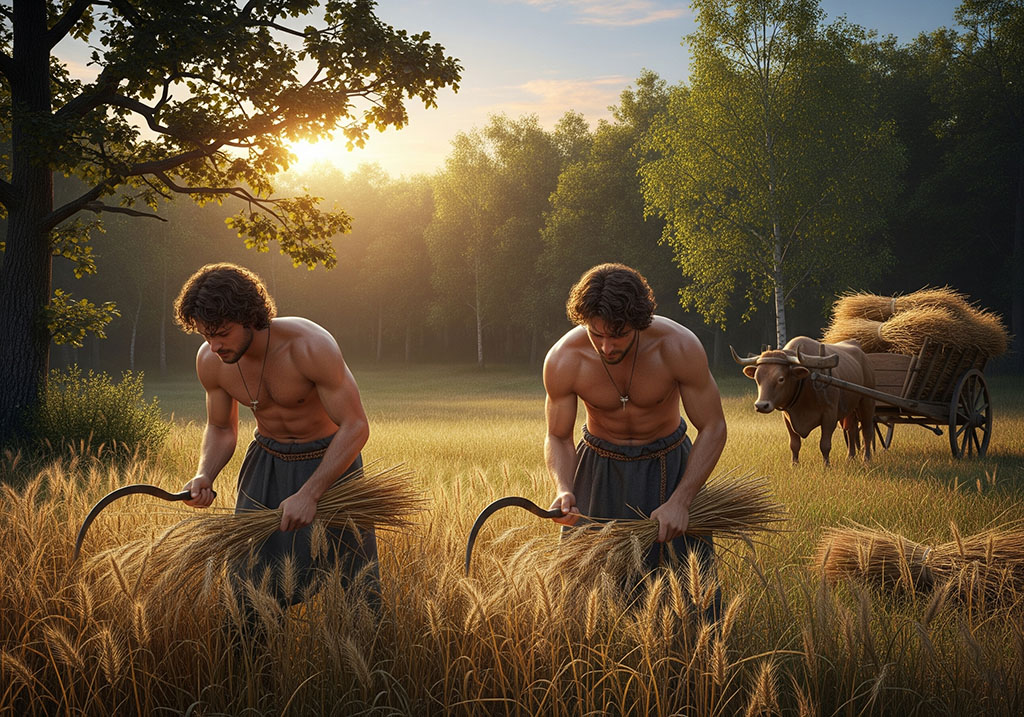
Roughly 10,000 years ago, the Neolithic Revolution reshaped the destiny of the human species. Until then a nomadic hunter-gatherer, Homo sapiens began a major transition toward settled life. At the heart of this shift lay the domestication of plants, and of cereal grains in particular.
The earliest crops of wheat, barley, millet, and spelt emerged in the Fertile Crescent (a region spanning part of the modern-day Middle East). These grains, still minimally processed, contained less starch than their modern descendants, and their glycemic index remained moderate. Humans learned to store grain, grind it, cook it, and ferment it. A new era had begun.
This turning point marked an anthropological break: thanks to grains, humans no longer depended solely on hunting and gathering. Food supplies became more regular, and agricultural surpluses enabled the emergence of social hierarchies, division of labor, writing, religion, and cities. In short, civilizations were built on a foundation of grains.
Yet this revolution did not come without a price.
2. Carbohydrates and Health: A Slow but Profound Transformation
The shift from a varied, predominantly protein-rich diet (wild game, eggs, wild plants, roots, berries…) to a grain-based diet triggered major physiological upheavals. Carbohydrate intake rose sharply, often at the expense of proteins and micronutrients. The human body, adapted to a Paleolithic diet for hundreds of thousands of years (if not millions), suddenly had to cope with a massive intake of carbohydrates and cultivated fruits, and therefore sugar.
Anthropological and paleopathological studies show that this transition was accompanied by a gradual decrease in human stature, a reduction in cranial volume, and the emergence of new pathologies: dental cavities, osteoporosis, chronic inflammation, anemia, and joint disorders. The first metabolic diseases began to appear.
Neolithic humans were no longer starving, but they were dying differently. Their diet became more stable, yet nutritionally poorer. Surges in population growth could not mask this nutritional impoverishment. And this pattern would only intensify over the centuries.
3. The Middle Ages: Grains as the Backbone of a Survival Diet
During the Middle Ages, grains formed the almost exclusive foundation of the common people’s diet. Dark bread, porridges made of barley, rye, or oats, and thin vegetable soups: meals were simple, repetitive, and poor in animal protein. Legumes (peas, broad beans) and the occasional egg or dairy product sometimes supplemented these diets, but protein remained a luxury.
In this context, caloric intake was not always adequate, and in every case it was deeply imbalanced. Rural populations lived in precarious sanitary conditions, exposed to overcrowding, famines, and epidemics. Average life expectancy dropped to 40 or 50 years, and infant mortality soared. Malnutrition was not always visible through thinness, yet it was very real, and nutritional deficiencies were widespread.
The elites, meanwhile, enjoyed a more varied and richer diet that included meat, game, fish, exotic fruits, and spices. This dietary divide also reflected a stark social and health gap.
4. Agricultural and Industrial Revolutions: The Peak of the Grain-Based Model
The agricultural revolutions (17th – 18th centuries) and later the industrial revolutions (19th – 20th centuries) accelerated the dominance of grains. The mechanization of farming, the use of chemical fertilizers, intensive varietal breeding, and the transformation of milling fundamentally altered the nature of the grains we eat. White bread became first a symbol of wealth and then a mass-market staple, flours became ultra-refined, and fiber and micronutrients vanished.
At the same time, the rise of the processed food industry turned grains into standardized, high-margin derived products: pastries, pasta, cookies, breakfast cereals, snacks, and ready-made meals. Carbohydrates became omnipresent in the modern diet, but in an ultra-processed, high-glycemic form stripped of protective nutrients.
The processing of grains has another consequence: they become hyper-palatable. This means these foods are engineered to be intensely flavorful and stimulating to the brain, to the point of overriding natural satiety signals. This turns them into addictive foods that drive disordered eating behaviors and overconsumption. Refining and the addition of fats, salt, or sugars make them highly addictive. Natural satiety no longer performs its role, hormonal regulation (insulin, leptin, ghrelin) is disrupted, and constant snacking becomes an entrenched habit.
5. A Global Epidemic: Diseases of Sugar and Wheat
Today, the consequences of this overconsumption of refined grains are massive and well documented. The World Health Organization regularly sounds the alarm: type 2 diabetes, obesity, non-alcoholic fatty liver disease, cardiovascular disease, and certain cancers (pancreatic, colon, breast) are surging across all industrialized nations, and increasingly across many developing countries as well.
This “carbohydrate epidemic” is largely fueled by products derived from modern grains, consumed in excess, often from earliest childhood. Global consumption of wheat, corn, and rice far outstrips that of every other food group.
Even vegetarian or vegan diets, which are already very difficult to balance, fall into this trap: the predominance of starches (pasta, white rice, bread, breakfast cereals) leads to significant nutritional imbalances.
6. Toward a Return to Our Roots?
Over the past few decades, a growing awareness has emerged. Nutritionists, researchers, physicians, and consumers are questioning the central role of grains in our diets. Movements such as low-carb and ketogenic eating advocate returning to a diet closer to that of our hunter-gatherer ancestors, incorporating more high-quality animal proteins and fats, fresh vegetables, and berries while limiting carbohydrate sources, whether refined or not.
Others champion a return to unmodified ancient grains rich in fiber and nutrients: einkorn, millet, fonio, buckwheat, quinoa, and teff. These less productive, less altered grains are often somewhat better tolerated and may theoretically pose fewer problems. Even so, they remain seeds with all their many drawbacks.
The solution does not necessarily lie in the total exclusion of grains, but in reassessing their nature, their quantity, and their degree of processing. Returning to whole, organic, unprocessed grains consumed in moderation, as part of a nutrient-rich, varied, and minimally industrialized diet, now appears to be a necessity.
In Conclusion: Rethinking Our Relationship with Grains to Rebuild Our Health
Grains accompanied the rise of humanity, yet they have also become the symbol of a global dietary drift. In just a few millennia, they have shifted from subsistence food to an ultra-processed, addictive, and unbalancing mass-market commodity.
Understanding this history means recognizing that our bodies are not adapted to a chronic overload of carbohydrates, whether refined or unrefined. Rethinking our relationship with grains means reclaiming our health, reconnecting with forgotten ancestral practices, and charting a more sustainable path for future generations.