
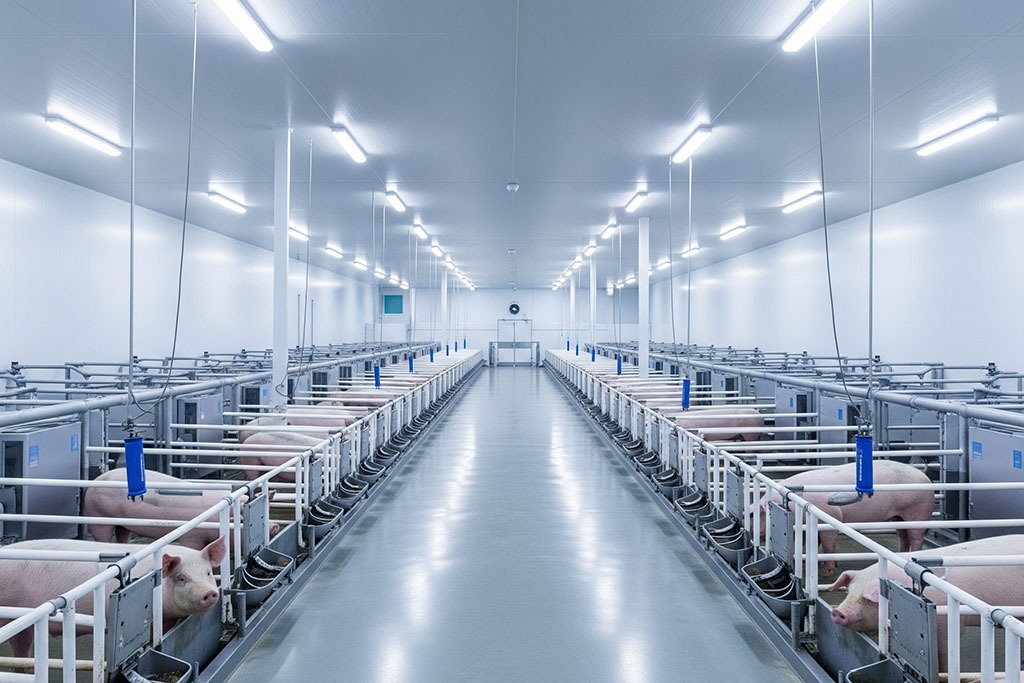
Intensive livestock farming is not just ecological nonsense; it is also deeply outrageous from an ethical standpoint: in the name of large-scale productivity, it forces animals into unnatural living conditions that cause suffering, and contributes to the destruction of our soils to fuel an overconsumption of mostly processed, nutritionally poor animal products.
Moving away from this model means drastically reducing our consumption of products from animals that rely on grain, oilseed, and legume crops (wheat, sorghum, corn, soy, triticale, sunflower, and more), such as poultry (for meat or eggs), dairy cows, and pigs. Of course, exceptions exist: some high-quality dairy products are made from the milk of cows, ewes, or goats that are exclusively grass-fed and raised on pasture. The goal is to return to a diet built on a true animal-plant symbiosis in harmony with how nature works, centered on pasture-raised herbivores (cattle, sheep, goats, and more), diversified market gardening, and regenerative agroforestry.
Leaving intensive livestock farming behind while prioritizing both our health and ecosystem regeneration also means adopting a lower-carbohydrate diet – moderate in grains, legumes, vegetable oils, and fruit – that centers on a balanced intake of high-quality pasture-raised animal proteins and fats, abundant local seasonal vegetables, and berries in the summer.
Intensive Livestock Farming: An Ethically Indefensible System
Intensive livestock farming has one single objective: to produce as much as possible, in the shortest time and smallest space possible, with maximum automation. Quantity and yield are prioritized at the expense of the proper living conditions suited to each species. In these systems, pigs, poultry, and dairy cows are crammed into closed buildings, cages, or confined enclosures lacking natural light, with no room to move freely and no opportunity to express their natural behaviors. Even farmed fish, such as salmon, are kept at extremely high densities in tanks or aquatic pens that fail just as completely to respect their biological and behavioral needs.
Several practices used in intensive livestock farming to force animals into extreme overcrowding with minimal losses are particularly outrageous:
- Poultry: to curb feather pecking caused by stress and overcrowding, beak trimming is routinely performed, causing pain and lasting disruption to natural behaviors.
- Genetic selection is another form of mistreatment. In broiler chickens, breeding ultra-fast-growing strains causes birds to gain weight so rapidly that their legs and bones can no longer support them: within just a few weeks, they collapse and develop deformities, fractures, and painful lameness.
- Likewise, industrial laying hens are genetically bred to produce an exceptionally high number of eggs in a very short time, leaving them physically exhausted in under two years.
- In cattle, practices such as dehorning are widely used to make handling easier inside barns and restraint systems – devices designed to immobilize or severely restrict the animals’ movements during milking, veterinary procedures, or loading onto transport trucks and at the slaughterhouse – rather than adapting facilities to the animals’ needs.
- Ultra-high-yielding dairy cows are selectively bred to produce ever greater volumes of milk, at the cost of metabolic exhaustion and disease. Antibiotic use is frequent.
- As for certain modern beef cattle breeds, they are bred for extreme muscle mass, to the point where the animals sometimes struggle even to move normally.
- In pigs, tail docking and castration – typically painful procedures – are presented as solutions to behavioral problems triggered by confinement. Sows are kept in gestation and farrowing crates so narrow that they cannot turn around or move. They endure cycle after cycle of large litters without ever truly being able to move or express their maternal instincts.
In every one of these cases, chronic stress from overcrowding and immobility, repeated injuries, respiratory illnesses, joint disorders, and many other ailments are sadly part of daily life on factory farms. How could it be otherwise when neither the animals’ living conditions nor their natural diets are respected?
Livestock feed poses another major problem, and not only from an ecological and environmental perspective. To make animals grow, fatten, and produce as quickly as possible, they are fed rations formulated primarily for output rather than for maintaining their health or meeting their true physiological needs. Poultry, pigs, and dairy cows are therefore given large amounts of grains (especially corn), legumes (including soy), and oilseed meal. This diet impairs not only the animals’ own health (leading to metabolic, digestive, and inflammatory disorders), but also the nutritional quality of the meat, dairy products, and eggs they produce.
Continuing to overconsume products from these intensive farming systems and the vast monocultures that feed them – both deeply destructive and disrespectful of living systems – means perpetuating animal suffering while placing an enormous burden on our ecosystems.
Overconsumption of Industrial Processed Animal Products
Intensive livestock farming did not reach its current extreme merely to fill a protein shortage, but to sustain a model of food overabundance in industrialized nations. Animal proteins are considered essential because they supply all the indispensable amino acids needed for bodily function and long-term health in highly bioavailable forms.
Plant proteins, by contrast, are incomplete and typically come packaged with higher levels of carbohydrates and antinutrients – a real issue at a time when modern diets are already excessively high in sugars.
Choosing to replace animal proteins wholesale with plant proteins would not solve the ecological problem in the long run either. If everyone switched to plant-based substitutes made from soy, grains, and protein isolates, we would simply keep the destructive model of large-scale monocultures alive.
Giving up animal products reliant on corn, soy, and other grain crops makes no sense if we end up growing even more of those very same crops to manufacture ultra-processed plant proteins, faux cheeses, faux yogurts, and fake meats – products that create their own ecological and health problems.
In short, intensive livestock farming has not simply served a nutritional need; it has propped up an entire system of overabundance. Animal proteins remain essential because our bodies rely on them to function properly and stay healthy. Plant proteins, on their own, cannot sustainably replace them: they are frequently incomplete, fall short gram for gram, and bring far more carbohydrates into diets already overloaded with sugars, grains, and starches.
Unlike monocultures, pasture-raised animals not only nourish the soil, support biodiversity, and sequester carbon, but also provide natural fat that serves as an excellent, healthy source of energy and makes it easier to cut back on sugars and carbohydrates. Animal fat is one of the cleanest and most reliable energy sources humans have consumed for roughly 2.5 million years – whereas a heavy intake of sugars and grain-derived carbohydrates dates back less than 10,000 years, reaching unprecedented levels only within the last century.
If we all shifted exclusively to plant proteins sourced from large-scale row crops (grains, soy, and legumes), the problem of destructive monocultures would remain entirely unresolved. Moving away from animal products dependent on corn and soy crops is essential – provided we replace them with products from pasture-raised, 100% grass-fed animals.
When Nutritional Balance Clashes with Consumerism
Intensive livestock farming, alongside intensive agriculture, has created a surplus of foods in industrialized countries designed primarily to gratify our taste buds, combining flavors and textures that hyper-stimulate our senses and appetite to keep us eating more and more. The formula relies on mass-producing a handful of raw ingredients at the lowest possible price – regardless of the environmental cost – which then serve as the foundation for a virtually endless array of intensely palatable, addictive sweet and savory industrial foods.
From milk, cream, butter, cheese, chicken, turkey, pork, and industrial eggs on the animal side, combined with a few staple plant ingredients such as wheat, oats, corn, rice, lentils, sugar, vegetable oils, and certain fruits, the food industry can churn out hundreds or even thousands of products: ready meals, desserts, pastries, candies, snacks, and more. The list goes on and on. These few animal and plant commodities pack together everything that pleases, comforts, stimulates, and drives us to eat far beyond true hunger – while frequently leaving us deficient in quality proteins, healthy fats, vitamins, and minerals.
An industrial diet built around sensory pleasure pays little attention to genuine nutrient density. It pushes aside the vast variety of vegetables – far less stimulating to the palate, yet essential for fiber, micronutrients, and overall dietary balance. It also overlooks the unmatched quality and nutritional richness of meat and fat from animals living out on pasture under natural conditions and eating a species-appropriate diet.
Thanks to intensive farming and cropping methods, foods that were once occasional treats or eaten in much smaller amounts – such as cheese, cream, yogurt, butter, and cured meats – have become everyday staples in abundant supply. These foods, which we could largely do without, are now consumed in excess, generating substantial profits while undermining public health.
In reality, among animal-derived foods, it is above all meat, organ meats, cartilage, bone marrow, and natural fat that are truly essential for human health. And when we choose high-quality foods aligned with our real biological needs, we quickly realize that the amounts required each day are actually quite modest.
On top of that, most of these industrial foods rely on complex formulations packed with chemical additives and modified ingredients. Together, these manufacturing methods, ingredient profiles, and incentives to overeat place a tremendous toll on the environment, human health, and, of course, animal welfare.
The Core of the Problem: Farming Systems Dependent on Monocultures
To sustain intensive production, animals must be supplied with abundant, high-output feed, even when it is neither physiologically appropriate nor genuinely healthy for them. As a result, all animal products from intensive livestock operations depend on vast grain, legume, and oilseed monocultures that are deeply destructive to the environment.
A 2016 FAO report (on the environmental performance of animal feed supply chains) shows, for example, that livestock feed (corn, soy, other grains, and protein crops) accounts for a major share of the environmental footprint of animal production, through land use, greenhouse gas emissions, and ecosystem pollution. (1) Another report published in 2020 notes that demand for corn and soy for animal feed is one of the primary drivers of deforestation and the conversion of biodiversity-rich ecosystems into industrial farmland. Poultry (for meat and eggs), pigs, dairy cows, and, to a lesser extent, certain intensive beef operations rely directly on these monocultures. (2) A 2009 report commissioned by Friends of the Earth from the IEEP (Sustainable Livestock and Feed Production), focusing primarily on the United Kingdom and the European CAP (Common Agricultural Policy), highlights that most industrial feed rations for these animals come from just a few globalized crops (grains, soy, and oilseeds), generating cumulative impacts on soils, water, and biodiversity. (3)
1) FAO/LEAP, 2016, "Environmental Performance of Animal Feeds Supply Chains: Guidelines for Assessment", Livestock Environmental Assessment and Performance (LEAP) Partnership, FAO, Rome; 2) FAO and UNEP (United Nations Environment Programme), 2020, "The State of the World's Forests 2020", FAO, Rome; 3) Baldock, D., & Mottershead, D., 2009, "Sustainable Livestock and Feed Production", Institute for European Environmental Policy (IEEP).
These monocultures lead to:
- deforestation and the progressive destruction of soils;
- the eradication of wildlife (insects, birds, small mammals, amphibians, etc.) as well as wild flora, weakening ecosystems across the planet through the heavy use of pesticides, fungicides, herbicides, and synthetic fertilizers.
A 2021 Chatham House report on food system impacts on biodiversity loss shows that the expansion of soy, corn, and other grain crops - largely destined for animal feed - is one of the primary global drivers of deforestation and biodiversity loss (threatening 86% of the 28,000 species at risk of extinction worldwide). (1) A 2025 article published by EarthDay.org describes these monocultures (with a 75% loss of crop varieties over the past century) as true "green deserts," poor in species and heavily dependent on chemical inputs. (2)
1) Benton, T.G., Bieg, C., Harwatt, H., Pudasaini, R., and Wellesley, L., 2021, "Food System Impacts on Biodiversity Loss: Three Levers for Food System Transformation in Support of Nature", Chatham House, UNEP, and Compassion in World Farming; 2) Murugesh, K., 2025, "One Crop to Rule Them All? The Hidden Dangers of Monoculture", EARTHDAY.ORG.
This contamination affects virtually every natural environment: soils, rivers, groundwater, the atmosphere, and the oceans. Most living organisms, humans included, are exposed to it, and biodiversity collapses inside and around these lifeless deserts of monoculture. A 2022 review published by Our World in Data (“Environmental Impacts of Food Production”) confirms that agricultural intensification and the spread of monocultures are among the leading causes of biodiversity loss, water pollution from nitrates and pesticides, and soil degradation.
The Health Risks of Intensive Livestock Farming
Intensive livestock farming is a major driver of health risks for animals, humans, and ecosystems alike. Within these systems, extreme overcrowding and confinement make disease outbreaks virtually inevitable, leading to the heavy, often preventive use of antibiotics.
The World Health Organization has called for strict limits on antibiotic use in order to curb the rise of resistance. In particular, it warns that "in some countries, approximately 80% of total consumption of medically important antibiotics is in the animal sector, largely for growth promotion in healthy animals." Routine antibiotic use in livestock farming therefore fuels the emergence of resistant bacteria that threaten the effectiveness of treatments in human medicine - even though research has shown "that interventions restricting antibiotic use in food-producing animals reduced antibiotic-resistant bacteria in these animals by up to 39%." Since 2006, the European Union has banned the use of antibiotics as growth promoters in livestock. Consumers play a vital role and must continue driving demand for meat raised without routine antibiotic use.
WHO, 2017, press release "Stop using antibiotics in healthy animals to prevent the spread of antibiotic resistance".
In natural ecosystems, wild animal manure is rapidly integrated into the cycles of life: countless insects, worms, microorganisms, and small creatures break it down, turn it into humus, and help sustain soil life and fertility.
By contrast, intensive farms pack far more animals into tiny areas than surrounding ecosystems can absorb. The overconsumption of dairy, eggs, pork, and poultry requires keeping excessive numbers of animals in cramped spaces – in landscapes where biodiversity has already been severely depleted by feed crops, and where wildlife is too diminished to naturally compost their waste.
Another major issue is the geographic decoupling of livestock operations from cropland: animals are concentrated in intensive farming hubs while the crops grown to feed them are often located far away. Under those conditions, it is frequently simpler and cheaper for farmers to apply synthetic fertilizers than to transport and properly recycle animal manure across long distances.
As shown in the report "Livestock's Long Shadow" (1), in areas of concentrated intensive livestock production, the output of slurry and other manure effluents exceeds the agronomic absorption capacity of surrounding farmland. The resulting over-application leads to nitrogen and phosphorus runoff into groundwater and surface waters, driving eutrophication of aquatic ecosystems and degrading soil quality. These phenomena are well documented across Northwestern Europe, particularly in Brittany, where the concentration of pig and poultry farms is directly linked to coastal green algae blooms. Solutions do exist: "improving livestock waste management would lower the environmental footprint of food production." (2)
1) Steinfeld, H., Gerber, P., Wassenaar, T., Castel, V., Rosales, M., & de Haan, C., 2006/2009, "Livestock's Long Shadow: Environmental Issues and Options", FAO, Rome. (Original English edition: 2006; French edition: 2009.); 2) FAO, 2009, "The State of Food and Agriculture 2009 - Livestock in the Balance, Chapter 4: 'Livestock and the Environment' (SOFA 2009)", FAO, Rome.
The Illusion of a Purely Plant-Based Solution
Faced with these facts, it is tempting to assume the answer is for everyone to go vegetarian or vegan and replace meat and healthy animal fats with plant proteins and vegetable oils. Yet those alternatives still depend on vast intensive monocultures of grains, legumes, oilseeds, and often fruit and sugar – especially when sugar becomes the primary fuel instead of healthy fats. Plant-based alternatives to animal products can thus reproduce the exact same ecological damage (habitat destruction for wild flora and fauna, heavy chemical input use, and biological desertification).
Plant-based substitutes for butter, animal fat, cream, meat, cheese, and yogurt, along with vegetable oils, remain heavily tied to the destructive model of intensive agriculture. While they understandably enjoy a “greener” image than factory farming, they still depend on the same crops (grains, legumes, and oilseeds) and continue to degrade soils and erode biodiversity.
The real challenge, therefore, is not to replace meat with ever more grains, legumes, and seed oils, but to fundamentally rethink our diet so it rests on genuine harmony between plants and animals, just as we observe in living ecosystems. Going too far toward an all-plant diet or an all-animal diet both lead to a dead end – even if an all-plant approach might briefly prolong the slow collapse of an agricultural model already exhausting our soils and destroying living ecosystems.
Returning to Grass-Fed Pasture-Raised Herbivores as Our Primary Source of Protein and Fat
Returning to grass-fed herbivores raised on pasture as our primary source of protein and fat means restoring ruminants to their natural role at the heart of living landscapes – as demonstrated by Richard Teague’s research and by Diana Rodgers and Robb Wolf’s analysis in Sacred Cow.
At the exact opposite of intensive factory farming, exclusively grass-fed herbivores – such as cattle (steers, cows, and calves), sheep (ewes and lambs), and goats – play a vital role in regenerating ecosystems when integrated into well-designed rotational grazing, transhumance, and adaptive management systems. The idea is nothing new: it takes inspiration from great wild herds (bison, antelope, and others) that move in dense waves, graze intensively, and then move on, giving plants and soils time to recover and regenerate.
The research of Richard Teague, a rangeland ecologist at Texas A&M AgriLife Research, is central to understanding this potential. In the paper "The role of ruminants in reducing agriculture's carbon footprint in North America," published in 2016 in the Journal of Soil and Water Conservation, Teague and his colleagues show that in regenerative grazing systems combining permanent pastures, adaptive multi-paddock grazing (short grazing periods followed by long rest intervals), and crop-pasture integration, ruminants can reduce agriculture's overall carbon footprint.
Teague, W.R., Apfelbaum, S., Lal, R., Kreuter, U.P., Rowntree, J., Davies, C.A., Conser, R., Rasmussen, M., Hatfield, J., Wang, T., Wang, F., & Byck, P., 2016, The role of ruminants in reducing agriculture's carbon footprint in North America, Journal of Soil and Water Conservation.
In practical terms, these regenerative grazing systems enable ruminants to:
- significantly increase soil carbon sequestration, with gains of several metric tons of carbon per hectare per year in certain long-term studies;
- improve soil structure and fertility through managed trampling, manure deposition, and continuous vegetative cover, which stimulates microbial life and humus formation;
- boost plant and animal biodiversity by reducing bare ground, increasing the diversity of grasses and legumes, and creating habitats for insects, birds, and small wildlife;
- reduce erosion and dramatically improve water infiltration and retention, making grasslands far more resilient to droughts and heavy rainfall events.
In other words, ruminants themselves are not the problem – how we raise and feed them is. In an industrial system built on monocultures and confinement, they contribute to ecosystem destruction. In a regenerative system grounded in adaptive grazing and living grasslands, they become powerful allies for restoring soils, climate stability, and biodiversity.
This vision is thoroughly developed and illustrated by Diana Rodgers and Robb Wolf in Sacred Cow. They argue that well-managed, grass-fed ruminants raised on pasture can produce nutrient-dense meat while improving the water cycle, increasing carbon storage, and supporting biodiversity – the exact opposite of indoor factory farming. They advocate for “better meat” rather than the elimination of meat: the goal is not to get rid of herbivores, but to place them back at the center of diversified agricultural landscapes alongside varied crops and trees.
- From this perspective, returning to grass-fed herbivores as our primary source of protein and fat means:
prioritizing meat and fat from cattle, sheep, and goats raised on pasture in regenerative systems; - drastically cutting back on animal products from animals fed concentrated rations in confinement;
- integrating these herds with diversified market gardening, agroforestry, and limited grain and legume crops in order to recreate a genuine animal-plant symbiosis.
It is this model – pastures grazed by grass-fed herbivores, diversified crops, and the planting of trees and hedgerows – that both Richard Teague’s scientific work and the Sacred Cow movement champion: a model in which animals, far from being a climate burden, become essential partners in soil fertility and in a human diet that is both deeply nourishing and aligned with ecosystem regeneration.
More articles
Organic Food vs. Conventional Food
Intensive Agriculture
Organic Food vs. Conventional Food
