In brief...
The ecological and health impact of vegetable farming fundamentally depends on the cultivation method adopted. Relying on monoculture and massive use of fertilizers and pesticides, intensive agriculture destroys wild biodiversity and permanently degrades soils and water resources. For human health, repeated exposure to chemical residues and their poorly understood synergies poses a proven threat to farmers, local residents, and consumers. Furthermore, the widespread use of heated greenhouses and soilless cultivation leads to excessive energy consumption and major plastic pollution. Recognized by scientific research as one of the main drivers of wildlife decline, this intensification directly calls into question the viability of our current food choices.
As with the cultivation of grains, legumes, oilseeds, and fruit, the ecological impact of vegetable production depends above all on how they are grown. As a result, the vegetables we choose to eat make a major difference when it comes to protecting the environment, and not only for that reason. In fact, the farming methods that are most harmful to the environment, which rely heavily on chemical inputs, are also the most harmful to our health. It makes complete sense that using products designed to destroy plant and animal life can prove just as harmful to human life over the medium or long term.
Vegetables are rightly presented as healthy foods, yet that is not always the case. Intensively grown vegetables very often contain pesticide residue levels that can make them far more hazardous than most people imagine. While a single chemical compound on its own may pose a moderate risk, a true cocktail of chemical substances is actually applied to vegetable, grain, and fruit crops. Their combined synergy, although still poorly studied, raises serious concerns: the precautionary principle is clearly called for.
Monoculture vegetable farming and the destruction of ecosystems
Vegetable monoculture involves growing a single variety of vegetable (tomatoes, lettuce, zucchini, peas, leeks, and so on) across a large area. This type of farming, with little diversity and often inadequate crop rotation, depletes the soil and wipes out plant and wildlife biodiversity over vast stretches of land.
To achieve high yields, growers must then apply substantial amounts of fertilizers, most often synthetic, along with pesticides meant to eradicate other plants, insects, slugs, aphids, and even small mammals that might feed on the crops. By trying to eliminate pests, we disrupt the entire food chain, driving the disappearance of a large share of wild plant and animal biodiversity, including birds, which are severely decimated every year. This destruction also kills soil life, creating an ever deeper dependence on chemical products to maintain high production levels.
This intensification of agricultural practices causes widespread soil and water pollution. Carried away by rainwater runoff and leaching, pesticides contaminate rivers, groundwater tables, and wetlands (marshes, peat bogs, swamps, estuaries, etc.). They have a direct impact on aquatic invertebrates, fish, and insect-eating birds, once again disrupting the entire food chain.
A study characterizing the ecotoxicity of pesticides used across all agricultural practices (arable crops, vineyards, orchards, market gardening, including vegetable crops), produced by the joint scientific assessment of INRAE and Ifremer, reveals that just a few substances account for the vast majority of toxic effects on aquatic and terrestrial organisms, even though they represent only a small share of the total tonnage applied. In other words, even in small quantities, certain chemical compounds are responsible for disproportionate damage.
INRAE and Ifremer, 2022, "Impacts of plant protection products on biodiversity and ecosystem services"
In fields of lettuce, carrots, or peas, for example, herbicides, insecticides, and molluscicides (slug pellets) are routinely used, affecting wildlife as a whole. Neonicotinoid and pyrethroid insecticides, to take just two examples, decimate pollinators and beneficial insects that are essential to ecological balance. Metaldehyde-based molluscicides, for their part, prove toxic to many terrestrial invertebrates and vertebrates.
The combined effects of these chemical compounds, even at very low doses, now represent a serious and well-documented threat to rural biodiversity, including birds, which are disappearing by the millions every year, as well as bats, amphibians, and insects. All of them suffer the gradual, devastating consequences of this widespread contamination.
1 in 4 birds has disappeared in Europe over the past 40 years, roughly 20 million birds per year, according to a study published in the journal PNAS in May 2023 analyzing bird population data since 1980 - a total of 800 million birds lost over those 40 years, primarily due to intensive farming and the massive use of pesticides.
Rigal, Dakos, Alonso, and Devictor, 2023, "Farmland practices are driving bird population decline across Europe.", PNAS.
It is a silent devastation, barely covered by the media, to which we are unfortunately growing accustomed. We fail to grasp how serious this phenomenon is for the future of life on our small planet Earth as we know it, the very web of life that makes our human existence possible.
But what about humans, who are also exposed to pesticides in the air and in their food?
Industrial vegetables grown in intensive monoculture systems frequently contain numerous pesticide residues. Health authorities maintain that, for each substance considered individually, measured levels remain below regulatory limits. These thresholds are set at the European level, notably by the European Food Safety Authority (EFSA), and then adapted and enforced in France by ANSES, based on risk assessments that rely largely on dossiers supplied by the manufacturers themselves, which is hardly reassuring!
The real question, therefore, is how reliable and genuinely protective these recommendations are, and whether the underlying studies draw sufficiently on independent research conducted by public research teams free from commercial interests. Several NGO investigations and academic studies have highlighted conflicts of interest and a lack of transparency in the governance of scientific assessments, particularly within EFSA and national agencies, calling into question the impartiality of the current pesticide evaluation system. Caution is therefore essential!
Moreover, these assessments generally fail to account for synergy between chemical compounds and the “cocktail effect,” even though dozens of different substances may be applied to vegetables, grains, and fruit during a single growing cycle. On this point, official answers remain incomplete, fueling deep concern within the scientific community and among consumers, who ultimately remain the least informed about the risks they face.
Despite this lack of transparency regarding the combined effects of so many chemical compounds, epidemiological and toxicological studies point to links between certain chronic pesticide exposures and an increased risk of neurological disorders, cancers, and endocrine disruption.
Inserm's collective scientific assessments notably highlight a strong presumption of a link between occupational pesticide exposure and several cancers (prostate cancer, non-Hodgkin lymphomas, multiple myeloma), as well as Parkinson's disease and certain cognitive disorders. (1) These risks primarily affect farmers and pesticide applicators, but also residents living near agricultural areas, as shown by biomonitoring data on the French population and recent studies on the exposure of residents living close to vineyards (the PestiRiv program). (2)
Sources: 1) Inserm, 2013, "Pesticides: Health Effects." and 2021, "Pesticides and Health: New Data, New Questions."; 2) Inserm, ANSES (including PestiRiv), and Santé publique France.
In France, millions of people live, work, or go to school right next to treated fields, including public facilities and many rural schools located in areas of heavy pesticide exposure. Since 2020, French regulations have required minimum spray-free buffer zones between treated plots and homes, set at 5 meters for low-growing crops (such as grains and vegetables) and 10 meters for tall crops (vineyards and orchards), with a non-negotiable distance of 20 meters for the most hazardous products. These buffer zones can even be reduced locally through regional charters, subject to specific equipment and spraying practices, drawing strong criticism from local resident associations and NGOs that consider them grossly inadequate.
In fact, several studies show that pesticide residues can be detected well beyond these buffer zones.
Measurements carried out in France reveal the presence of pesticides in over 90% of samples taken within 100 meters of crops, with a clear decrease only beyond that distance. (1) Recent studies on residents of wine-growing regions (notably ANSES's PestiRiv program) confirm higher pesticide exposure than in people living far from fields, including among young children. Worldwide, a significant proportion of the population lives close to intensively treated farmland. More than half of the land used by humans is now dedicated to agriculture, with heavy reliance on pesticides across most major producing regions (Asia, the Americas, Europe). Global pesticide use amounts to more than 3.5 to 4 million metric tons per year (2), leading to widespread dissemination of chemical molecules in the air, water, and soil well beyond the treated plots themselves. Research on pesticide drift also shows that these substances can travel several kilometers, not just a few dozen meters, which considerably expands the number of people potentially affected in densely farmed regions. (3)
Sources: 1) ATMO France, 2026, PhytAtmo Dataviz tool; 2) FAOSTAT; 3) AASQA (Approved Air Quality Monitoring Associations).
Around the world, several billion people are thus exposed, to varying degrees, to mixtures of pesticides through inhalation, skin contact, and diet, often with no direct control over how these chemicals are used. This passive, diffuse, daily exposure, which hits the most vulnerable groups hardest (children, pregnant women, and an ever growing number of sick or fragile individuals), heightens concern over the medium- and long-term effects of these chemical cocktails on human health.
Greenhouse, soilless, and plastic-tunnel cultivation
To achieve higher yields, earlier crops, and longer harvest seasons, many vegetables sensitive to cold or adverse weather conditions are increasingly grown in protected artificial environments. It is now very common for lettuce, spinach, endive, fennel, broccoli, tomatoes, eggplant, cucumbers, and bell peppers to be grown in greenhouses or under plastic tunnels. Intensive organic greenhouse cultivation of these vegetables is also widespread.
Some intensive production methods grow these vegetables without soil: the plants are completely cut off from the earth and depend entirely on nutrient solutions and chemical treatments for nourishment and protection. While these farming methods are undeniably profitable and extremely productive, serious questions arise about the nutritional value and flavor of the vegetables they yield. Moreover, these systems generally rely on varieties bred first and foremost for yield and visual appearance, far more than for their nutritional qualities.
In a world with an ever growing human population, making higher output a priority may seem obvious. Yet this outlook ignores the question of achieving a demographic balance compatible with our planet’s finite resources. All the more so because we are not the only inhabitants of these fragile ecosystems. We must take into account the living space that other wild plant and animal species need in order to thrive alongside us. Regardless of the choices we make regarding human diets, if we keep multiplying at this pace and encroaching on all natural spaces, we will eventually have to exploit every last stretch of land until it is completely destroyed or paved over. It will merely be a matter of time, differing by a few decades at most.
In this race to maximize yield per square meter, new technologies are constantly rolling out high-tech farming innovations that are set to take on an increasingly prominent role in global vegetable production.
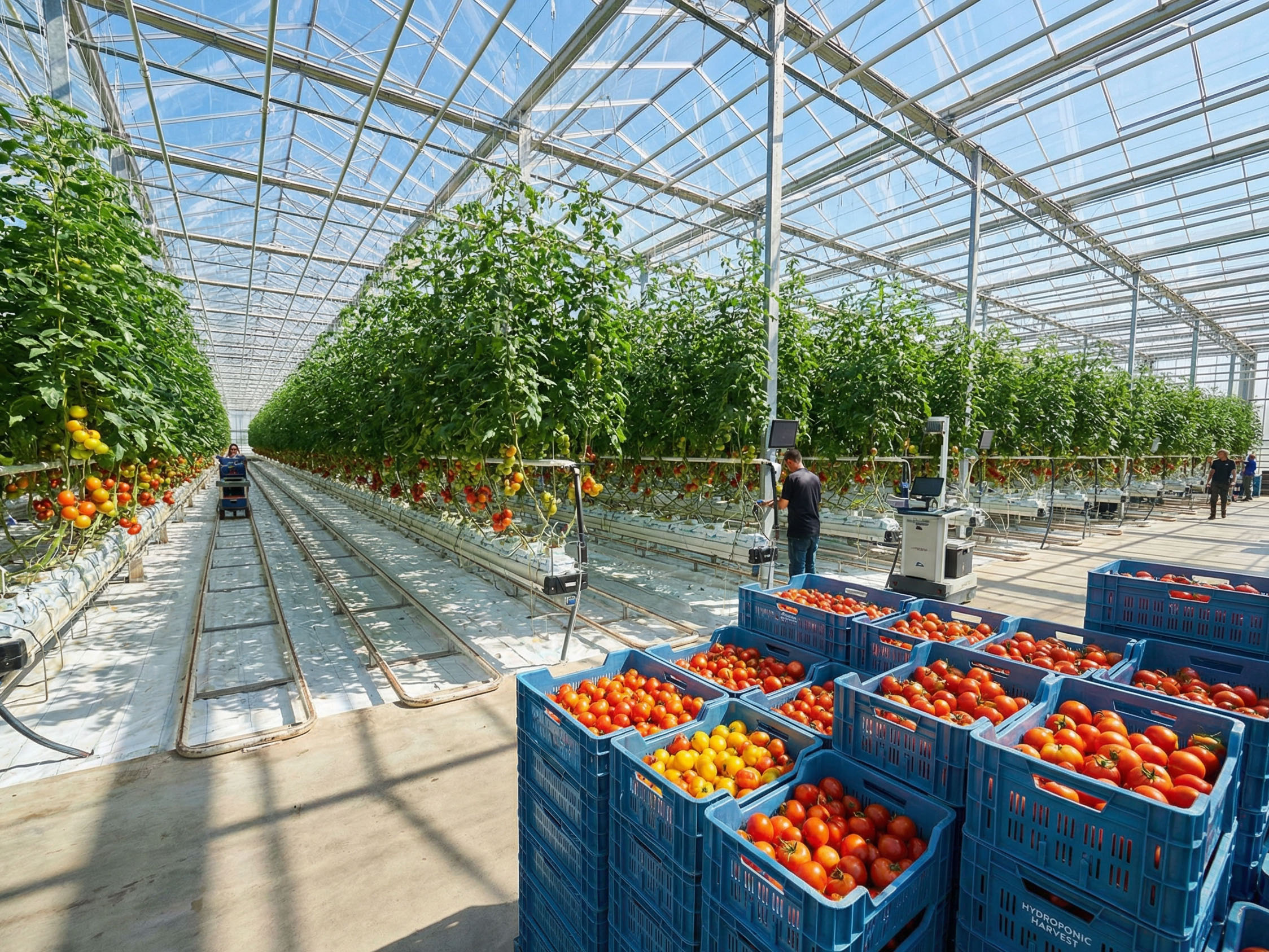
Wageningen University & Research (WUR) conducted a study for Grodan comparing the ecological impact and performance of different protected tomato cultivation systems. The study contrasts soil-based greenhouse farming, both conventional and organic, with high-tech soilless cultivation systems. It concludes that high-tech greenhouses perform best on most indicators studied: for tomatoes, one square meter of conventional soil-based greenhouse cultivation yields around 6 kg per year, whereas a high-tech greenhouse can reach and exceed 100 kg per square meter.
Grodan, 2020, "Greenhouse and soilless crops have a head start in sustainability."
Here again, however, the focus is solely on productivity, with no mention of nutritional quality or the potential health risks of eating such vegetables.
The energy cost of greenhouse and soilless farming
A growing share of industrial vegetables is produced in heated or unheated greenhouses, often in hydroponic soilless systems fed with mineral fertilizers. Available data remain partial and vary widely depending on the country and the crop, but a few orders of magnitude provide a clearer picture.
In Spain, the European leader in greenhouse farming, around 73,000 hectares are covered, with a very large share of export vegetables grown under plastic shelters. (1) In Italy, greenhouses already account for around 24% of total zucchini acreage, and about 27% of eggplant production now comes from greenhouses. (2) In France, for tomatoes, industry sources indicate that 65% to 70% of volumes are grown in greenhouses or tunnels, and several media investigations estimate that up to 90% may be grown soilless, giving an idea of the scale of this production method, even if these figures do not cover all vegetables or the entire European Union. (3) This 90% figure is notably cited in the documentary "Multinationals: Hold-up on our fruits and vegetables", a 2019 episode of Cash Investigation, as well as in excerpts relayed by Brut and franceinfo claiming that 90% of tomatoes grown in France are cultivated soilless. (4)
Sources: 1) Spanish Ministry of Agriculture (MAPA) and AOPN (Associations of Fruit and Vegetable Producer Organizations); 2) ISTAT (Italian National Institute of Statistics) and CREA (Council for Agricultural Research and Economics); 3) Agreste (statistical service of the French Ministry of Agriculture); 4) Cash Investigation, "Multinationals: Hold-up on our fruits and vegetables", episode broadcast on France 2 on June 18, 2019.
These systems deliver high yields and precise control over growing conditions. On the other hand, they rely on highly energy-intensive infrastructure (heating, ventilation, supplemental lighting where used, and pressurized irrigation).
In France, for example, producing tomatoes in a heated greenhouse consumes on average around 280 to 300 kWh per m² per year (1), which represents several kilowatt-hours of energy per kilogram of tomatoes produced. It also involves heavy use of synthetic nitrogen, whose agricultural application is a major source of nitrous oxide, a greenhouse gas with an extremely high warming potential. Greenhouses and tunnels also create vast expanses of plastic. Most of these materials (covering films and tarps, mulch sheeting, drip-irrigation lines, twines, and clips) are made from fossil-derived polymers, mainly polyethylene and polypropylene produced from oil and natural gas. In France, agriculture thus consumes around 100,000 metric tons of plastic per year, roughly 38% of which is used for crop production (2), with a substantial share going to crop protection and greenhouse vegetable farming. Over time, part of this plastic fragments and feeds microplastic pollution in agricultural soils, with documented effects on soil structure, water circulation, the nitrogen cycle, and soil fauna (earthworms, nematodes, microfauna). (3)
Sources: 1) ADEME; 2) CPA, FNSEA, Adivalor, 2019, PLASTICULTURE IN FRANCE; 3) INRAE, 2026, "Ubiquitous plastics from the field to living organisms."
Life-cycle assessments carried out on greenhouse tomato systems show that the primary drivers of environmental impact are, on the one hand, mineral fertilization (N₂O emissions and eutrophication) and, on the other, the greenhouse structure itself.
Eutrophication refers to the excessive enrichment of aquatic environments with nutrients (nitrogen and phosphorus), which triggers algal blooms, depletes available oxygen, and ultimately leads to a profound ecological imbalance.
N₂O emissions refer to nitrous oxide released into the atmosphere when nitrogen fertilizers are applied – a greenhouse gas whose global warming potential is nearly 300 times greater than that of CO₂.
Indeed, a greenhouse concentrates the “embodied energy” of its manufacturing and construction, meaning all the upstream energy spent extracting raw materials, producing building components, transporting them, and installing the structure. It also requires energy to operate, especially when heated. Even when recent projects manage to optimize water and energy use, the overall footprint of this infrastructure and its inputs remains a major ecological sticking point.
The example of industrial tomatoes and their ecological cost
Industrial tomatoes grown in greenhouses, generally without soil and destined for the fresh market in Spain, the Netherlands, or France, rely on highly intensive farming systems. They require greenhouse heating or cooling systems (depending on the season), sometimes artificial lighting, pressurized drip irrigation, and, of course, substantial quantities of chemical inputs (fertilizers, pesticides, fungicides, etc.). On top of that come significant transport energy costs to get these tomatoes onto European supermarket shelves.
Spain and the Netherlands are among France’s main suppliers of fresh tomatoes, with distances frequently exceeding 1,000 to 2,000 kilometers between production hubs (Andalusia, Almería, Barendrecht, and others) and French wholesale markets such as Rungis. Each year, Rungis handles more than 3 million metric tons of fresh produce and supplies roughly 18 million consumers, mainly in the Greater Paris region (Île-de-France). Some of these tomatoes, including organic ones, are grown in heated greenhouses within industrial systems, sparking heated debate over their carbon footprint and the very spirit of organic farming.
In France, growing tomatoes in heated greenhouses consumes an average of nearly 300 kWh of energy per square meter per year, or several kilowatt-hours per kilogram of tomatoes produced, making them one of the most energy-intensive vegetables people eat. These tomatoes are often harvested before full ripeness from varieties selected for firmness and shipping durability, which clearly takes a toll on both flavor and nutritional value.
At the same time, a vast industry of open-field industrial tomatoes grown intensively for processing (purees, sauces, and tomato paste) has developed in a handful of major regions in Southern Europe, California, and China. Worldwide, more than 40 million metric tons of tomatoes are produced every year for the processing industry (FAO), accounting for a substantial share of total tomato production.
Grown in vast monocultures, these tomatoes are mechanically harvested and then hauled in bulk by truck to processing plants. Crushed under their own weight, part of the harvest begins to bruise and rot, which can lead to substantial losses.
Once processed, most often into tomato paste, these products travel thousands of kilometers by truck and cargo ship before being packaged under various brands around the world, often very far from where they were grown.
This production model generates heavy energy costs as well as massive waste, which is rarely factored into assessments of the ecological impact of industrial vegetable farming.
The case of the avocado
The avocado is the textbook example of an unusually heavy ecological footprint that could be avoided.
Admittedly, the avocado is an especially flavorful fruit-vegetable. Ever since it gained a healthy reputation, however, consumption in industrialized countries has surged, inevitably driving up production and placing growing pressure on ecosystems. Avocado trees require very fertile soil and substantial inputs of fertilizer.
Its rapid expansion in Mexico, Chile, and Spain has driven major deforestation, often illegal, to clear land for orchards in formerly forested mountain regions. Over the past decade, tens of thousands of hectares of forest have been converted into avocado plantations, and the trend continues to rise.
Avocados are also extremely water-intensive: in some areas, an orchard consumes four to five times more water than traditional crops, worsening already severe water shortages for local communities. Deforestation reduces the soil’s ability to replenish aquifers, while unregulated irrigation withdrawals trigger drinking-water shortages and undermine smallholder farming.
Added to this are often serious social issues stemming from the monopolization of water by certain large industrial growers. As a result, local populations are deprived of a vital resource.
In some regions, control over land and water also fuels tensions and conflict. The true cost of the avocado is therefore not limited to its environmental impact; it also carries heavy human and social consequences for the communities living in these producing regions.
The most dangerous pesticides for wild flora and fauna
- Neonicotinoids (e.g., imidacloprid, thiamethoxam, clothianidin):
Highly toxic to pollinators (honeybees, bumblebees, butterflies) and aquatic insects, they also affect soil fauna (earthworms, springtails) and higher-trophic species through food chains, owing to their strong persistence in soil and water. - Organophosphate and carbamate insecticides (e.g., chlorpyrifos, malathion, diazinon):
As neurotoxins that inhibit nerve signaling, they are particularly hazardous to birds, non-target insects, and freshwater species. Assessments by the U.S. Environmental Protection Agency (EPA) indicate that these three pesticides affect more than 97% of the threatened and endangered wildlife species evaluated on the endangered species list. - Organochlorines (e.g., DDT or dichlorodiphenyltrichloroethane, aldrin and dieldrin, endrin, heptachlor, chlordecone, and toxaphene):
Among the first synthetic pesticides widely used in the 20th century, they have now been largely banned due to their very high toxicity. Extremely persistent, they take years or even decades to break down in the environment: they accumulate in soils, sediments, and food chains, causing long-term harm to birds, fish, amphibians, and many other species even after being banned, as shown by multiple studies on persistent pesticide pollution. - Certain systemic herbicides such as glyphosate.
Although primarily targeted at plants, they disrupt soil microbiology and soil fauna, reduce plant diversity, and affect various organisms by altering habitats and the food chain. Widely detected in water, soil, and air, glyphosate exposes wildlife and flora well beyond the treated fields themselves.
In summary, according to recent reviews on the impact of pesticides on biodiversity, neurotoxic insecticides (neonicotinoids, organophosphates, and carbamates) and a few persistent systemic herbicides stand out as the most damaging to wild flora and fauna at the ecosystem level.
A 2023 meta-analysis on soil fauna, encompassing more than 1,000 studies, shows that pesticides reduce the abundance, diversity, and functionality of soil fauna, with particularly strong effects from broad-spectrum insecticides and repeatedly applied products. (1) A 2022 collective scientific assessment also highlights negative impacts across all major groups of organisms, notably through insecticides and certain persistent herbicides that disrupt soils and food chains. (2) Finally, a landmark synthesis published in 2026 by the French Ministry for Ecological Transition, "Pesticides: what uses, what impacts?", recalls that these substances are now recognized as one of the leading drivers of biodiversity collapse, especially when treatments rely heavily on the most widely used neurotoxic insecticides (neonicotinoids, chlorpyrifos, diazinon, etc.) and systemic herbicides such as glyphosate. (3)
Sources: 1) Beaumelle et al., 2023, "Pesticide effects on soil fauna communities - A meta-analysis", Journal of Applied Ecology; 2) INRAE and Ifremer, 2022, Collective Scientific Assessment (ESCo), "Impacts of plant protection products on biodiversity and ecosystem services"; 3) French Ministry for Ecological Transition, 2026, "Pesticides: what uses, what impacts?".
Tags:
VegetablesMore articles
The Modern and Industrial Era of Vegetables