In brief...
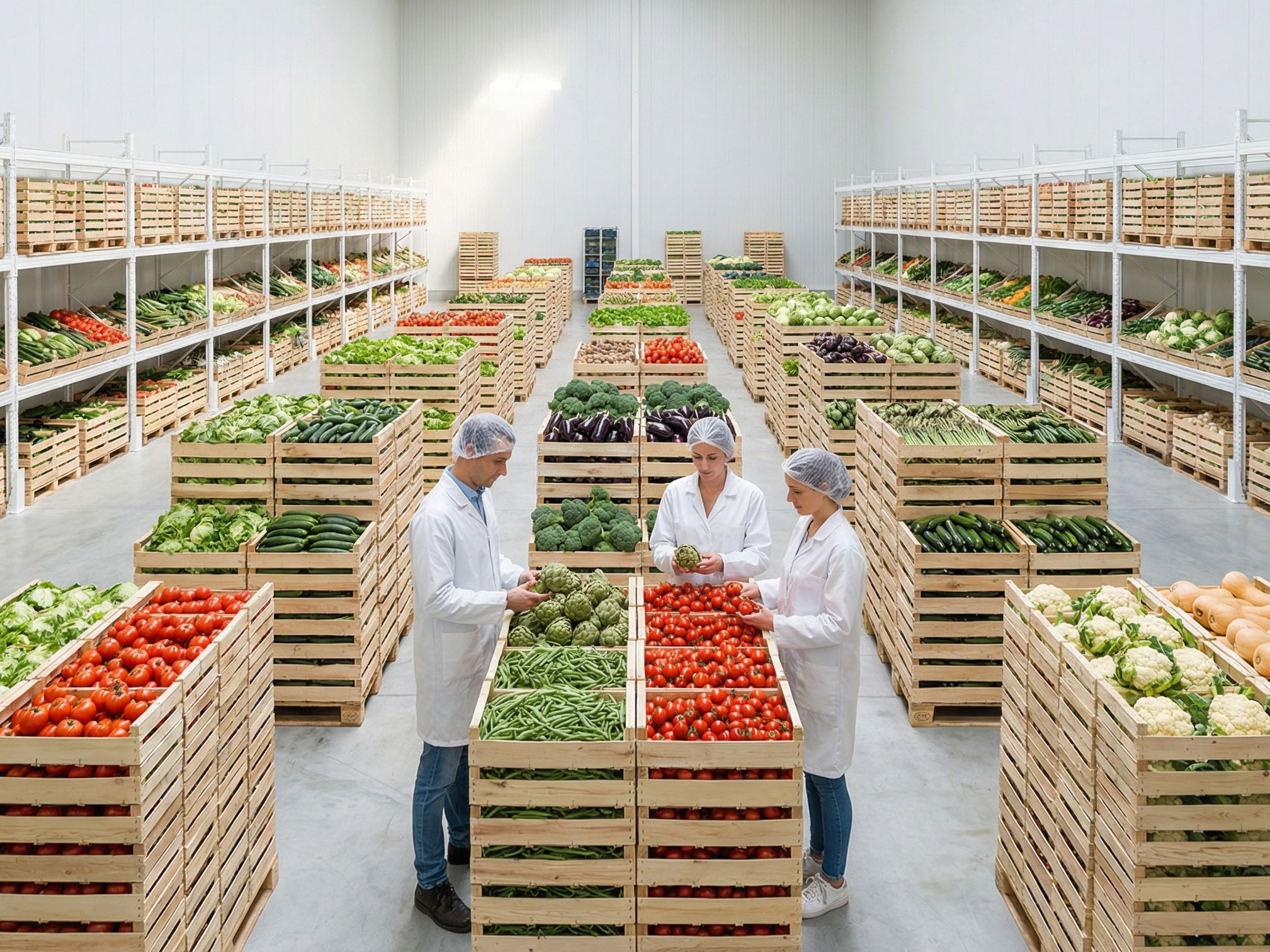
Our vegetables have lost diversity, flavor, and nutrients in favor of standardized, ultra-productive varieties dependent on synthetic chemicals. Between taste homogenization, industrial processing, and climate change, our food system has become more fragile. Restoring vegetable diversity is now a vital challenge for health, agriculture, and gastronomy.
The agricultural and industrial revolutions transformed our vegetables in less than two centuries. In the 18th and 19th centuries, the agricultural revolution laid the groundwork for this shift through early mechanization, the introduction of crop rotation, and above all the consolidation of farmland into large agricultural estates, paving the way for larger-scale production.
The Green Revolution (1960-1980) then drove yields dramatically higher through hybrid seeds, chemical fertilizers, and intensive irrigation.
This surge in productivity went hand in hand with the industrialization of food, which imposed standardized varieties suited to industrial processing, preservation (frozen and canned foods), and mass retail.
In the 21st century, globalization and the rise of ultra-processed foods have pushed these upheavals to their peak: from hundreds of highly diverse local varieties per species, each adapted to its local soil and climate, we have moved to a very small number of standardized, high-yielding cultivars that rely heavily on chemical inputs and are often depleted in nutrients.
From local diversity to standardization
For millennia, every region grew its own vegetable varieties, perfectly adapted to local climates, soils, and culinary tastes.
In the 20th century, modern plant breeding and improved cultivars quickly replaced these traditional heirloom varieties, causing a drastic decline in cultivated diversity. Fortunately, part of this heritage has been preserved in gene banks, and a handful of small growers still keep these treasures alive. Renewed interest in heirloom varieties is emerging, yet it remains marginal compared with standardized global production.
As early as the 1920s-1930s, Russian geneticist Nikolai Vavilov strongly warned against the dangers of this massive disappearance. Without genetic diversity, crops become vulnerable to a disease, pest, or climate shift that could wipe out entire harvests worldwide in one stroke. (1) He feared a genetic catastrophe comparable to the Irish Great Famine (1845-1852). In that case, reliance on a handful of genetically very similar potato varieties allowed late blight to destroy nearly all of the country's harvests, causing the deaths of roughly one million people and a mass exodus of nearly two million Irish to the New World (North and South America). (2)
Sources: 1) Harlan J. R., 1975, "Crops and Man", American Society of Agronomy; 2) Donnelly J. S., 2001, "The Great Irish Potato Famine", Sutton Publishing.
For vegetables, losing this diversity means losing their resistance to local diseases as well as their resilience (their ability to adapt to poor soils, excess moisture, and drought), which is crucial for coping with climate crises. Naturally, this loss of diversity also affects the nutritional quality of our food.
The Green Revolution (1960-1980), though initially focused on cereal crops, reshaped all of agricultural production, vegetables included. The replacement of traditional varieties with standardized, high-yielding cultivars accelerated sharply during this period.
It relied on seeds developed through breeding programs in specialized research centers, then grown with heavy applications of synthetic fertilizers and pesticides, and generally dependent on intensive irrigation. While this approach delivered dramatic gains in productivity, it came at the cost of widespread genetic homogenization of crops and massive soil and water pollution.
In the decades that followed, selective breeding intensified with the rise of F1 hybrid seeds. These varieties are created by crossing two highly uniform parent lines to produce offspring that are both vigorous and remarkably consistent. Unfortunately, seeds saved from these plants do not retain the traits of the parent crop, forcing growers to buy new seeds from one planting season to the next.
They are ideally suited to intensive farming and increasingly advanced mechanization, made possible by technological progress in sowing, spraying, and harvesting vegetables.
The genetic revolution: GMOs
Starting in the 1990s, modern genetic breeding techniques entered the picture. GMOs (created through transgenesis) were developed to make crops more resistant to certain insects or herbicides, or to protect them against viruses, particularly in major commodity crops such as soy, corn, and rapeseed (canola). In theory, these crops are tightly regulated and GMO cultivation is virtually nonexistent in Europe, even though large volumes of GMOs (including soy and corn) are imported for livestock feed and processed foods. The same technology has also been applied to certain vegetables, such as virus-resistant squash and zucchini, delayed-ripening tomatoes, specific potato varieties, and disease-resistant sweet and chili peppers, mainly in the Americas.
This technology was designed to simplify farm work (fewer losses from insects or disease, and easier chemical weed control) and ensure more stable yields. However, it draws heavy criticism for several reasons: the risk of genetic contamination of wild or local varieties, the emergence of “superweeds” and resistant insects, increased or sustained herbicide use, and the economic dependency created by seed patents.
In parallel, other tools such as marker-assisted selection, genomics, and genome editing (for example CRISPR, Clustered Regularly Interspaced Short Palindromic Repeats) now make it possible to target specific genes of interest much faster (shape, color, shipping durability, drought tolerance, and more) while remaining fully compatible with highly standardized production systems.
In theory, these scientific and technological advances could enrich cultivated diversity. In practice, they are mostly used to refine the exact same commercial varieties already dominating the market. Out of hundreds of traditional heirloom varieties possible for a single vegetable, only a handful of modern varieties end up being grown on a large scale, further tightening the genetic diversity bottleneck described by researchers.
It is estimated that between 60% and 75% of cultivated plant diversity disappeared from fields during the 20th century, even though part of this heritage is still preserved in scientific collections (around 1,700 gene banks worldwide conserving more than 7 million samples of plant genetic resources) or kept alive by seed savers and passionate gardeners.
FAO, 1996, "The State of the World's Plant Genetic Resources for Food and Agriculture", Rome.
Today, for many vegetable species, the bulk of commercial production relies on a small number of dominant, genetically similar varieties bred primarily for productivity, uniform sizing, shipping durability, and visual appeal. Where every region once grew dozens of types adapted to local conditions, the diversity actually cultivated has shrunk dramatically.
Universalizing and standardizing flavor to please the widest audience
For several decades, the agri-food industry, driven by volume and profit, has pushed toward the universalization of flavor. Vegetables have become progressively milder, less bitter, sweeter, and more tender, designed to appeal to the broadest possible market and especially to the most reluctant eaters, such as children. Modern vegetable breeding and hybridization gradually erase bold or bitter notes in favor of pleasant, easy-to-eat produce tailored to a highly standardized diet.
For example, Belgian endives are noticeably less bitter than they used to be, radishes are milder and less peppery, lettuces are tender with virtually no bitterness, and carrots are sweeter with a bright, appetizing orange color.
Making vegetables sweeter and sweeter:
Some varieties are even bred specifically to be eaten raw as bite-sized treats or snacks, such as ultra-sweet mini carrots and Rainbow carrots, very sweet cherry tomatoes (Sun Sugar, Super Sweet 100, and others), and Sugar Snap peas, which are far sweeter and more tender than traditional field peas.
This shift toward mild flavor, melt-in-the-mouth texture, and eye-catching colors meets market demand, yet it narrows our culinary and sensory experience. Worse still, while these cultivars pack more sugar, they lose depth of flavor and typically contain fewer protective nutrients such as bitter phytonutrients.
Fragile vegetables dependent on technology and chemicals: declining nutritional quality
To grow these high-yielding modern varieties intensively, industrial agriculture relies heavily on chemical inputs and new cultivation methods:
- Synthetic fertilizers (nitrogen, phosphorus, potassium) to force rapid growth.
- Herbicides, insecticides, and fungicides to eradicate pests and weeds.
- Disinfectants and fumigants to sterilize soils and greenhouses.
Since the 1960s, overall pesticide use has climbed sharply, and in Europe, pesticide residues are increasingly detected across a wide range of fruits and vegetables.
Between 2011 and 2021, the proportion of European vegetables containing PFAS-type residues ("forever chemicals") nearly tripled. Vegetables such as chicory (52% of samples tested), eggplants (29%), and bell peppers (23%) are among those most frequently contaminated by at least one PFAS pesticide.
Générations Futures, 2024, Report "PFAS pesticide residues in fruits and vegetables in Europe - Focus on France"
Greenhouse cultivation (tomatoes, cucumbers, bell peppers, lettuces, strawberries, zucchini, and more) enables year-round production, often with artificial heating and lighting.
Soilless systems (hydroponics and inert substrates), widely used for tomatoes, cucumbers, lettuces, basil, and similar crops, grow plants that no longer draw their nutrients from living soil, but instead from a standardized nutrient solution.
While these techniques guarantee spotless appearance and near-constant availability, they come with a loss of both nutritional value and flavor.
Industrial processing of vegetables
Technological advances of the 20th century also profoundly changed the way we eat vegetables. In the 1920s, American inventor Clarence Birdseye developed flash freezing, a process that freezes foods at very low temperatures while preserving their texture and much of their nutritional value far better than slow freezing.
In 1927, he filed his patents and founded the General Seafood Corporation, later known as Birds Eye, laying the foundation for the modern frozen vegetable industry. During the 1950s and 1960s, as supermarkets grew in popularity, frozen food sales soared. Store aisles filled up with frozen ready-made meals and bags of ready-to-cook frozen vegetables.
Meanwhile, globalization and cold-chain logistics now make it possible to find the same vegetables on shelves year-round (such as tomatoes, zucchini, bell peppers, and green beans), thanks to imports and greenhouse production.
Today, vegetables are available in almost every imaginable form:
- Canned, jarred, or concentrated vegetables (such as tomatoes, peas, artichokes, and carrots), typically packaged in tin cans or glass jars.
- Prepared vegetable dishes in jars, such as ratatouille.
- Plain frozen vegetables (such as green beans or spinach) as well as pre-seasoned skillet mixes and blends ready to heat and serve.
- Vegetables folded into industrial soups, purees, sauces, or pizzas, where they often make up only a small fraction of the product, usually packaged in Tetra Pak cartons or cans.
- Pre-cut, “ready-to-eat” bagged salads and raw vegetable mixes.
While these products make vegetables far more convenient to prepare, they frequently come with:
- Additives (thickeners, flavorings, flavor enhancers, preservatives, colorings, and more).
- Added sugar, particularly in sauces, soups, ready-made meals, and vegetable-based foods for babies and children. Ketchup, so popular among teenagers and young adults, illustrates this widespread added-sugar issue particularly well. Supposedly a tomato sauce, it is above all a concentrated source of sugar, salt, and additives that bears little resemblance to actually eating vegetables.
The place of vegetables in an industrial diet high in carbohydrates and sugar
The shift in agricultural and industrial methods has triggered a major change and imbalance on our plates. Since the mid-20th century, the share of carbohydrate- and sugar-rich foods (grains, starches, fruits, added sugars, and more) has climbed to levels never seen in the diets of our ancestors. Our diet has become predominantly carbohydrate-based and therefore sweet. This upheaval in eating habits has occurred at the expense of other food groups that are far more essential to our health, such as vegetables.
The rise and dominance of processed and ultra-processed foods
Since the mid-20th century, massive mechanical, technological, and chemical advances have enabled intensive cultivation of sugar beets, making it possible to produce sugar in huge quantities at very low cost. The same happened with large-scale fruit production, as well as every other source of carbohydrates, including grains, starches, and legumes. Even healthy animal fats were replaced by vegetable oils high in omega-6 fatty acids, which are far more problematic for health. These carbohydrates, sugars, and vegetable oils became the foundation for a virtually endless range of processed foods, whether savory, sweet, or both.
A diet that constantly triggers the brain’s reward system
A diet high in sugars and carbohydrates strongly stimulates dopamine release in the brain, delivering an immediate sense of pleasure. Because of their addictive nature, carbohydrate-rich foods are far more rewarding to the brain than vegetables. Public health campaigns, which have promoted eating “five servings of fruits and vegetables a day” since the 1990s, try as best they can to highlight the importance of whole, unprocessed foods, even though modern fruits have become increasingly high in sugar.
The emphasis should have been placed on vegetables first, because in practice people naturally prefer fruit over vegetables precisely because fruit also activates the brain’s reward circuitry. Moreover, the fructose found in fruit (just like in refined sugar) blunts the feeling of satiety and encourages eating larger quantities. This stems from a natural evolutionary mechanism designed to build up fat reserves before winter: the sweetest wild fruits, which typically ripened in late summer, offered a seasonal opportunity to store energy as body fat. The problem is that while fructose was once scarce and strictly seasonal, today it is available in abundance every single day, all year round, both in added sugars and in modern fruit.
As a result, vegetables still occupy far too small a share of the daily diet. The higher a diet is in carbohydrates, grains, starches, sugars, and processed foods, the less spontaneous appetite we feel for vegetables. Compounding this issue is the decline in nutritional quality among vegetables grown intensively in monoculture systems.
Since the 1950s, several studies have shown a measurable decline in the vitamin and mineral content of many plant foods, such as Donald Davis and colleagues' analyses of 43 crops (1), or Marles' syntheses on historical changes in the mineral composition of vegetables and fruits. (2) According to a literature review published in 2024 in Frontiers in Nutrition (3), this "nutritional dilution" is explained by a combination of factors: the selection of ultra-high-yielding varieties; greenhouse or soilless cultivation; intensive use of chemical fertilizers; the biological and mineral depletion of soils.
Sources: 1) Davis D. R., Epp M. D., and Riordan H. D., 2004, "Changes in USDA Food Composition Data for 43 Garden Crops, 1950 to 1999.", Journal of the American College of Nutrition; 2) Marles R. J., 2017, "Mineral nutrient composition of vegetables, fruits and grains: The context of reports of apparent historical declines.", Journal of Food Composition and Analysis; 3) Bhardwaj R. L. and Parashar A., 2024, "An alarming decline in the nutritional quality of foods: the biggest challenge for future generations' health.", Frontiers in Nutrition.
Are vegetables a public health issue?
Faced with the rise in metabolic diseases such as obesity, type 2 diabetes, and cardiovascular disease, health authorities are emphasizing the need to bring vegetables back to the center of the diet. Their role is essential, not only for their fiber content, but also for their concentration of vitamins, minerals, and antioxidants required for the body to function properly. Crucially, vegetables are often far more nutritionally valuable than fruits, without the metabolic downsides of sugar.
The monopoly of major seed corporations
Since the 1980s, technical advances have led to the creation of numerous grain, legume, and vegetable varieties known as F1 hybrids. Often protected by patents, these seeds have flooded the market, allowing a handful of global giants, such as Bayer-Monsanto, Corteva, and Syngenta, to take control of the seed industry.
By promoting food security and agricultural progress, these corporations have gradually marginalized heirloom seeds. They favor standardized varieties that have to be repurchased every year. This model has led to the disappearance of countless traditional seeds and depleted crop biodiversity.
While these high-yielding F1 varieties are well suited to intensive agriculture, they cannot be reliably saved and replanted. Farmers and gardeners lose their independence as a result, becoming reliant on seed companies to plant their crops each year.
Indeed, seeds harvested from an F1 hybrid vegetable do not grow true to type the following year. Multinational corporations therefore supply uniform products that cannot be reproduced identically by growers, locking producers into ongoing dependency.
Gene banks and movements preserving seed diversity
Since the 1970s, growing awareness of the genetic erosion of cultivated grains, legumes, fruits, and vegetables has led to the creation of major seed conservatories dedicated to preserving endangered heirloom varieties. In the face of crop homogenization and declining agricultural diversity, these institutions play a vital role in safeguarding the world’s agricultural heritage.
CGIAR, founded in 1971 with the backing of the World Bank, the FAO, and the Rockefeller and Ford Foundations, coordinates a vast network of agricultural research centers dedicated to conserving plant genetic resources. Their work safeguards millions of seed samples from across the globe, including local landraces threatened by agricultural standardization. Their mission is to preserve this plant heritage over the long term and keep it accessible for research, crop improvement, and adaptation to environmental change.
Alongside these global institutions, grassroots preservation movements have taken root at the local, national, and European levels. In France, the Réseau Semences Paysannes (Peasant Seed Network), community seed houses (Maisons des semences paysannes), and the Kokopelli association play a major role in defending cultivated biodiversity. These organizations do far more than simply store seeds: they also keep traditional know-how, seed-swapping practices, and a living culture of sowing and knowledge sharing alive. Kokopelli, for instance, has made it its mission to distribute open-pollinated, royalty-free heirloom seeds so that gardeners, market gardeners, and farmers can once again produce their own seeds. Meanwhile, the Réseau Semences Paysannes brings together stakeholders committed to preserving seeds adapted to local growing conditions, regional traditions, and grower autonomy.
Elsewhere in Europe, initiatives such as Arche Noah in Austria and ProSpecieRara in Switzerland complement this vital work. These foundations have helped rescue numerous forgotten varieties, raised public awareness of the importance of cultivated diversity, and secured recognition for the heritage value of heirloom seeds. Their efforts show that seed preservation is not merely an agricultural priority: it is also a cultural, ecological, and political one. By keeping varieties neglected by industrial agribusiness alive, these associations and foundations protect a shared memory and provide concrete alternatives to seed dependency.
Seed standardization and food vulnerability
Developing standardized, genetically uniform vegetable varieties built for intensive farming and maximum yield can increase their vulnerability to extreme weather events. These hybrid cultivars require specific growing conditions regardless of the region or climate zone in which they are planted. Compared with locally adapted varieties, they are less able to withstand extreme conditions such as prolonged droughts, heat waves, heavy rainfall, and the plant diseases these events trigger.
Several scientific reviews indicate that climate change is likely to have a major impact on crop productivity, particularly for vegetables.
In a review published in 2018, Bisbis, Gruda, and Blanke emphasize that rising temperatures, shifting rainfall patterns, and declining water availability can reduce both yields and the quality of vegetables, particularly in regions that are already warm or subject to water stress. (1) Two years later, Leisner showed that climate change, by altering temperatures, precipitation, and the frequency of extreme weather events, threatens both crop productivity and the nutritional value of fruits and vegetables. (2)
Sources: 1) Bisbis M. B., Gruda N., and Blanke M., 2018, "Potential impacts of climate change on vegetable production and product quality - A review.", Journal of Cleaner Production; 2) Leisner S. M., 2020, "Review: Climate change impacts on food security - focus on perennial cropping systems and nutritional value.", Advances in Food and Nutrition Research.
Taken together, these studies show that global warming poses a serious threat to many vegetable-growing operations, especially in regions where growing conditions are already challenging.
Conversely, heirloom varieties selected over centuries, or even longer, often demonstrate greater resilience. Adapted to local climate patterns, they generally have a stronger capacity to cope with weather extremes. Preserving these varieties is essential, not only to maintain broad genetic diversity across crops, but also to retain a pool of hardier varieties capable of withstanding climate disruption.
Cultivating diversity to preserve gastronomy
Over the past millennia, humanity developed an extraordinary diversity of vegetables. Yet our modern, industrial era has standardized and homogenized the food supply, sharply shrinking that variety. In doing so, it has reshaped both gastronomy and everyday eating habits. Around the world, this homogenization of flavor and culinary craft encourages a single, heavily industrialized pattern of consumption at the expense of traditional know-how and regional cuisines. Vegetables are heavily affected by this trend, and the variety on our plates inevitably suffers. Modern recipes tend to rely on roughly the same vegetables all year long, regardless of the season.
Conclusion
Ultimately, the recent history of vegetables highlights a growing tension between advances aimed at boosting output and the erosion of biodiversity. While the agricultural, industrial, and genetic revolutions have increased yields, simplified preservation, and met global demand, they have also driven massive varietal standardization, heavier reliance on chemical inputs, and greater fragility across our food systems. At a time when climate change is heightening risks for vegetable farming, safeguarding heirloom varieties, local know-how, and cultivated biodiversity stands out more than ever as an agricultural, nutritional, ecological, and cultural imperative. Cultivating diversity means not only protecting the future of our harvests, but also preserving the richness of our plates and our culinary heritage.
Tags:
VegetablesMore articles
Vegetables and Ecology – Part 1
Sedentarization and the First Vegetables