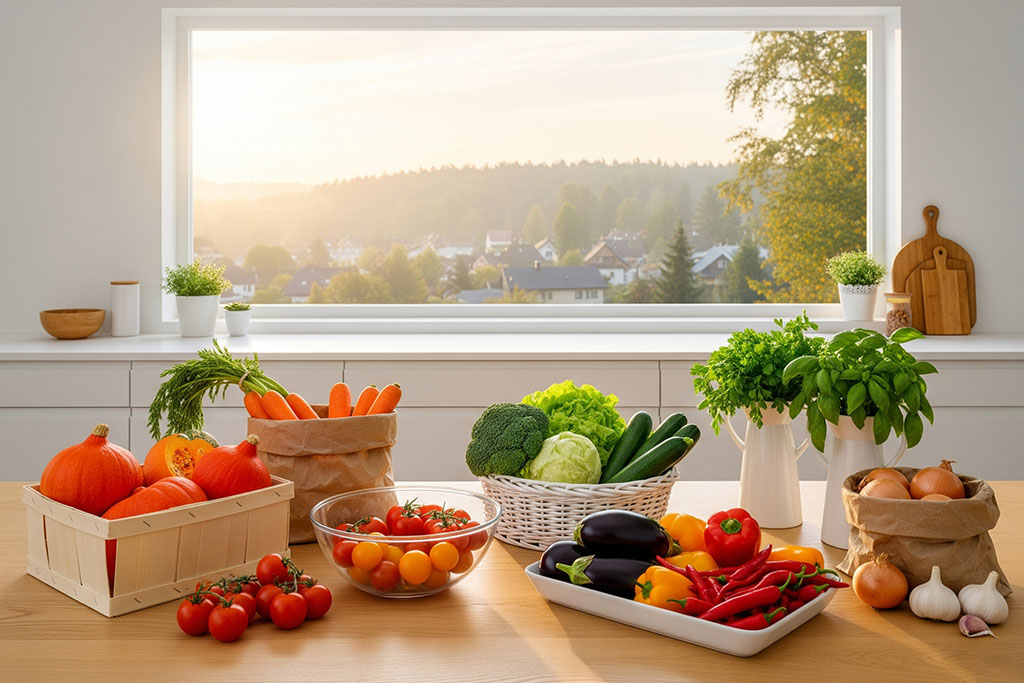
Vegetables are also a source of natural sugars, though in much smaller quantities than fruit. The types of sugar they contain vary by species, consisting mainly of glucose, fructose, and sucrose. Some vegetables also contain complex sugars, such as starch. However, aside from starchy vegetables, their sugar concentration generally remains low.
The sugar content of vegetables varies considerably depending on the type of vegetable, its level of ripeness, and how it is prepared. In some cases, cooking can actually concentrate the sugars they contain. In general, the sweetest vegetables are root vegetables, such as carrots, beets, and onions. Starchy vegetables, such as potatoes and sweet potatoes, are a separate case: their high starch content makes them particularly concentrated in complex sugars, placing them in the carbohydrate category. Certain fruit vegetables, such as tomatoes and squash, can also contain more sugar than most common vegetables. Conversely, the lowest-sugar vegetables are leafy greens and flower vegetables, such as spinach, leafy salads, and broccoli.
Starch, which is broken down into sugar during digestion, is found in particularly large amounts in potatoes. During the digestive process, it is converted into glucose, causing blood sugar levels – known as glycemia – to rise. Excessive consumption of starch-rich foods can therefore trigger significant blood sugar spikes. These high-carbohydrate vegetables generally contain much less fiber than other vegetables, which limits their ability to slow down glucose absorption and makes them more problematic from a metabolic standpoint.
The fiber found in vegetables is also a type of complex carbohydrate. It consists of sugar chains so complex that they are not absorbed by the body and therefore do not supply sugar. As a general rule, the fiber content – meaning non-assimilable sugar – is much higher than the amount of assimilable sugars (simple sugars and starch). This is the exact opposite of fruit and makes all the difference in how vegetables affect our health. Fiber also increases the feeling of satiety, which can help regulate appetite and prevent excessive calorie intake.
Here are a few examples from CIQUAL, France’s official nutritional database, to illustrate the differences between vegetable types (values per 100 g of vegetables).
Leafy Vegetables
They generally contain no starch and very little simple sugar.
- Lettuce (green salad): 0.4 g of fructose and 0.33 g of glucose, yet 1.2 g of fiber.
- Spinach (cooked): less than 0.5 g of sugar, yet 2.7 g of fiber.
Green Vegetables
They may belong to the fruit-vegetable or flower-vegetable families.
- Green beans (frozen, cooked): contain 1.23 g of simple sugars, 3.61 g of starch, and 3.3 g of fiber.
- Green peas: 1.8 g of simple sugars, mainly sucrose, 2.8 g of starch, and 5.8 g of fiber.
- Broccoli: less than 0.5 g of each individual sugar, totaling 1.1 g of simple sugars, similarly less than 0.5 g of starch, and a modest amount of fiber at 1.5 g.
Vegetables That Are Fruits
- Tomatoes: tomatoes contain more fructose (1.4 g) and glucose (1.08 g) than fiber (1.2 g), with no starch.
- Squash (pumpkins, butternut squash, zucchini, melons): they contain an average of 1.6 g of simple sugars, including fructose (0.9 g) and glucose (0.7 g), with little fiber (1.3 g) and starch (from less than 0.5 g to around 2 g depending on the variety). Note that certain vegetables in this cucurbit family, such as zucchini, contain less sugar than others, such as butternut squash.
Root Vegetables
These are usually the sweetest, sometimes even including surprising ones like onions.
- Carrots (raw): carrots contain nearly 8 g of total carbohydrates, 0.9 g of fructose, 1.1 g of glucose, and 4 g of sucrose, little starch (0.4 g), and 2.7 g of fiber. Depending on how they are cooked, carrots retain roughly these same characteristics, especially when steamed. Otherwise, their sugar content decreases with cooking.
- Turnips (cooked): an average of 1.3 g of fructose and 1.6 g of glucose, less than 0.5 g of sucrose and starch, and 2.2 g of dietary fiber.
- Beets: 0.6 g of fructose, 0.8 g of glucose, 5.3 g of sucrose, little starch (0.35 g), and 2.5 g of fiber.
- Onions (raw): 1.7 g of fructose, 1.6 g of glucose, 1.5 g of sucrose, less than 0.5 g of starch, and 1.7 g of fiber. They retain roughly the same amounts of sugar once cooked.
Starchy Vegetables
- Potatoes: cooked potatoes contain about 17.2 g of total carbohydrates, most of which is starch (14.5 g), along with a small amount of simple sugars (around 1 g) and 1.96 g of fiber.
- Sweet potatoes: 6.11 g of simple sugars (mainly maltose), 6.14 g of starch, and 2.9 g of fiber.
Although vegetables contain natural sugars, they generally have a lower glycemic index than fruit. Eating them causes a slower, more moderate rise in blood sugar compared to fruit, largely thanks to their high fiber content, which slows down carbohydrate digestion. They also offer many nutritional benefits such as vitamins and minerals, making them healthy, essential foods in a balanced low-carbohydrate diet.