
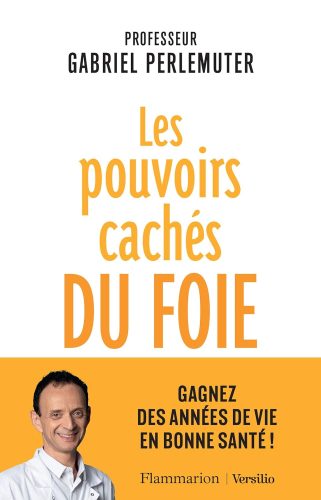
What if your liver were much more than a simple filtration organ? Often neglected, or even mistreated by our modern lifestyle, the liver is in fact the grand conductor of our health. In Les pouvoirs cachés du foie (The Hidden Powers of the Liver), Dr. Gabriel Perlemuter, a renowned hepatologist and researcher, takes us on a fascinating exploration of this little-known yet essential organ.
A true energy and detoxification powerhouse, the liver influences our weight, our immunity, our mood, and even our longevity. But how can we take care of it and keep it from becoming overloaded?
This book about the liver seems very worthwhile to learn more about an organ that is absolutely vital to us. Easy to read, the author is genuinely pedagogical, explaining things simply and clearly, backed by very specific examples for optimal understanding.
However, certain points deserve nuance, as in any book. In this article, we present our analysis.
1 – The liver, a very discreet hero
Did you know that the liver is involved in more than 500 vital functions? Far beyond its detoxification role, it regulates our metabolism, stores essential vitamins, produces hormones, and ensures the digestion of fats. Likewise, did you know that the liver is capable of regenerating itself like a phoenix? This is a unique property in our body, although it has its limits when we abuse alcohol or follow an unbalanced diet. Dr. Perlemuter takes us behind the scenes of this “factory of the body”. We learn, for example, that women have an advantage over men until menopause thanks to the estrogens they produce and their protective effects, which he explains. However, he also details how estrogens have their dark side. Dr. Perlemuter explores the rhythm of the liver and the consequences when this tireless organ is overworked. He notably explains that the liver is the only organ that metabolizes the fructose found in foods, including table sugar and fruit. He details the consequences of our modern high-sugar diet and how our liver, consumed by this continuous workload, cannot carry out its other essential functions. He makes us aware of the very concerning health consequences of an overloaded liver trying as best it can to adapt to our habits.2 – When things go wrong with the liver
We hear more and more regularly about non-alcoholic fatty liver disease (NASH), sometimes also called “soda disease” or “fatty liver” disease. Today, this condition is estimated to affect nearly one in three people in France. It often develops without any visible symptoms. The doctor explains how this pathology, characterized by an excessive accumulation of fat in liver cells, is no longer confined to heavy alcohol drinkers. He points to our modern diet (excess sugar, sodas, ultra-processed foods…) and explains how necessary it is to screen for this increasingly common condition and how to do so. He details the stages from its onset to the development of a variety of pathologies threatening our health, all the way to liver cancer. Dr. Perlemuter sounds the alarm on these risks, from the most benign to the most serious. However, according to him, it is not inevitable, and he explains how to regenerate our liver by following a few rules. While the link between fatty liver and chronic diseases is well established, we think it is important to caution that the speed at which a liver can regain optimal function varies from one individual to another.3 – The diet that heals and regenerates the liver
Do you need to follow a strict diet to protect your liver? Not at all! According to Dr. Perlemuter, who claims to offer a simple and effective dietary guide to naturally detoxify this vital organ, a few habits may be enough. Dr. Perlemuter lists the foods to prioritize and, second, those to avoid. This section is unfortunately the one that seems the least accomplished to us: this physician’s advice is sometimes unoriginal, difficult to apply, or even outdated. There are also a few errors. For instance, saying that if cholesterol levels are slightly above normal, one should avoid eating more than 2 eggs per week. Today, we know that dietary cholesterol has virtually no impact on blood cholesterol: indeed, our liver produces at least 80% of the cholesterol we need, because it is an absolutely vital molecule, and if we eat cholesterol-rich foods, our liver will simply produce less of it. Similarly, he advises avoiding saturated fatty acids on the grounds that they promote cardiovascular disease, and recommends polyunsaturated fatty acids or vegetable oils instead, even though those are genuinely problematic because they are already oxidized when purchased. He also suggests plant proteins as a substitute for animal proteins, such as legumes. Yet the amount of protein contained in legumes (lentils, chickpeas, etc.) is three times lower than in meat. Cooked or sprouted lentils contain 8% protein, compared to 26 to 30% for meat. Furthermore, meat contains no antinutrients, unlike seeds and legumes. Another notable error: according to Dr. Perlemuter, eating slowly makes us swallow less air and leads to less gastroesophageal reflux. To improve digestion, the author recommends taking baking soda (bicarbonate). Yet to digest properly, we need acidity, so one should take vinegar instead. Reflux issues are partly linked to a lack of acidity: the pH must drop low enough for the sphincter at the top of the stomach to close and prevent reflux. On the other hand, we should pay attention to poor food combinations, such as eating fruit at the end of a meal, which this doctor, like many others, unfortunately recommends in this section on the argument that fruit contains vitamins. We feel it is important to remind readers that the amount of vitamins in fruit is tiny, whereas it contains large amounts of sucrose, glucose, and fructose… sugars that are harmful in many respects in our diet. Some of the advice given here seems rather unrealistic: for example, the doctor suggests continuing to eat French fries from time to time while limiting yourself to 100 g per meal, which seems hard to stick to. In the same way, he advises not exceeding 150 g of cooked rice or cooked pasta per meal. Some people may manage to limit themselves, but for others it will not be possible: it would be better to rethink how they are prepared in order to limit the amount eaten more easily. Dr. Perlemuter expresses a rather negative opinion of the ketogenic diet, without being an expert in the field. He addresses the topic of intermittent fasting by referring to studies conducted on people observing Ramadan, two practices that actually have little in common, particularly in terms of duration. It is absurd to use Ramadan as an example, since people can only eat at night, which is the natural period of digestive rest. By contrast, intermittent fasting focused on an extended overnight fasting window will have very different effects in terms of body regeneration. According to him, intermittent fasting could harm our gut microbiota and impair bacterial diversity, on the grounds that we must constantly feed our gut microbiota with fiber. To counter this, one can note that throughout human history, over the last few million years, humans experienced far more periods of scarcity than of abundance, so our microbiota may be much better adapted to fasting than he claims.4 – Which medicine can save your liver?
In conclusion, what causes liver inflammation? Several causes are possible:- alcohol consumption;
- certain viruses;
- medications;
- however, the leading cause of liver inflammation in the West remains a diet too high in sugar and fats.
Why read Les pouvoirs cachés du foie ?
This book succeeds in helping readers better understand the fundamental role of the liver and adopt new habits to optimize its health. It could directly apply to you if:- Are you often tired? Your liver might be overloaded.
- Do you want to lose weight sustainably? Understanding the role of the liver is essential.
- Do you suffer from digestive or inflammatory issues? Your liver may need a helping hand!

No Comment! Be the first one.