• FrançaisFR
  • EnglishEN
  • DeutschDE
DJFORM Information Blog

Type and hit Enter to search

  • Home
  • Our Supplement Courses
    • Seasonal Supplement Courses
      • Spring Supplement Courses
      • Summer Supplement Courses
      • Autumn Supplement Courses
      • Winter Supplement Courses
    • Supplement Courses for Nutritional Deficiencies
  • Nutrition
    • Our Nutritional Principles
    • Processed and Industrial Foods
    • Organic vs. Conventional Food
    • Nutritional Balance
  • Our Brand
    • DJFORM Food Supplements
    • DJFORM Food Supplement Formulas
    • Capsule Quality and Selection
    • Our Story
    • Our Packaging: Ecology & Recycling…
  • Our Reading List
  • DJFORM Shop
  • Contact
Les oeufs, attention à la qualité
Animal Proteins

Eggs: Pay Close Attention to Quality

10 September 2025
1 Views
0 Comments

History and Domestication of the Chicken

The domestic chicken (Gallus gallus domesticus) is descended from the red junglefowl, a wild species native to the forest edges of Southeast Asia, specifically the regions corresponding today to Thailand, Myanmar, Vietnam, and Malaysia. Characterized by open woodlands and transitional landscapes between dense forests and open habitats, these areas offer a wide variety of food sources, which played a major role in shaping the wild chicken’s omnivorous behavior. It feeds on wild seeds, berries, fresh grasses, insects, small reptiles, worms, and even small rodents, making it a highly adaptable species.

The domestication of the chicken dates back to roughly 8,000 BCE, although the most precise archaeological evidence points to domestication 6,000 to 8,000 years ago in that same region of Southeast Asia. This process likely began with the capture and gradual taming of these wild birds, which were selectively bred in particular for their ability to lay eggs and provide meat.

The primary reason for this domestication was access to a renewable source of protein that was easier to manage than hunting or fishing and did not require large expanses of farmland or intensive livestock operations.

Thanks to its omnivorous diet and ability to eat food scraps, the chicken proved very easy to raise alongside humans.

Over the millennia, humans selectively bred different chicken breeds to improve egg or meat productivity, as well as for cultural and aesthetic reasons. Trade networks, particularly along the Silk Road, spread the domestic chicken to India, China, the Middle East, and later to Europe and Africa, eventually leading to its global presence today.

In the wild and in semi-wild conditions, the chicken remains a highly opportunistic species, alternating between a primarily plant-based diet (seeds, berries, fresh greens) and animal-based foods (insects, worms, small reptiles). This dietary diversity is essential to the nutritional quality of the eggs it produces.

How Farming Methods Affect Egg Quality

The nutritional quality of eggs depends closely on farming conditions and, above all, on what the hens are fed.

A hen raised in semi-free-range conditions, whether in a family backyard or on a farm that genuinely respects its welfare, can fully express its natural behavior, resulting in eggs of exceptional quality.

In an outdoor environment rich enough in biodiversity, a hen spends most of its day scratching the ground in search of worms, insects, small reptiles, and sometimes even small rodents. It rounds out this animal-protein diet with a wide variety of plant foods: fresh grasses, wild seeds, berries, and plant-based kitchen scraps such as vegetable peelings. This diverse, natural diet is essential to ensure a balanced supply of nutrients. A moderate addition of grains, especially when corn is excluded, helps lower omega-6 content while significantly increasing the proportion of omega-3 fatty acids in the eggs, which supports a healthier balance of essential fatty acids in our diet.

This “old-fashioned” way of raising hens, traditionally practiced by many families for their own consumption, gives eggs remarkable nutritional richness. They contain more essential fatty acids, particularly omega-3s, along with fat-soluble vitamins (A, D, E), essential minerals, and natural antioxidants, all contributing to better overall health.

Moreover, this small-scale, semi-free-range backyard model has a far lower ecological footprint than industrial farming systems. It supports more sustainable, respectful stewardship of natural resources and significantly reduces dependence on intensive grain crops that cause pollution and destroy natural habitats.

Of course, modern lifestyles, even in rural areas, no longer make it as easy as it was for our grandparents or great-grandparents to keep a few hens to meet a family’s annual demand for fresh eggs. As a result, only a minority of consumers have regular access to eggs of this caliber. Meeting high demand therefore requires larger-scale poultry farms, even though their conditions and practices vary enormously.

Ecological and Ethical Limits of Industrial Egg Farming

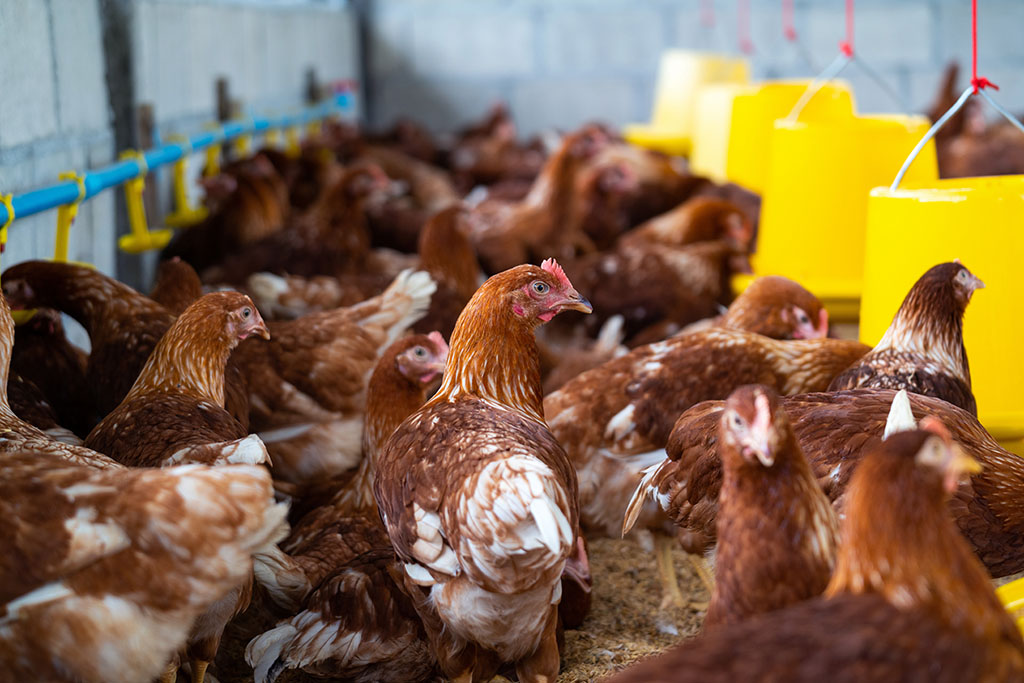
In stark contrast to these ideal conditions, laying hens in industrial operations frequently endure intolerable living conditions. Virtually all caged or intensive farming systems are unacceptable from an animal welfare standpoint: extreme confinement, aggressive genetic selection for high-volume laying at the expense of health, rapid physical exhaustion after just a year and a half, and the systematic culling of male chicks at birth.

Even so-called “free-range” farms do not always guarantee decent conditions: outdoor areas are often too small to supply hens with the insects, worms, and plants they need for a naturally balanced diet. This “label” can sometimes amount to little more than greenwashing, misleading consumers about the reality of animal welfare.

Finally, egg production remains heavily reliant on grain crops and industrial plant proteins, such as soy, which carry a heavy ecological toll (deforestation, soil depletion, pollution). In addition, hens are easy targets for predators, making it difficult to raise them completely free-roaming across large open spaces.

Understanding Egg Labels and Farming Codes

To help consumers make an informed choice, eggs are stamped with a code indicating their farming method.
Every commercially sold egg carries a code starting with a digit from 0 to 3, indicating how the laying hens are raised. This code provides an initial clue about the animals’ living conditions, even though it does not always reflect reality on the ground.

  • 0: Organic egg:
    The hens enjoy the greatest relative freedom: they have access to a vegetated outdoor range, their feed is certified organic (GMO-free, with no synthetic pesticides), and medical treatments are restricted. Stocking density is also lower than in conventional farming, allowing them to express more of their natural behaviors.
  • 1: Free-range egg:
    The hens have outdoor access, but the space is often small or poorly maintained, and sometimes open for only a few hours a day. Their feed is not organic, and farming practices remain industrial in most cases. This system is often marketed as ethical, yet in practice it does not guarantee genuine animal welfare.
  • 2: Barn-laid (cage-free indoor) egg:
    The hens are not kept in cages, but they live inside an enclosed building with no outdoor access. Stocking density is generally very high, causing stress, aggression, and often poor hygiene. This farming method remains widespread in industrial supply chains.
  • 3: Caged hen egg:
    This is the most intensive and cruelest farming system. Hens are confined in wire cages, often without natural light, with severely restricted living space (less than a sheet of A4 paper per bird). They can neither scratch the ground, perch, nor properly spread their wings. This system is still widely used because it enables low-cost production at the price of extreme animal suffering.

These codes offer a useful starting point, yet it remains essential to favor local producers committed to more respectful practices that deliver both higher nutritional quality and somewhat less undignified living conditions for the hens. That said, genuine animal welfare is never truly achieved in today’s commercial farming systems: regulations governing stocking density, measured in hens per square meter, remain far too lenient, even on so-called “free-range” or “organic” farms. In reality, consumers do not have access to farming that truly respects living creatures; they can only choose between different compromises and settle for what seems like the lesser evil.

What Laying Hens Eat Across All Farming Systems

Regardless of the farming method (industrial, free-range, Label Rouge, organic, or even some so-called “farmstead” operations), the diet of laying hens almost always rests on the same foundation: a blend of grains (typically corn, wheat, and barley) and plant proteins (primarily soy, sometimes rapeseed or sunflower meal). This standardized diet is favored because it is easy to distribute, inexpensive, and effective at maximizing egg laying, but it comes with serious drawbacks.

This kind of feed is deeply unbalanced for an omnivorous animal like the chicken, which in an appropriate natural habitat eats a broad variety of insects, small animals, wild seeds, and fresh greens. In captivity, the overwhelming dominance of grains creates an excess of carbohydrates in its diet, undermining both the hen’s health and the nutritional quality of its eggs.

Heavy reliance on grains, plant proteins, and oilseed meals severely skews the omega-6 to omega-3 ratio in eggs. Within an overall modern diet already overloaded with omega-6 fatty acids and vegetable oils, this imbalance is harmful to human health, as excessive omega-6 intake promotes chronic inflammation, especially alongside a diet already high in industrial vegetable oils.

Furthermore, corn is a high-sugar, starch-rich grain that poses health problems for hens. This carbohydrate load promotes excess fat accumulation, metabolic imbalances, and a gradual decline in overall health, particularly in intensive operations where physical movement is restricted. A hen fed primarily on corn will lay eggs that are poorer in micronutrients and have a degraded fatty-acid profile, diminishing the nutritional quality of the final product.

Finally, from an environmental perspective, corn often comes from intensive monocultures that require massive amounts of water, nitrogen fertilizers, and pesticides, and are generally tied to agricultural practices that degrade soils, biodiversity, and natural resources.

Even in organic supply chains, where GMOs and certain synthetic chemicals are banned, the dietary foundation remains unchanged: large-scale grains and legumes, with far too little fresh, living, or animal-derived food. Organic farming standards require outdoor access and organically grown feed ingredients, but they do not guarantee a truly varied diet tailored to the animal’s natural biological needs.

Consequently, as long as hen diets remain anchored in these industrial feed models, even eggs from more ethical or certified organic systems can suffer from nutritional depletion compared to eggs laid by hens that forage naturally and live in genuine freedom.

Conclusion: Eggs vs. Red Meat

While top-quality eggs are an excellent food, they cannot fully replace red meat from grass-fed herbivores such as beef or lamb. These meats provide not only complete proteins, but also a broad spectrum of micronutrients, energy density, and a fatty-acid profile well suited to human biology, while contributing positively to the ecological stewardship of grasslands.

Although eggs remain nutritionally worthwhile, significant ethical and environmental concerns argue for moderating their consumption. The egg production industry needs a fundamental overhaul. That shift will only happen if overall demand declines in favor of genuine quality that respects both animals and the environment. Eating eggs as a substitute for meat is therefore not a sound solution.

Tags:

Animal ProteinsEggs

More articles

Les œufs
Previous

Eggs

Les oeufs - intolérance alimentaire
Next

Eggs – Food Intolerance

Next
Les oeufs - intolérance alimentaire
12 September 2025

Eggs – Food Intolerance

Previous
10 September 2025

Eggs

Les œufs

No Comment! Be the first one.

Leave a Reply Cancel reply

Your email address will not be published. Required fields are marked *

DJFORM natural food supplements banner
  • About Us

Copyright © 2026 DJFORM

  • Home
  • Nutrition: Our Advice
    • Nutritional Principles
    • Processed Foods
    • Organic Food
    • Nutritional Balance
  • Seasonal Supplement Courses
    • Spring Supplement Courses
    • Summer Supplement Courses
    • Autumn Supplement Courses
    • Winter Supplement Courses
  • Our Brand
    • DJFORM Supplements
    • DJFORM Formulas
    • DJFORM Quality
    • About Us
    • Our Eco Packaging
  • Our Reading List
  • DJFORM Shop
  • Contact