Between Grass-Fed Farming and Industrial Meat Production from Dairy Cows
In France, a large majority of cattle raised specifically for meat are primarily grass-fed. This often-overlooked fact is a major advantage for the nutritional and ecological quality of French beef. Ruminants such as steers and beef-breed cows (Charolais, Limousin, Aubrac, Salers, etc.) are traditionally raised in extensive grazing systems on permanent or temporary pastures. In winter, their diet generally consists of hay or grass preserved as wrapped haylage, which respects their natural physiology and maintains the quality of their rumen.
The rumen is the first and main compartment of a ruminant's stomach. It is a large fermentation vat where billions of microorganisms break down plant fibers (such as cellulose) to produce essential nutrients. It enables ruminants to digest grass, hay, and other fibrous plants through microbial fermentation. However, the rumen is not designed to efficiently digest starch-rich grains. A diet too high in grains can disrupt this flora, cause ruminal acidosis, and lead to health problems in the cow. That is why prioritizing a diet based on grass and hay is essential for the animal's health and the quality of its meat.
The meat from these animals, especially when they are raised exclusively on grass without grain supplementation, is exceptionally rich in nutrients.
It offers a healthy balance of omega-3 and omega-6 fatty acids, a high density of fat-soluble vitamins, and a valuable antioxidant content. It also stands out for its flavor, its tenderness, and the quality of its fat, which is firm and white.
The “organic farming” label is an additional indicator of quality. In particular, it guarantees a GMO-free diet, a high proportion of pasture grazing, and the absence of synthetic fertilizers and routine antibiotic treatments. However, even outside the organic label, many French farmers practice respectful livestock farming, feeding their cattle solely on grass and hay, without grains or industrial feed supplements. These are the farmers you should prioritize.
Lower-Quality Beef: Meat from Dairy Cows
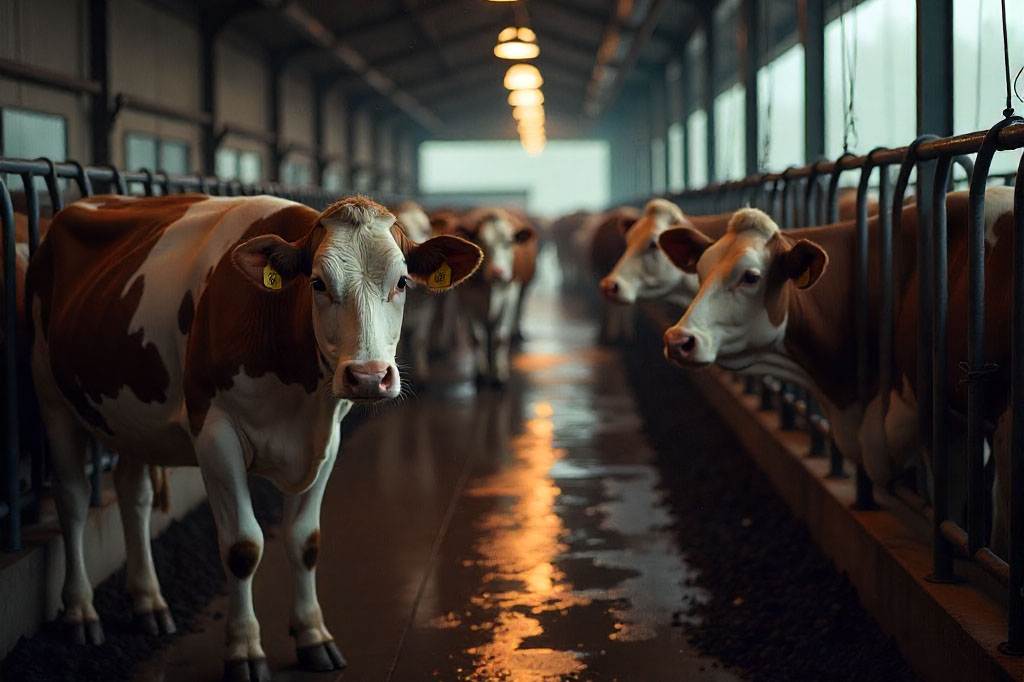
Unlike most cattle raised for beef, a large share of the beef consumed in France comes from so-called “cull” dairy cows. These animals, mainly Holsteins (Prim’Holstein), are selectively bred to produce maximum milk rather than high-quality meat. Once their milk output declines, usually after a few years of intensive production, they are sent to slaughter. Their meat is then used in low-cost products, particularly ground beef patties, supermarket meats, and processed meals.
Their diet is designed entirely to maximize milk production, often at the expense of their health. It relies on high-energy, high-protein rations made up of corn silage, beet pulp, grains such as grain corn or barley, soybean, rapeseed, or sunflower meal, and sometimes vegetable or animal fats. These rations are supplemented with minerals and additives to stimulate lactation. Grazing, if it exists at all, is marginal. Most of the time, the cows are kept indoors in barns and fed at the trough in an intensive system.
This highly concentrated diet disrupts their natural ruminant metabolism. It frequently causes digestive disorders such as ruminal acidosis, udder inflammations known as mastitis, lameness, and nutritional deficiencies. These conditions require veterinary interventions, particularly antibiotics. These cows live in a state of chronic exhaustion driven by continuous milk production, which deeply weakens their bodies.
Meat from dairy cows fed primarily on grains often has an inferior nutritional profile and lower sensory quality compared to grass-fed beef.
Indeed, a diet high in grains and low in grass alters the fatty acid profile of the fat, increasing omega-6 levels while reducing omega-3s, which creates an imbalance that is less favorable for health. In addition, chemical pollutants such as pesticides, cadmium-contaminated fertilizers, and other toxic substances tend to accumulate in animal fat, which affects the safety and wholesomeness of the meat.
Moreover, dairy cow meat is often more fibrous, less flavorful, and lower in essential nutrients. Its color and texture differ noticeably from grass-fed beef, and its fat is often softer and yellowish, reflecting lower overall quality. These factors underscore the importance of choosing meat from pasture-raised, hay-fed ruminants, especially from organic farms, to enjoy beef of superior quality both nutritionally and in terms of taste.
Nutritional and Ecological Issues
From a nutritional standpoint, the difference between these two types of meat is far from trivial. Beef from animals fed exclusively on grass is denser in micronutrients, better balanced in fatty acids, and often contains fewer medication residues. Conversely, meat from dairy cows is not only less beneficial for human health, it also comes from exhausted animals whose metabolism has been profoundly altered.
From an ecological standpoint, it is worth emphasizing that grass-fed cattle farming actively contributes to maintaining grasslands, soil fertility, rural biodiversity, and carbon storage. When properly managed, pasture-based farming is one of the rare agricultural models capable of combining food production with respect for ecological balance.
By contrast, intensive dairy production relies on massive quantities of grains, soy, and oilseeds that are often imported, carrying a heavy environmental footprint. It contributes to deforestation, soil depletion, groundwater pollution from excess nitrogen, and biodiversity loss.
Some argue that eating meat from dairy cows is more environmentally friendly, which is partly true, but the real problem lies elsewhere. We do not need to consume dairy products in the excessive quantities seen today. This demand drives the mass farming of animals under conditions that are often unacceptable. Without this excessive consumption of dairy products, there would be no need to rely on meat from exhausted cows of inferior quality.
Conclusion
Choosing quality beef is therefore much more than a health, taste, or budget decision. It is a nutritional, ethical, and ecological act. It is essential to support farmers who raise their cattle exclusively on grass and hay, by favoring short supply chains, trustworthy labels, or better yet, buying directly from a producer you know. Conversely, we must stay aware that cheap meat, especially from cull dairy cows, offers neither the same nutritional qualities nor the same environmental or food-safety guarantees.