• FrançaisFR
  • EnglishEN
  • DeutschDE
DJFORM Information Blog

Type and hit Enter to search

  • Home
  • Our Supplement Courses
    • Seasonal Supplement Courses
      • Spring Supplement Courses
      • Summer Supplement Courses
      • Autumn Supplement Courses
      • Winter Supplement Courses
    • Supplement Courses for Nutritional Deficiencies
  • Nutrition
    • Our Nutritional Principles
    • Processed and Industrial Foods
    • Organic vs. Conventional Food
    • Nutritional Balance
  • Our Brand
    • DJFORM Food Supplements
    • DJFORM Food Supplement Formulas
    • Capsule Quality and Selection
    • Our Story
    • Our Packaging: Ecology & Recycling…
  • Our Reading List
  • DJFORM Shop
  • Contact
Sugar

Sugars Concentrated Through Natural or Industrial Processes

23 July 2025
2 Views
0 Comments

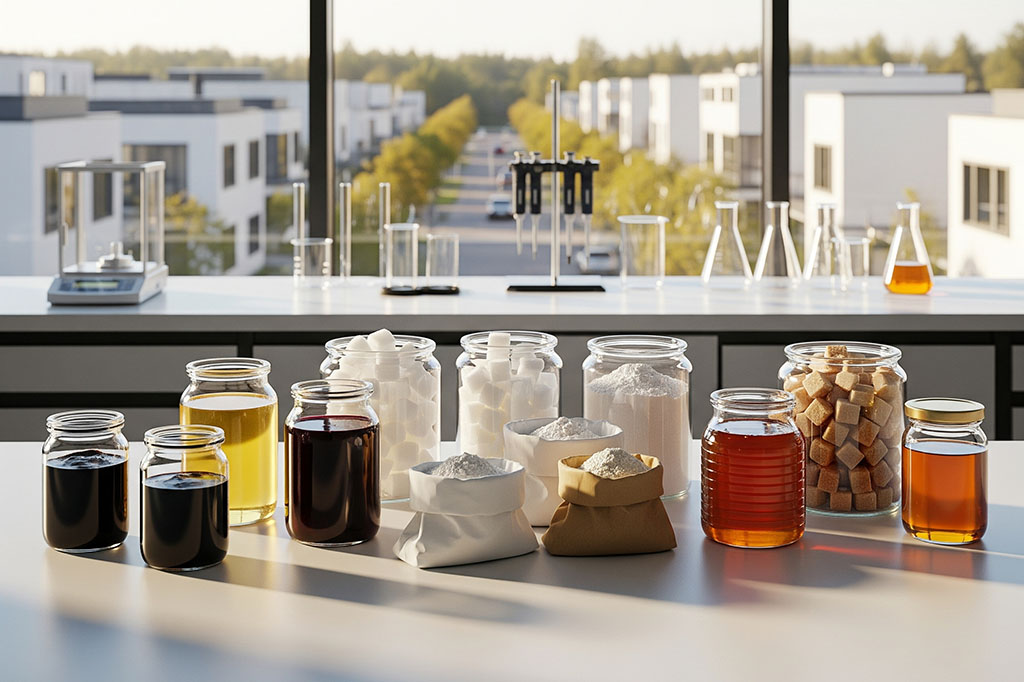
Processed sugars are sugars extracted from natural sources, such as sugarcane, sugar beets, or corn, and then refined or modified into simpler or more concentrated forms, such as sucrose, glucose, fructose, or blends of these. These processes can involve extraction, refining, and sometimes chemical modifications to produce concentrated sweeteners. They are then either sold directly for us to add to our own recipes and desserts, or added to foods, particularly beverages, common sweet products like jams, fruit compotes, and fruit syrups, and, more surprisingly, savory supermarket products.

These sugars can be of natural or industrial origin, yet because of their concentration and extraction methods, they can no longer be considered truly natural. They are processed, or even ultra-processed, sugars. We consume them in various forms, sometimes hidden in our diet without even realizing it, such as sugar added to canned vegetables, deli meats, and ready-made meals. Without this heavy addition of sugar, almost all industrial foods would simply taste too bland and unappetizing. Sugar and salt are used to improve the flavor of products made from low-cost, poor-quality raw ingredients and to preserve them.

Pure industrial sucrose, our well-known table sugar, was long the most widely used form of sugar in home kitchens and the food industry. It comes in every form (cubes, granulated, or syrup) and color (from pure white to brown). Over the past few decades, however, processed and ultra-processed sugars have arrived on the scene: the more natural ones have made their way into our kitchens, while a large share of them hide in industrial foods under obscure names, from high-fructose corn syrup (HFCS) to glucose and glucose syrups, all the way to sweeteners and sugar alcohols (polyols). Stay alert!

Here is a non-exhaustive list of names under which sugar can hide in food products, from the most natural to the most heavily modified:

  • Concentrated Fruit Juice
  • Barley Malt
  • Molasses
  • Honey
  • Agave Syrup
  • Malt Syrup
  • Rice Syrup
  • Dextrose
  • Fructose
  • Galactose
  • Glucose
  • Lactose
  • Maltose
  • Sucrose / Saccharose
  • Xylose
  • Dextrin
  • Ethyl Maltol
  • Diastatic Malt
  • Maltodextrin
  • Glucose-Fructose Syrup
  • High-Fructose Corn Syrup (HFCS)
  • Invert Sugar

Be careful: natural sugar does not mean harmless!

Although they are often perceived as healthy, or at least healthier because they are “natural,” naturally derived sugars are still sugars whose composition and intake must both be monitored. The impression that a sugar is natural can falsely lead us to believe we can consume more of it safely. Yet any excess of sugar or carbohydrates, regardless of its source or quality, will have the same effects on health. For example, whether fructose comes from a piece of fruit or an industrial process, the body has to metabolize it in the exact same way, and its detrimental, even harmful, effects will be identical.

Processed sugars of natural origin include:

  • Cane sugar: extracted from sugarcane, a tropical plant that is crushed to extract its juice, which is then heated through an industrial process to concentrate the sugar and subsequently cooled to crystallize it.
  • Beet sugar: extracted from sugar beets, a plant grown in temperate regions. It is obtained through the same industrial process, which consists of extracting sucrose from sugar beet juice by heating it and then crystallizing it as it cools.

Both cane sugar and beet sugar consist of 99% to 100% sucrose (that is, 50% glucose and 50% fructose bound together).

  • Honey: naturally produced by bees from flower nectar mixed with an enzyme called invertase. Invertase breaks down the sugar in nectar, sucrose, into two simple sugars: glucose (31% to 35%) and fructose (38% to 40%). Honey also contains traces of other sugars, including complex sugars, as well as water. Natural honey is harvested at maturity, extracted, and jarred by beekeepers. It preserves itself naturally thanks to the work of the bees, requiring no processing or additives. Be careful, however: many products labeled “honey” on supermarket shelves are not 100% honey, and some contain no real honey at all.
  • Maple syrup: made from the sugar maple, a North American tree. Maple sap is harvested by tapping the tree and then heated to evaporate the water from the sap and concentrate the sugar. It consists mainly of sucrose (half glucose, half fructose), along with small amounts of other sugars and water.
  • Maltose: it can occur naturally in certain foods such as sprouted grains, bread, beer, malt, or wine, or be produced industrially from wheat or corn starch. Its composition is 90% to 95% pure maltose, with trace amounts of other sugars.
  • Agave syrup: a natural liquid sweetener produced from the sap of the agave, a succulent plant native to Mexico. Agave sap is harvested by making an incision in the plant’s stem, then filtered and cooked at low temperature to concentrate the sugars and reduce its water content. It is composed mainly of fructose (70% to 90%) and glucose (10% to 30%), with trace amounts of sucrose. Despite the craze around this sweetener – which is mostly fructose and therefore has a low glycemic index, avoiding insulin spikes – it is important to remember that fructose is metabolized exclusively by the liver, making it a dangerous sugar for this organ.
  • Coconut sugar, also known as coconut blossom sugar: an unrefined sugar made from the sap of coconut palm blossoms. It is typically dark brown or golden and has a sweet, malty flavor. It consists mainly of sucrose (70% to 80%), along with simple glucose and fructose molecules, plus small amounts of fiber and minerals.
  • Rice syrup: it has the major advantage of containing no fructose at all. It is made up of roughly half maltose (45% to 50%), followed by glucose (25% to 30%), maltotriose (10% to 15%), and a few other complex sugars.

Ultra-processed sugars in industrial foods…

Ultra-processed concentrated sugars are added sugars found in large amounts in foods that are themselves ultra-processed. They are frequently added to foods to improve their taste, texture, or shelf life.
The high concentration of sugar, and especially fructose, in ultra-processed sugars puts our health at risk. Table sugars are already problematic, but these industrial sugars, produced through increasingly chemical processes and ever more refining steps, should be avoided at all costs! Be sure to read food labels carefully whenever you shop to protect yourself!

Processed sugars of industrial origin include:

  • Table sugar, white or brown:
    1. White sugar: obtained by refining raw sugar extracted from sugarcane or sugar beets. Refining is a process that strips away the sugar’s natural nutrients, such as vitamins, minerals, and fiber. This makes the sugar more calorie-dense and less nutritious. This refined sugar is made up of 50% glucose and 50% fructose. The glucose it contains triggers a rapid, almost immediate spike in blood sugar levels. Because of its high concentration, the amount consumed quickly exceeds our cells’ ability to use it, so it gets stored as fat in our adipose tissue. As for fructose, it must also be stored in the liver, the only organ capable of metabolizing it. As a result, this concentrated intake of glucose and fructose, especially when consumed regularly, gradually adds fat to both our body and our liver.
    2. Brown sugar: obtained by crystallizing sugar syrup or molasses, an intermediate byproduct of white sugar manufacturing that gives it its natural color. Be careful, though: many so-called “brown” sugars, such as light brown sugar, are actually white sugars that have been recolored by adding molasses or coloring agents.
  • High-fructose corn syrup (HFCS), also known as glucose-fructose syrup (GFS) or isoglucose, is an artificial sweetener made from cornstarch or from the starch of several grains, particularly corn and wheat. Its name varies around the world and depending on its fructose content: over 42%, over 55%, or over 90%, among others. It is used in a very wide variety of foods and beverages because it is cheap to produce, drives consumer cravings, and acts as a preservative. It is made through an enzymatic process that converts cornstarch into glucose and fructose, which are then blended to produce HFCS. HFCS is a controversial sweetener whose excessive consumption is linked to several serious health problems, including obesity, type 2 diabetes, and heart disease. Some experts argue that it is a major driver of the obesity epidemic and other health conditions (especially diabetes). Considering that 17% of the French population was already living with obesity in 2020, it becomes clear that this is a sugar to avoid completely!
  • Glucose syrup is a clear, viscous liquid usually made from grains (corn, wheat, rice, as well as potatoes). It is commonly used in candies, beverages, cookies, pastries, and breakfast cereals because it prevents sugar from crystallizing and improves texture. It consists primarily of glucose (up to 90%).
  • Fructose syrup is a clear, viscous liquid made from cornstarch or glucose syrup. It is often used in sweetened beverages and sodas, processed foods, and desserts. It contains fructose (42%, 55%, or even 90%) and glucose.

Sweeteners:

  • Invert cane syrup is a liquid sweetener made from cane sugar. It is produced by hydrolyzing sucrose, a chemical reaction called inversion that breaks it down into free glucose and fructose. Invert cane syrup has greater sweetening power than cane sugar, is more heat-stable, and helps keep foods moist, making it ideal for cooking and baking, candies, confections, and “diet” products.
  • Honey can also be industrial. This fake honey is made from simple sugars, such as glucose and fructose syrups, usually derived from corn or wheat starch. The simple sugars are then mixed with water and heated. Flavorings and colorings may be added to mimic real honey. The mixture is then cooled and packaged. Natural honey contains a wide variety of compounds, including enzymes, amino acids, minerals, and vitamins. Industrial honey contains nothing but simple sugars.
  • Artificial maple syrup is made from corn syrup, sugar, and artificial flavorings. It is commonly used on waffles, crepes, and desserts. Natural maple syrup is rich in minerals and antioxidants, whereas artificial maple syrup is not.
  • Artificial sweeteners, in general, are substances that have a stronger sweetening power than sugar while providing no calories. They became very popular when sugar first came under scrutiny. However, they are not without risks to our health.
PrevPreviousSources of Natural Sugars – Meat and Protein
NextSweeteners and Their DangersNext

Tags:

Added SugarsSugar

More articles

Previous

Sources of Natural Sugars – Meat and Protein

Next

Sweeteners and Their Dangers

Next
25 July 2025

Sweeteners and Their Dangers

Previous
23 July 2025

Sources of Natural Sugars – Meat and Protein

No Comment! Be the first one.

Leave a Reply Cancel reply

Your email address will not be published. Required fields are marked *

DJFORM natural food supplements banner
  • About Us

Copyright © 2026 DJFORM

  • Home
  • Nutrition: Our Advice
    • Nutritional Principles
    • Processed Foods
    • Organic Food
    • Nutritional Balance
  • Seasonal Supplement Courses
    • Spring Supplement Courses
    • Summer Supplement Courses
    • Autumn Supplement Courses
    • Winter Supplement Courses
  • Our Brand
    • DJFORM Supplements
    • DJFORM Formulas
    • DJFORM Quality
    • About Us
    • Our Eco Packaging
  • Our Reading List
  • DJFORM Shop
  • Contact