An Ancestral, Essential Food Source Adapted to the Core Needs of the Human Body
This ancestral diet centered on meat and animal foods is the key to human evolution.
For millions of years, the meat and fat of large ruminant herbivores have provided humans with a foundational, abundant, and nutritionally complete source of nourishment.
Long before the invention of agriculture, our ancestors began as opportunistic scavengers. They recovered carcasses left behind by predators and prioritized the most nutrient-rich parts: bone marrow, brains, organ meats, and abdominal fat. These extraordinarily nutrient-dense foods enabled them to fuel a rapidly expanding brain.
Gradually, hominids adapted to an increasingly meat-based diet. The development of their intelligence, social cooperation, fine motor skills, and toolmaking was intimately linked to this dietary transition. They evolved into efficient, skilled, and organized hunter-gatherers capable of bringing down large prey such as mammoths, aurochs, antelopes, horses, deer, and buffalo.
Foraging for roots, wild plants, wild fruits, and summer berries supplemented their diet, but the bulk of their nutritional needs was met by animal meat and fat. Without this resource, they would not have survived periods of scarcity, ice ages, or frequent climatic upheavals.
It is revealing that every more plant-oriented hominid species disappeared from the human lineage. Only the groups that learned to harness animal resources effectively were able to adapt, spread, and thrive.
These large herbivores supplied them not only with nutrient-dense food, but also with the materials needed for clothing, shelter, and survival across every natural environment on Earth. This interaction spanning thousands – indeed millions – of years between humans and large herbivores shaped our physiology, our social behavior, and even our cultural structures.
Around 10,000 years ago, as humans gradually settled into sedentary communities, they began domesticating some of these large herbivores, paving the way for livestock farming.
Over the centuries, this gave rise to modern breeds of cattle, sheep, goats, and horses. This turning point made it possible to secure a reliable supply of animal protein without depending exclusively on hunting. Animal husbandry thus became one of the earliest forms of coevolution between humans and animals.
Red Meat: A Physiologically Adapted Diet
It is remarkable that red meat is so frequently vilified today, when in reality it is one of the foods most physiologically suited to our species. Contrary to popular belief, it is impossible to survive for long without animal products in a natural temperate and seasonal environment. By contrast, ruminants (specifically their muscle meat, bones, tendons, organ meats, and fat) can cover the entirety of our nutritional needs without causing deficiencies.
It is one of the very few foods that is simultaneously rich in complete proteins, beneficial fats, vitamins, and highly bioavailable minerals. Eating animal meat and fat accompanied the evolution of the human brain and supported our cognitive abilities, muscular strength, and bone solidity. Conversely, the rise of a sedentary diet higher in carbohydrates and plant products correlated with the emergence of numerous chronic diseases, lower bone density, and a decline in physical and cognitive capacity.
Hunter-gatherer societies that regularly consumed large herbivores exhibited taller stature, larger brain volume, stronger skeletal structure, and a near-absence of tooth decay or degenerative diseases. It was only with the advent of grain-based agriculture that these health markers began to decline significantly.
Complete Nutrition From Every Part of the Animal
Every part of the animal is valuable. Red meat delivers high-quality proteins containing all essential amino acids. Organ meats, often overlooked today, rank among the most nutrient-dense foods available (liver, heart, kidneys, bone marrow, and more). Liver, in particular, is an exceptional source of vitamin A, heme iron, vitamin B12, and copper.
Bones, tendons, and cartilage contain collagen, which is essential for joint, skin, and digestive health. Bone broths, rooted in ancient culinary traditions, extract these restorative minerals and amino acids.
Ruminant fat, especially from grass-fed animals, is a valuable source of energy. Unlike carbohydrates, it provides a stable, long-lasting, non-oxidizing, and non-inflammatory fuel. It is also naturally rich in omega-3 fatty acids, fat-soluble vitamins (A, D, E, and K2), and cholesterol, a vital building block of the nervous system and cell membranes.
Contrary to mainstream narratives, saturated fats from well-nourished animals are not harmful; they are essential to the proper functioning of the body.
Recent research is rehabilitating these natural fats, which were long and unfairly blamed for cardiovascular disease. In reality, the true culprit is an overly carbohydrate-heavy diet that prevents the body from efficiently using these fats as an energy source. It is the simultaneous combination of sugar and fat, typical of the modern industrial diet, that proves particularly harmful to health, driving inflammation, weight gain, and metabolic disorders.
Sustainable Farming That Respects Living Ecosystems
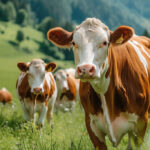
Extensive pasture-based ruminant farming is today one of the few agricultural models that is simultaneously sustainable, ethical, and ecological.
Grazing preserves ecosystems, fertilizes soils naturally, maintains biodiversity, and captures atmospheric carbon.
Grass-fed ruminants stimulate the carbon cycle in a regenerative way, contrary to what certain anti-meat campaigns suggest.
By making productive use not only of land unsuitable for growing grains, but also of much of the acreage currently devoted to grains, legumes, oilseeds, and fruit crops, well-managed ruminant farming offers a sustainable and coherent way to feed humanity. Conversely, a diet based primarily on industrial plant crops requires heavy mechanization, heavy reliance on chemical inputs, and massive artificialization of ecosystems. It drives soil destruction, biodiversity loss, groundwater pollution, and the extermination of countless wild animals: insects, birds, rodents, reptiles, and deer.
Every hectare of monoculture soy or wheat causes the disappearance of hundreds of species, often unseen yet essential to ecological balance. This silent violence is rarely factored into dietary choices.
The Excesses of Industrial Livestock Farming
The problem is not meat itself, but overconsumption, waste, and the way it is produced today.
Driven by yield and profit, we have confined animals to industrial factory farms and fed them grains and imported soy that are often ill-suited to their physiology, fundamentally altering the quality of their meat.
Animal living conditions have become deplorable, undignified, and all too often contrary to any basic ethics.
Deprived of space, light, and movement, and fed an unnatural diet, these animals endure chronic suffering. In response to this intolerable reality, the vegan movement emerged at the opposite extreme, rejecting every form of animal use. Yet by eliminating livestock altogether, this model paradoxically contributes to wiping out wild animal and plant life by intensifying industrial farming of grains, legumes, fruits, and oilseeds, often grown on deforested land treated with pesticides and hostile to biodiversity.
Replacing healthy animal fats with vegetable oils rich in pro-inflammatory omega-6 fatty acids (with the notable exception of olive oil) is a major nutritional and ecological dead end. This dietary paradigm shift fuels the current epidemic of metabolic disorders while intensifying the environmental pressure of industrial agriculture.
Meat from these industrial farms, where animals are fed grains and soy instead of grass, is poorer in nutrients, less balanced in healthy fats, and significantly more inflammatory.
It also contains more omega-6 fatty acids, whose excess promotes immune imbalances and chronic disease, along with pharmaceutical residues (antibiotics, anti-inflammatory drugs, and hormones). Deprived of exercise, exposed to stress, and fed a diet unsuited to their physiology, these animals produce depleted, degraded meat that no longer meets human needs.
This nutritional profile is a far cry from meat produced by grass-fed animals raised in harmony with their natural needs, whose fatty acid composition is far more favorable (higher in omega-3s, CLA, and fat-soluble vitamins) and which supports better metabolic and cardiovascular health.
Furthermore, we have overconsumed certain cuts (muscle meat) while abandoning others (organ meats and bones), throwing our relationship with the animal out of balance. The widespread expansion of dairy farming has also driven the breeding of hyper-productive livestock at the expense of their health and the quality of their products. Yet milk is not a necessity for humans, and its intensive production places a heavy burden on the environment.
A modern dairy cow produces up to 10 times more milk than is needed to nurse a calf, at the cost of constant physiological stress, rapid exhaustion, and dependence on an unnatural diet.
Restoring a Healthy, Sustainable Balance
There is an urgent need to rethink the way we feed ourselves. A low-carbohydrate diet built around nutrient-dense, complete whole foods, such as meat from grass-fed ruminants paired with seasonal vegetables and berries, would meet true human nutritional needs while preserving ecosystems.
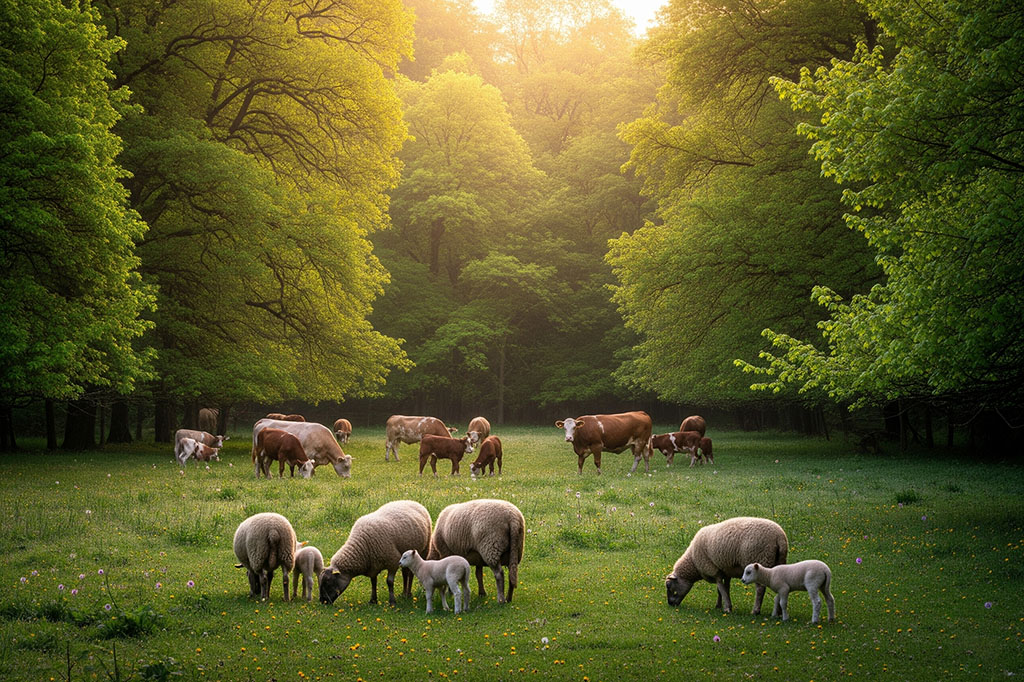
Large herbivores must once again be part of the natural landscape so that the animal-plant symbiosis can resume its virtuous cycle: natural soil fertilization, carbon sequestration, and the preservation of biodiversity.
Grasslands and pastures, long neglected in favor of destructive monocultures, have a vital role to reclaim in our agricultural systems. They are not wasted land, but reservoirs of life, regeneration, and sustainability.
The goal is not to eat more meat, but to choose it more wisely and use it more thoughtfully: honoring every part of the animal, supporting local extensive pasture-based farms, cutting back on destructive grain, fruit, legume, and oilseed crops, and restoring the natural complementarity between nature and herbivores.
This ancestral, relocalized, and regenerative model could help restore our collective health while actively contributing to ecological resilience.
Rebuilding the Symbiosis Between Animals and Plants
Nature works in synergy.
Wild herbivores play a vital role in regenerating soils and dispersing seeds.
By eliminating them to make way for monocultures, we broke a fundamental balance. Recreating diverse, living grazed pastures with herds of cattle, sheep, or goats is not nostalgia for a bygone era, but a necessity to regenerate landscapes, protect biodiversity, and nourish future generations in good health.
It is not animals that must be removed from the human diet, but the extractive, disconnected agricultural system that must be transformed.