Berries such as strawberries, raspberries, and blackberries are among the most popular fruits for their flavor, culinary versatility, and nutritional qualities. However, behind their image as healthy superfoods, the way they are eaten, prepared, and even grown can be problematic.
Eaten fresh, with no added sugar and in reasonable amounts, these berries can enrich a healthy, low-sugar, reduced-carbohydrate diet, provided you choose them only in summer at full ripeness.
From an environmental standpoint, the main issue does not come from the existence of these berries, but from the drive to make them available year-round. To meet this constant demand, they are often grown intensively, sometimes in soilless systems, and then frozen or processed to supply a continuous market. A large share of this fruit ends up as jams, coulis, ice creams, yogurts, or other heavily sweetened desserts, which cancels out their nutritional benefits and adds to the excess sugar and carbohydrates in the modern diet, which already contains far too much of both.
Yet these berries would lend themselves well to more extensive, diversified farming models on small market-garden farms growing vegetables and berries, built on more modest volumes and local, fresh, seasonal consumption. Respecting their natural season without trying to export or preserve them benefits both ecosystems and human health. Our body is not designed to receive fructose and such high amounts of sugar uninterruptedly all year long. It needs breaks to mobilize the reserves stored as fat in the liver, around the organs (visceral fat), and in adipose tissue. What makes fruit metabolically problematic today is not so much its existence as how often and how much we eat it, almost daily and with no seasonality.
Strawberries
The strawberry (Fragaria x ananassa) is the most widely consumed berry in Europe and around the world. It appeals for its sweetness, texture, and signature fruity aroma, which works just as well eaten plain as turned into desserts (pastries, jams, coulis, ice creams).
Nutritional benefits:
Strawberries are low in calories (around 35 kcal per 100 g) yet nutritionally worthwhile, especially when eaten plain with no added sugar. On average, they provide 60 to 70 mg of vitamin C per 100 g, which is comparable to – or even higher than – many citrus fruits. Vitamin C supports the immune system, plays a role in collagen synthesis (skin, blood vessels, cartilage), and acts as a water-soluble antioxidant protecting the body against oxidative stress.
Strawberries are also a good source of vitamin B9 (folate), providing about 70 µg per 100 g. This vitamin is involved in DNA synthesis and repair, red blood cell production, and proper nervous system function. It also helps regulate homocysteine, an amino acid whose excess is associated with increased cardiovascular risk.
Their red color comes mainly from anthocyanins, alongside other polyphenols (ellagic acid, flavonoids) with strong antioxidant activity. These compounds help limit free-radical damage and may help protect against cardiovascular and metabolic diseases as part of a healthy, reduced-carbohydrate diet rich in vegetables, moderate in berries, and including quality animal proteins and fats (from grass-fed animals).
Finally, strawberries provide a small amount of minerals: primarily potassium (about 150 to 170 mg per 100 g), along with magnesium, calcium, and a little iron. They are also a source of manganese (about 0.3 mg per 100 g). On top of that, they deliver around 2 g of fiber per 100 g.
Nutritional and quality differences: open-field soil vs. soilless cultivation
The farming method affects both the nutritional quality and the flavor of strawberries. Two main systems coexist on the market today.
- Open-field soil cultivation (seasonal): In this model, the strawberry plant roots into living soil. It draws its mineral resources directly from the earth, benefiting from the activity of soil microorganisms (fungi, bacteria) that break down organic matter and make nutrients bioavailable to the roots.
Yet this is only true in theory and in organic farming. In organic (or certified residue-free) agriculture, organic fertilizers such as manure and animal-derived compost feed soil life and recreate the animal-plant symbiosis that underpins soil fertility and ecosystem vitality.
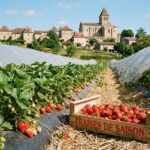
By contrast, intensive conventional open-field cultivation remains one of the heaviest users of pesticides (fungicides, insecticides) and herbicides to sterilize the soil before planting. Added to this is the heavy use of synthetic mineral fertilizers (nitrates, phosphates, synthetic potassium) which, although they feed plants directly, bypass the work of soil microorganisms. These soluble fertilizers gradually deplete microbial biodiversity, acidify the soil, break down its structure, and leave the land dependent on constant chemical inputs. As a result, intensively farmed open-field strawberries end up resembling soilless strawberries, so heavily does their cultivation rely on chemistry. Impact on the fruit: exposed to natural weather fluctuations (temperature, UV radiation) as well as attacks from pests and pathogens (fungi, insects), the plant has to defend itself to survive. These attacks act as an alarm signal. To fight back, the strawberry plant activates its secondary metabolism and synthesizes more defense molecules, such as antioxidant polyphenols (to strengthen its cell walls) and vitamin C. Moreover, when grown in living soil (especially organic), it draws up a complex range of nutrients to support its defenses. The result is that an organic, open-field strawberry delivers optimal nutritional and aromatic density. Its rich flavor and antioxidant content stem from the plant’s resilience in its natural environment. Ultimately, a nutrient-dense fruit is the outcome of a plant’s ability to overcome natural stressors. Overprotection, aimed at a flawless appearance, curtails this process and impoverishes the fruit. - Soilless cultivation (intensive): Here, the plants grow in troughs filled with an inert substrate (coconut coir, peat), often inside heated greenhouses or polytunnels. They are fed via fertigation using a drip-delivered solution of water and mineral fertilizers directly to the roots.
Impact on the fruit: this system allows the plant to grow effortlessly and very quickly. The fruit tends to absorb more water. To withstand long-distance transport, the varieties used are bred for firmness rather than nutritional richness.
As a result, hybrid strawberries bred for industrial production may boast a flawless appearance and yield over a longer season, but they are also less concentrated in nutrients (vitamin C, polyphenols) and aroma.
Because of strong demand, strawberries represent major economic and commercial stakes. Production is therefore very often intensive, leading to soil and environmental degradation. The heavy use of plastic mulch laid over the ground to suppress weeds, plastic greenhouses or polytunnels to harvest earlier and longer, and frequent chemical inputs further amplify this negative impact. It is important to realize that the use of chemical slug pellets and insecticides in intensive strawberry farming triggers a cascading collapse of biodiversity. Designed to kill pests, these chemicals severely damage the entire agricultural ecosystem. This is standard practice in intensive farming, which quite literally kills wildlife. Predators (birds, small mammals, amphibians) that eat contaminated insects or slugs are poisoned and die in turn. This creates famine across ecosystems. The massive, indiscriminate eradication of insects – including pollinators and natural pest predators – causes the food chain to collapse. This starves bird populations and other insectivores that rely on them. Over the past few decades, it has become common for large numbers of songbird chicks to starve to death in their nests in rural areas near farmed fields, because their parents can no longer find enough insects to feed them. Fruit farming is almost certainly the costliest form of agriculture in terms of wildlife loss.
These agrochemical practices therefore do far more than eliminate pests; they sterilize fields, destroy natural regulatory mechanisms, and jeopardize the balance of the entire ecosystem.
The food industry turns strawberries into yogurts, ice creams, candies, sorbets, coulis, jams, flavorings, and beverages. Because industrial varieties are often bland, synthetic flavorings are routinely added, and it is not uncommon for certain strawberry-flavored products to contain no actual strawberries at all.
Between 2024 and 2025, global strawberry production stood at around 9 to 10 million metric tons. They are mostly grown in intensive systems, notably in plastic tunnels or greenhouses, some of which are heated. A large share of European production even comes from soilless substrate systems, an unecological approach that compromises both the aroma and nutritional quality of the fruit. Strawberries produced this way are no longer truly the berries they ought to be nutritionally.
Because strawberries are vulnerable to diseases and pests, intensive crops require numerous treatments, even in organic systems. Inputs vary by country, but commonly include fungicides against botrytis, insecticides to control aphids and thrips, and nitrogen fertilizers in soilless setups.
The countries where strawberries are most heavily treated and regulations are least strict are Spain, the United States, China, Mexico, and Egypt. Germany, France, Italy, and Poland enforce slightly tighter rules, though they still fall short in most cases. Unfortunately, organic strawberries grown in open-field soil or diversified market-garden systems remain a minority.
Organic strawberries:
The strawberry as we know it is a human-bred hybrid that has lost the hardiness of its wild ancestors. Because of this fragility, organic strawberries account for only a tiny share of global production, estimated at just 2 to 5%. This low figure reflects the technical constraints inherent to the crop. Strawberries are highly susceptible to fungal diseases and pests, making organic production complex and expensive. Without synthetic pesticides, yields are lower and losses substantial, which strongly slows the large-scale expansion of the organic sector.
Unfortunately, as enjoyable as this fruit is, we have to admit that it is not an eco-friendly berry. Its intensive farming methods are deeply problematic for the environment, as well as for human health due to the many chemical inputs used. Aside from enjoying a few strawberries from your own garden – whenever the slugs have spared them – it is therefore best to eat as few of them as possible.
The modern strawberry, created through hybrid breeding and selected primarily for firmness, size, and shipping durability, often suffers from a major flaw: blandness. Grown in soilless or intensive systems and picked before full ripeness to prevent bruising in transit, it frequently lacks the fragrance and natural sweetness characteristic of more traditional varieties – even though the strawberry as we know it is only a few centuries old at most.
To make up for this lack of flavor, it has become common to eat strawberries with added sugar, whether by sprinkling sugar directly over fresh fruit or turning them into jams, coulis, or heavily sweetened industrial desserts. This seemingly harmless habit completely cancels out the fruit’s nutritional value. A strawberry that, in its ripe organic form, provided very little sugar (about 5 g per 100 g) and a strong micronutrient ratio becomes just another vehicle for sugar intake. Eaten this way, strawberries are problematic for metabolic health. Their modest amounts of vitamins and antioxidants are no match for the harmful effects of fructose and added sugar.
Nutritional profile per 100 g:
- Water: about 90%
- Carbohydrates: about 7 g, including about 5 to 6 g total sugars (about 2.5 g glucose, about 3 g fructose) and about 2 g fiber
- Vitamin C: about 60 mg
- Potassium: about 180 mg
- Antioxidants: anthocyanins and ellagitannins
Raspberries
Raspberries are highly prized for their intensely fruity, velvety, luscious, and slightly tart aroma. They are exceptionally rich in fiber – about 6 to 7 g per 100 g, compared to around 2 to 3 g for most fruits.
They contain numerous vitamins:
- Vitamin C: compared to conventional fruits, raspberries are rich in vitamin C (about 25 mg) while offering the advantages of low sugar content and high fiber.
- Vitamin B9 (folate): about 38 µg, or 19% of the recommended daily intake, a vitamin essential for cellular renewal.
- Vitamin B5: raspberries have the highest content of any fruit, at 0.85 mg per 100 g.
- They also contain appreciable amounts of vitamin E and vitamin K1.
Minerals and trace elements – the catalysts:
- They contain manganese (0.67 mg), a trace element that plays a crucial role in protecting against oxidative stress;
- Potassium, about 150 to 200 mg, which supports fluid balance and muscle function;
- They also provide phosphorus, magnesium, calcium, and smaller amounts of iron and zinc.
Polyphenols – the antioxidant protectors:
- Anthocyanins: these red and purple pigments account for more than half of the total polyphenols in raspberries (about 31 mg per 100 g).
- Flavanols and phenolic acids, which help combat inflammation and cellular aging.
The raspberry (Rubus idaeus) is a particularly delicate and fragile fruit, making its production complex and costly. It is highly sought after, eaten fresh or processed into a wide array of desserts, jams, coulis, pastries, and frozen products.
Global raspberry production has grown dramatically, doubling over twenty years to reach roughly 850,000 to 900,000 metric tons per year (based on 2023-2024 data - 1). Russia remains the world's top producer (around 200,000 metric tons), followed closely by Mexico (around 165,000 metric tons), Serbia (110,000 metric tons), and Poland. China is also among the world's leading producers, though strictly for domestic consumption. Morocco has likewise emerged as a major export player, reaching record volumes exceeding 60,000 metric tons. (3) In the Northern Hemisphere, the main harvest runs from July to September, though certain everbearing varieties extend the season into October. Thanks to heavy off-season imports (Chile, Mexico) and supplies from southern Europe and North Africa (Spain, Portugal, Morocco), fresh raspberries are now available on store shelves almost year-round. (4)
Sources: 1) Fructidor, 2024, Global Raspberry Production Growth; 2) Atlas Big, World Raspberry Production by Country; 3) Le Matin - Moroccan Raspberries, New 2024/2025 Record; 4) CTIFL, 2025, Raspberry - Fruit and Vegetable Handbook.
Ecological impact and farming methods:
The ecological impact of raspberries is mixed. This fruit is often transported by air to remain available fresh year-round, which considerably increases its carbon footprint.
Cultivation is mostly carried out on trellised rows or under tunnels (high tunnels or greenhouses) to shelter the fruit from rain and insects, thereby limiting losses. Intensive systems frequently rely on permanent plastic covers.
Crop-protection treatments include fungicides (against Botrytis, or gray mold), targeted insecticides, and the widespread use of insect-exclusion netting.
Toward lower-chemical organic farming?
Is it possible to grow raspberries with fewer chemicals? Yes, though it is a technical challenge.
The share of certified organic raspberries remains low globally, even though acreage is growing. In France, about 20 to 25% of cultivated area is farmed organically (130 ha out of 600 ha), which is higher than the average for other berries such as strawberries.
Alternatives exist for growing raspberries organically, such as:
- Preventive protection (prophylaxis): tunnels and shelters physically shield plants from disease-carrying rain, reducing the need for fungicides.
- Biological pest control: introducing beneficial insects to feed on pests is common in greenhouse settings.
- Soil management: using mulch or woven landscape fabric limits the need for chemical herbicides.
However, the fruit’s extreme fragility and susceptibility to post-harvest mold make zero-treatment cultivation difficult for long-distance export supply chains, which often favors intensive farming to ensure shelf life and firmness.
Nutritional profile per 100 g:
- Water: about 86%
- Carbohydrates: about 6 g, including about 4.3 g total sugars (about 2 g glucose, about 2 g fructose) and about 5.7 g fiber
- Vitamin C: about 25 mg
- Potassium: about 140 mg
- Antioxidants: ellagitannins, anthocyanins, polyphenols
Given its composition, the raspberry is truly a standout berry that can fit seamlessly into a healthy, reduced-carbohydrate diet, provided it is organic and eaten locally during its harvest season. On top of that, it is delicious, offering a genuine source of enjoyment and well-being – in moderation, of course.
Blackberries
The blackberry (Rubus fruticosus) has an intense aromatic profile dominated by deep fruity notes and a subtle woody undertone. Its aroma varies depending on ripeness and variety.
Flavor qualities: the difference between wild and cultivated blackberries
Wild blackberries are the iconic fruit of late-summer foraging, picked along hedgerows and country lanes. Small, irregular in shape, and deeply colored, they stand apart from cultivated blackberries with a signature sweet-and-tart flavor that is wonderfully delicious.
This slight acidity naturally balances their sweetness. Wild blackberries are prized for their aromatic intensity and juicy, complex flavor – far more pronounced than that of cultivated varieties, which are often considered blander. This richness of taste stems from their high polyphenol content (notably chlorogenic acid and procyanidins), which also gives them a mild astringency on the palate.
Ultimately, wild blackberries offer a far more intense flavor spectrum than their modern cultivated descendants, with remarkable aromatic persistence. However, they are very delicate and do not store well, which explains why they are rarely sold commercially.
Modern cultivated hybrid blackberries come from selective breeding and crossbreeding of North American and European wild varieties, notably developed in the United States and the United Kingdom. They are much larger (with a uniform size), fleshier, and glossier. Bred for export, they are firmer and hold up better in transit. The trade-off is that their flavor is often considered blander – dominated by water and sweetness, with less acidity and aromatic complexity than their wild cousin.
Nutritional qualities:
- Antioxidants: Blackberries are among the fruits richest in polyphenols. Their deep purple-black color comes from a high concentration of anthocyanins, compounds that work alongside vitamin C and vitamin E to protect cells against oxidative stress.
- Minerals and trace elements: They stand out for their high manganese content, a trace element involved in energy metabolism and connective tissue formation. They also supply appreciable amounts of potassium, calcium, and magnesium.
- Vitamins: They are a valuable source of vitamin C (about 36 mg per 100 g), which supports normal immune system function, as well as vitamin K1, which plays a role in blood clotting.
- Metabolic profile: With moderate sugar content (about 5 to 8 g per 100 g) and solid fiber levels (3 to 7 g depending on the variety), their impact on blood glucose is fairly low when eaten in moderation.
Thus, blackberries – especially wild ones – are truly an excellent berry to include in late summer as part of a healthy, reduced-carbohydrate diet. As with all healthy berries, it is neither necessary nor helpful to eat them year-round. Berries are far better for your health when eaten as nature intended, during their brief local harvest window. It is important not to eat the exact same foods all year long. Our diet should reflect the seasons. Even though blackberries contain less sugar and fructose than conventional fruits, they still contain some. Taking a break from fructose is the best way to allow the body to burn through all the sugar stored as fat in the liver and visceral adipose tissue. If we consume fruit and added sugar every day (table sugar is 50% fructose), we prevent our body from tapping into its stored fat, which then accumulates and impairs our metabolic health over the short, medium, and long term.
Blackberry cultivation:
Blackberry harvesting long remained a matter of wild foraging or small-scale open-field growing. Over the past few decades, cultivation has become professionalized and shifted toward more intensive methods. Today, global production is estimated at roughly 500,000 to 600,000 metric tons per year.
A large share of Asian production goes to the food processing industry, where blackberries are used to make jams, syrups, juices, concentrated purees, natural colorings, and frozen products.
North American and European production, meanwhile, is primarily aimed at selling fresh fruit directly to consumers. It relies on varieties bred for firmness, uniform size, and the ability to survive transport without damage.
Farming methods: Intensive vs. Organic
Production is divided into two distinct models:
- Intensive farming (about 90 to 95% of volume): This relies on trellised plants, increasingly grown under cover (high tunnels or multi-span greenhouses) and sometimes in soilless systems. This method helps offset harsh weather and control major pests such as the spotted-wing drosophila (Drosophila suzukii). Chemical treatments such as fungicides and insecticides are also used to protect the plant and fruit, but they severely harm biodiversity and soil life.
- Organic farming (estimated at under 5% of volume): Although demand is strong, organic production remains a small minority due to the difficulty of controlling pests without synthetic pesticides on such a fragile fruit. It is nevertheless growing in high-value niche markets, notably in France and the United States.
Crop protection in organic farming:
Regardless of the farming system, growers are increasingly favoring physical barriers. Ultra-fine insect netting and bird nets are widely used to protect the fruit while reducing the use of pesticides and insecticides, whether synthetic or approved for organic farming. Unfortunately, these barriers are not enough to stop fungal attacks and diseases such as downy mildew or powdery mildew. In conventional production, chemical fungicides are therefore applied, while in organic farming, copper and sulfur treatments remain necessary – which ends up harming soil life when applications are repeated.
Blackberry canes, bred from selected – often thornless – varieties, are trained on trellises to simplify harvesting and maintenance. Growing is increasingly done under cover (tunnels or greenhouses). This protection is designed to safeguard fruit quality from bad weather and limit damage from diseases and pests like Drosophila suzukii, which targets red-colored fruits such as berries and cherries, rendering them inedible.
In terms of global blackberry production volume (fresh and processed markets combined), Mexico holds its position as the undisputed world leader, especially for supplying the North American fresh market, with output approaching 250,000 metric tons. (1) It is followed by other major players such as China (a key producer whose exact volumes remain difficult to separate from other berries in official statistics) and the United States (notably Oregon for processing). Serbia, Poland, and Romania are also essential European producers for the frozen market. In the Northern Hemisphere, the main harvest runs from July to September, extending until the first frosts (October) thanks to protected cultivation. During the off-season, supply shifts to the Southern Hemisphere (mainly Chile and Argentina) and above all to Mexico's subtropical winter production, ensuring continuous commercial availability all year round.
Source: 1) USDA - Mexico Berry Production 2025.
Nutritional profile per 100 g:
- Water: about 88%
- Carbohydrates: about 5 to 8 g depending on ripeness, including about 4.5 to 5 g total sugars (about 2 g glucose, about 2 g fructose) and about 2 g fiber
- Vitamin C: about 35 mg
- Potassium: about 170 mg
- Antioxidants: anthocyanins, vitamin E (about 2.4 mg), manganese (about 1.6 mg)
Tags:
FruitsMore articles

Berries and Small Red Fruits