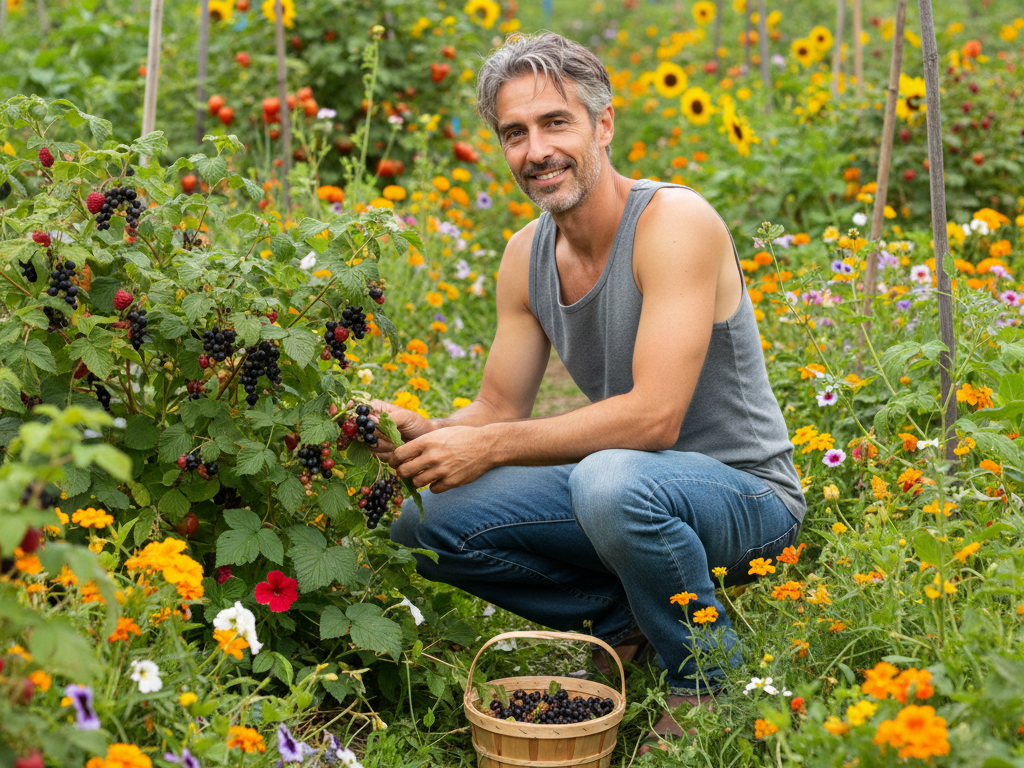
Blueberries
Blueberries, whether cultivated Vaccinium corymbosum or wild Vaccinium myrtillus (bilberry), are among the fastest-growing berries in the world. Long a niche fruit, they have now become a true “superfruit” praised for their health benefits, notably thanks to their high antioxidant content and potential effects on vision. On the other hand, they contain far less vitamin C and more sugar than other red berries, a drawback that keeps them from ranking at the very top of the best berries. Drinking them as juice is therefore discouraged, as juicing further concentrates their sugar content. Moreover, in juice form, it is very easy to overconsume fruit and, consequently, sugar. Their fruity, mildly tangy flavor and juicy texture make them popular both fresh and processed into desserts, jams, coulis, purees, or frozen products. Keep in mind that both industrial and traditional blueberry preparations very often contain large amounts of added sugar. These foods lose their health value and become mere indulgence foods to be enjoyed with great moderation.
The food industry uses blueberries extensively, taking advantage of their different qualities depending on whether they are wild or cultivated:
- As a key ingredient: Smaller and richer in flavor, wild blueberries are the star of baked goods (muffins, pancakes), yogurts, ice creams, coulis, confectionery, and industrial jams. Their intense taste and heat-stable color make them a top-choice flavoring ingredient.
- For the fresh and health-food market: Larger cultivated blueberries are used pureed or frozen for fruit juices and antioxidant smoothies. They are also found dehydrated in cereal bars, fruit puree pouches, and trail mixes. It is a shame that cultivated blueberries are used this way while wild ones end up in processed treats, because cultivated blueberries, though better looking, are less nutritionally interesting.
- For the food supplement market: The blue pigments of blueberries are processed into dry extracts and powders concentrated in anthocyanins. These extracts are then sold in capsules or tablets as food supplements, primarily targeting eye and cardiovascular health.
Rapidly expanding worldwide, blueberry production relies on two distinct models. Cultivated (highbush) blueberries are grown on shrubs in traditional plantations or, increasingly for intensive varieties, in acidic soilless substrates (peat/coir mixes) that eliminate soil constraints. Meanwhile, wild (lowbush) blueberries, smaller and richer in antioxidants, are not planted but managed in natural barrens, mainly in Canada and Maine (USA).
Global production has experienced spectacular growth, doubling in ten years to exceed 2 million metric tons in 2024 (1). While cultivated blueberries account for the majority of volume (over 80%), wild blueberries retain a significant 10 to 15% share of the global market, primarily destined for processing (freezing, ingredients). (2) To protect the crop, cultivated plants are often grown under shelters (high tunnels) or netting, which provide an essential physical barrier against birds and bad weather (hail, excessive rain). Crop protection follows an integrated approach: treatments may include fungicides to limit diseases (such as anthracnose or botrytis) and targeted insecticides, notably against the global pest spotted-wing drosophila (Drosophila suzukii). However, fine-mesh insect nets and bird nets remain the preferred and most sustainable method for preserving fruit quality without chemical residues. The leading producing countries are China (32% of the world total, 1st producer), the United States (16%), Peru (13%), Canada mainly for wild blueberries, as well as Chile, Mexico, Spain, rapidly growing Morocco (over 71,000 metric tons in 2024), Poland, and France (at nearly 8,000 metric tons, ranking 12th worldwide). (3) Open-field harvesting in the Northern Hemisphere runs from June to August and can extend into October through protected cultivation. Substantial production in the Southern Hemisphere, notably in Peru, Chile, and South Africa, ensures near-continuous commercial availability throughout the year, from November to April, giving European and global markets year-round access to fresh blueberries.
Sources: 1) International Blueberry Organization (IBO), 2025, "Global blueberry industry consolidates its structural expansion" via Blueberries Consulting; 2) International Blueberry Organization (IBO), 2025, "The Global Blueberry Market 2025" via Fructidor; 3) AtlasBig, World Blueberry Production by Country.
Nutritional composition per 100 g:
- Water: about 84%
- Carbohydrates: about 10 to 14 g, including about 10 g of total sugars (around 5 g of fructose and 5 g of glucose), making it one of the sweetest berries.
- Fiber: about 2.4 g (can reach 5 to 7 g for wild blueberries, while cultivated ones contain less).
- Vitamin C: about 10 mg (less than commonly assumed).
- Vitamin K1: about 19 µg (a worthwhile source).
- Manganese: about 0.34 mg (a key nutrient in blueberries).
- Antioxidants: Rich in polyphenols (anthocyanins responsible for the blue color, flavonoids, resveratrol).
Black Currants
The black currant is a small, nearly black berry with a complex fruity aroma. Its scent comes largely from volatile thiols, notably the 4-MMP molecule. Black currants are renowned for their exceptional vitamin C content (four times higher than oranges or lemons).
Before being used in cooking, the black currant bush was long regarded as a medicinal shrub. In the 18th century, a treatise by Canon Bailly de Montaran presented it as a panacea, claiming the plant could relieve a wide range of health complaints. The leaves are steeped as an herbal tea for their antirheumatic and diuretic effects. The berries, exceptionally rich in vitamin C, were eaten to soothe sore throats.
Although some modern varieties are less tart, early selections were so acidic that the fruit was rarely eaten fresh. With the rise of cane sugar and later beet sugar, black currants quickly came to be cooked with added sugar. It was in this context that crème de cassis, a liqueur made by macerating the berries in alcohol, was born in Dijon in the 19th century.
Following the phylloxera crisis, which destroyed much of Burgundy’s vineyards, grape production – and therefore the distilled alcohol available for liqueurs – dropped sharply. Because demand for sweet alcoholic beverages remained strong, black currant cultivation expanded to meet that need. Part of the vineyard land was replanted with black currant bushes. Crème de cassis thus played a decisive role: its commercial success enabled growers to make a living from this new crop, and a genuine black currant economy flourished in the region.
Both traditional and industrial uses of the black currant bush make use of the entire plant. Fresh fruit is rarely sold because it is fragile and keeps poorly. Most of the harvest goes to processing into juices, jams, coulis, crème de cassis, or liqueurs. Its high anthocyanin content also makes it an important source of natural colorants used in dairy products, confectionery, and certain beverages. Its bold aroma helps intensify the fragrance of red berry blends.
The bud is used in luxury perfumery. Black currant bud absolute, produced primarily in Burgundy and Auvergne, is one of the rare natural raw materials offering a fruity note. Harvested in winter, this raw material is prized for its green, woody, and fruity facets.
Black currant seeds and leaves are used in pharmacy and food supplements. The seeds yield an oil rich in gamma-linolenic acid, used for skin health and hormonal balance. Standardized black currant extracts (fruit and leaves) are used to support ocular microcirculation and venous comfort.
Nutritional qualities:
Black currants are nutritionally very compelling berries. Their vitamin C content is remarkably high compared to most fruits we commonly eat, ranging from 180 mg to 200 mg per 100 g. That is more than three times the amount found in oranges or lemons and twice that of kiwi. A 50 g serving of black currants covers 100% of the recommended daily intake of vitamin C, which notably supports immunity, iron absorption, and fatigue reduction.
Black currants are rich in antioxidants, especially polyphenols and anthocyanins such as delphinidin and cyanidin. These compounds support cardiovascular health by protecting blood vessels and may help defend against oxidative stress. They are also involved in improving ocular microcirculation.
Keep in mind that even though tartness dominates on the palate, black currants are sweeter than blackberries or raspberries. Per 100 g, they still contain 9 to 10 g of sugar. On the other hand, they are rich in fiber and pectin. Per 100 g, they provide 350 mg of potassium and 1.3 mg of iron, whose absorption is enhanced by the vitamin C naturally present in the fruit.
Black currant cultivation:
Global black currant production, though difficult to measure separately because it is often grouped with red currants in statistics, can be estimated overall at between 765,000 and 800,000 metric tons. Russia stands as the world leader, with a substantial volume of roughly 300,000 to 470,000 metric tons of black and red currants depending on the source, though nearly all of this output is absorbed by domestic consumption. In terms of exports, Poland dominates, producing 130,000 to 160,000 metric tons per year (much of it dedicated to processing and export). Ukraine is also a notable producer with around 25,000 metric tons. France produces roughly 7,000 to 10,000 metric tons (including the renowned 'Noir de Bourgogne' variety), positioning itself in a high-quality niche market aimed primarily at processing into crème de cassis and liqueurs. (1) The market for black currant buds, used in perfumery, is much smaller and almost exclusively French. In Burgundy, the annual harvest of fresh buds is estimated at 40 to 60 metric tons. Although modest in volume, this output is essential to the global perfume industry. (2) The vast majority of the world's black currants, particularly in Poland, are grown under conventional, intensive farming for the food processing industry. Harvesting is almost entirely mechanized using specialized harvesters. In France, about 10% to 12% of black currant acreage is certified organic, out of 2,000 to 3,000 hectares planted with this berry. Organic acreage is growing, with a recent 5% increase, though conversion remains limited by technical constraints.
Sources: 1) Les Vergers Boiron, 2025, Black Currant Cultivation; Académie des langues (fr-academic), Black Currant (fruit); and International Blackcurrant Association (IBA), Blackcurrant Production in Poland; 2) Chambre d'Agriculture Côte-d'Or, Black Currant; 3) Agence Bio, Organic Farming in Figures 2024, and FranceAgriMer, 2024, Market Outlook for the Industrial Black Currant Sector in France.
From an environmental standpoint, black currants remain a polluting crop that requires 10 to 12 chemical treatments per year. The main treatments target pests, notably the black currant gall mite Cecidophyopsis ribis and the currant clearwing moth, as well as fungal diseases like powdery mildew and anthracnose, which can quickly wipe out a harvest in humid climates. Under organic farming, black currants remain difficult to grow because few effective curative solutions exist aside from copper, which also ends up creating environmental problems.
Nutritional composition per 100 g:
- Water: 80 to 82%.
- Total carbohydrates: about 15 g, including simple sugars: ~8 g (glucose: about 3.3 g, fructose: about 3.7 g, sucrose: about 1 g) and fiber: 5.5 to 6 g.
- Protein: 1.0 to 1.4 g.
- Fat: 0.4 to 0.5 g.
- Vitamin C: 180 to 200 mg.
- Potassium: 310 to 370 mg.
- Antioxidants: anthocyanins, polyphenols.
Red Currants
The red currant (Ribes rubrum) is a small, translucent, bright red berry with a tart flavor. It develops fresh, lightly herbaceous and floral notes driven more by its abundance of organic acids than by complex sulfur compounds. Its juicy pulp and thin skin make it well suited to processing, though its pronounced acidity means it is rarely eaten plain and is more often prepared with added sugar.
Before becoming a classic pastry ingredient, red currants were long valued for their refreshing properties thanks to their organic acids, vitamin C, and fiber content. The berries went into syrups and jellies traditionally used to “purify the blood” and relieve minor digestive issues.
In the kitchen, red currants are used primarily in processed forms: jellies, jams, coulis, syrups, and dessert glazes, as well as accompaniments for meats (especially game and poultry). In the food industry, they are widely used in jams, yogurt preparations, dairy desserts, and certain fruit beverages, often paired with strawberries, raspberries, or cherries to balance flavor and cost.
Their main nutritional value lies in their vitamin C, fiber, and polyphenol content. The red pigments (anthocyanins) along with other polyphenols give them appreciable antioxidant activity.
Red currants have the advantage of being lower in sugar than most fruits, though that does not mean they are sugar-free. They therefore have a place in summer as part of a healthy low-carbohydrate diet. Unfortunately, because of their tartness, they are mostly cooked with sugar.
Red currant cultivation and production:
The red currant bush is a temperate-climate shrub well adapted to regions with cold winters. It is grown mainly in Europe (Poland, Germany, Central and Northern European countries, France, the Netherlands, the United Kingdom, and Scandinavia) as well as in parts of Russia and North America. Global production of currants (red and white) remains modest compared to major fruit sectors, amounting to a few hundred thousand metric tons per year, far behind apples, grapes, or even strawberries. A significant share of this output goes to the processing industry rather than the fresh market.
Growing systems are most often intensive, using dense hedgerow plantings, with increasingly mechanized harvesting when the crop is intended for industry (jams, juices, freezing). Crop protection inputs are still needed because red currants are susceptible to diseases such as powdery mildew, anthracnose, and rust, as well as a few specific pests, though overall they receive far fewer treatments than most fruits. Organic cultivation is technically feasible, but it demands closer monitoring and careful variety selection, especially to prevent losses during wet years. Overall, the environmental footprint of red currants falls in a middle ground: lighter than that of heavily sprayed fruit crops, yet far from neutral when grown intensively.
Average nutritional composition per 100 g:
- Energy: 55 to 60 kcal.
- Water: 82 to 84%.
- Total carbohydrates: 13 to 14 g, including sugars: 7 to 8 g (fructose: 3 to 4 g / glucose: 3 to 4 g, sucrose: trace to 1 g) and dietary fiber: 4 to 5 g.
- Vitamin C: 35 to 45 mg.
- Potassium: 250 to 300 mg.
- Other compounds: polyphenols (flavonols, phenolic acids, anthocyanins responsible for the red color) and organic acids (primarily citric and malic acids), which account for their pronounced tartness.
Serviceberries (juneberry, saskatoon berry)
A berry well worth discovering, useful both to humans and to wildlife! The serviceberry is the fruit of the Canadian serviceberry shrub (Amelanchier canadensis), native to North America. This small, round purple to blue-black berry ripens in June and July in the Northern Hemisphere. It offers a sweet, mild flavor reminiscent of blueberries, sometimes with subtle almond or apple notes depending on the variety.
Serviceberries were a prized foraged fruit among Indigenous peoples of North America, who ate them fresh, dried, or mixed into pemmican (an energy-dense blend of dried meat, fat, and berries). In traditional medicine, the bark and roots were used for their astringent and anti-diarrheal properties, while the berries, rich in sugars and iron, served as a restorative food.
Long overshadowed by other berries, the serviceberry shrub is now seeing renewed interest due to its remarkable nutritional qualities and exceptional hardiness. It tolerates extreme cold and thrives in a wide range of soils, making it an ideal candidate for fruit diversification in northern and continental climates.
In the kitchen, serviceberries can be eaten fresh, made into jam (thanks to their high natural pectin content), coulis, or juice, or baked into pastries (pies, muffins). Their mild, sweet flavor and juicy texture make them a versatile fruit, enjoyable both raw and processed.
Global serviceberry production remains marginal. It is concentrated mainly in Canada (Saskatchewan, Alberta, British Columbia), where it forms a small, growing local industry, and to a much lesser extent in France and a few other European countries where enthusiasts are beginning to grow the shrub in gardens or small farms. Serviceberry is also planted in permaculture food forests and agroforestry systems. Most global output remains artisanal or wild-harvested. Grown under extensive or agroecological methods, the shrub is hardy and requires minimal to no chemical inputs.
Nutritional qualities:
Serviceberries have a highly compelling nutritional profile that surpasses many common fruits. Their antioxidant content is substantial, concentrating anthocyanins (purple pigments), flavonoids, and phenolic acids (notably chlorogenic, caffeic, and coumaric acids). Their antioxidant capacity, measured by the ORAC index, is comparable to that of blueberries and up to 3 to 4 times higher than classic fruits like apples. These compounds help protect cells from oxidative stress and are associated with the prevention of cardiovascular and inflammatory diseases.
Serviceberries are a good source of manganese, essential for energy metabolism and antioxidant defense. They also supply iron, magnesium, calcium, potassium, and zinc. Their vitamin C content is fairly low. They also contain vitamin A in the form of beta-carotene and vitamin E, both of which contribute to cellular protection. It is a shame that their sugar content is somewhat high for a berry, close to that of an apple. However, because it is a small berry, keeping portions reasonable is easier. Within a healthy low-carbohydrate diet, serviceberries can be enjoyed in moderation, especially given their short harvest season.
Average nutritional composition per 100 g:
- Energy: 80 to 85 kcal.
- Water: 72 to 75%.
- Vitamin C: about 4 mg.
- Manganese: about 1.4 mg (70% RDA).
- Iron: about 1 mg.
- Magnesium: about 24 mg.
- Calcium: about 42 mg.
- Potassium: about 162 mg.
- Antioxidants: Anthocyanins, phenolic acids (chlorogenic, caffeic, coumaric, syringic), flavonoids (rutin).
Total carbohydrates: 18 to 19 g, including simple sugars: about 11 g (fructose, glucose, sucrose) and fiber: about 6 g.
In Conclusion
With a few exceptions, red fruits and berries rank among the fruits richest in vitamin C, fiber, anthocyanins, and polyphenols. Beyond their undeniable culinary appeal, their greatest asset lies in their carbohydrate profile. Unlike most modern cultivated fruits, they are significantly lower in sugar – and especially in fructose, excess intake of which is harmful to metabolism and the liver.
Although these berries are delicate and more expensive to produce, it is neither necessary nor desirable to eat large quantities year-round. They offer a much healthier alternative to conventional fruits, which are often overly sweet and grown in polluting intensive systems. To reap their benefits, it is best to eat them strictly during their summer harvest season, ideally organically grown.
Even with their moderate sugar content, the golden rule remains eating the whole, fresh fruit in reasonable portions during its harvest window. Juices should be avoided, as they concentrate sugars and easily lead to overconsuming fruit and fructose. Likewise, jams, ice creams, coulis, and other preparations with added sugars should remain rare festive treats. Enjoyed sparingly, locally, and in season, berries fit naturally as an occasional addition to a healthy, eco-conscious, low-carbohydrate diet rich in vegetables and balanced with high-quality animal proteins and fats (from grass-fed animals).
Tags:
FruitsMore articles

Wild Fruits
Wild Fruits
Strawberries, Raspberries, and Blackberries