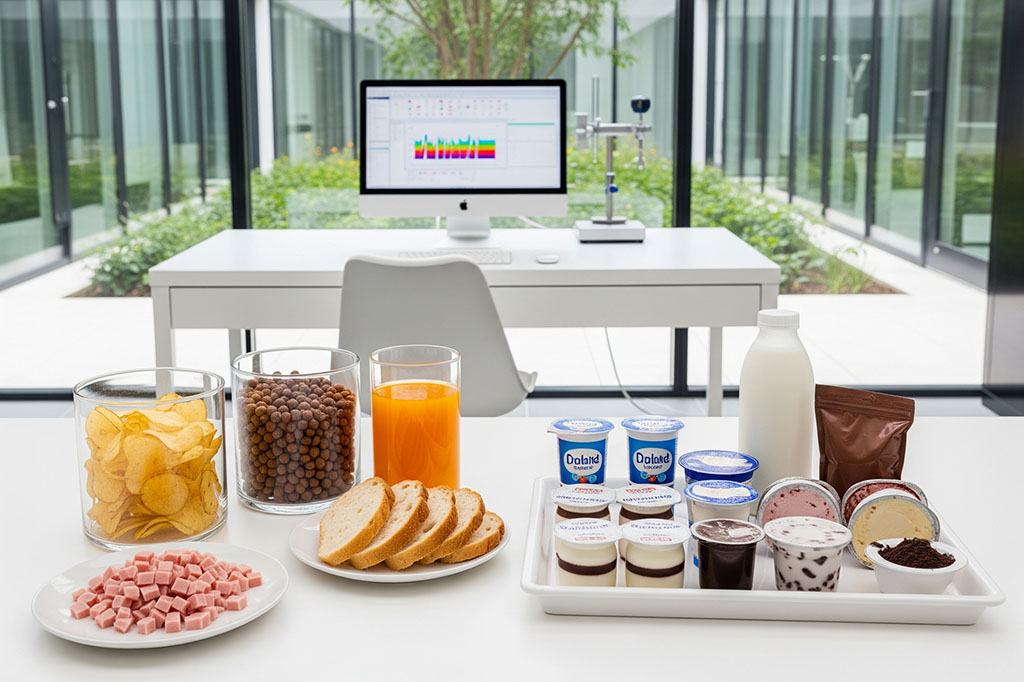
Changing Ingredients: Are Processed Foods Still Natural?
15 December 2023
2
Views
0
Comments
Over the past few decades, the composition of industrial foods has shifted from simple processing to ultra-processing, relying on a growing number of ingredients that are increasingly problematic and less and less natural.
More and more ingredients, and less and less natural!
The vast majority of industrial sweet and savory products are affected by this issue. The exact same product, from the same brand and under the same name, no longer has anything close to the quality it had 15 or 30 years ago. Ingredient lists have grown longer, and ingredient quality has declined sharply. For example, consider the famous holiday boxed pralines that, just a few decades ago, still had a relatively simple recipe. They were made mostly of sugar, chocolate, cocoa butter, hazelnuts, a preservative, salt, and a flavoring. Decades later, those formulas have been replaced with vegetable fats and modified or invert sugars (a mixture of glucose and fructose obtained through the hydrolysis of sucrose, a definition that speaks volumes about how heavily processed this sugar is). Today, it has become very difficult to find commercial chocolates that do not contain dramatically less real chocolate and fewer hazelnuts, and far more flavorings, flavor enhancers, chemical colorings, and other additives… A striking example of an ingredient that has taken over industrial food formulations is palm oil, which entered the European market in 2001 to replace the partially hydrogenated fats previously used in sandwiches, puff pastries, and industrial baked goods after those fats were discredited for their negative health effects. Manufacturers quickly adopted palm oil for its high saturated fatty acid content, which makes it resistant to oxidation, its stability at high temperatures, its long shelf life, its low cost, and its ease of transport (it remains semi-solid in temperate climates, making it easier to handle and ship). Palm oil is especially cost-effective. Today, it appears on the labels of nearly all our processed foods, yet it is partially hydrogenated, a treatment designed to improve taste, texture, and shelf life that produces trans fatty acids, which are dangerous for the heart and blood vessels.Are Processed and Ultra-Processed Foods Still Natural?
Processed and ultra-processed foods undergo chemical changes during industrial treatment processes (fermentation, smoking, desiccation, extrusion, sterilization, refining, and high-temperature cooking). However, high-heat cooking, frying, and processing methods that grow ever more complex and less natural can have undesirable consequences.Food products so heavily processed that there is nothing natural left about them!
Beyond causing the loss of various nutrients such as vitamins and antioxidants, these transformations are so drastic that the final product becomes problematic for our health. The manufacturing processes behind processed and ultra-processed industrial foods have nothing in common with actual cooking. Raw ingredients are generally denatured, and the use of chemical substances is widespread. The primary goal is not to produce healthy food, but rather an inexpensive product with standardized flavor and appearance that meets consumer expectations and encourages them to eat more. These industrial food products are engineered entirely to please our taste buds, even if the end result becomes mostly artificial. The systematic presence of sugar and modified sugars further amplifies this addictive effect. Even so, it is easy to tell whether a food product is natural or not. Simply look at the ingredient list. The longer it is and the more obscure ingredients it contains, the more questionable the product is and the more it should be avoided.More articles
Next
18 December 2023
The Systematic Addition of Food Additives
Previous
15 December 2023