• FrançaisFR
  • EnglishEN
  • DeutschDE
DJFORM Information Blog

Type and hit Enter to search

  • Home
  • Our Supplement Courses
    • Seasonal Supplement Courses
      • Spring Supplement Courses
      • Summer Supplement Courses
      • Autumn Supplement Courses
      • Winter Supplement Courses
    • Supplement Courses for Nutritional Deficiencies
  • Nutrition
    • Our Nutritional Principles
    • Processed and Industrial Foods
    • Organic vs. Conventional Food
    • Nutritional Balance
  • Our Brand
    • DJFORM Food Supplements
    • DJFORM Food Supplement Formulas
    • Capsule Quality and Selection
    • Our Story
    • Our Packaging: Ecology & Recycling…
  • Our Reading List
  • DJFORM Shop
  • Contact
Consommation de protéines animales et écologie
Animal Proteins

Animal Protein Consumption and Ecology

17 September 2025
2 Views
0 Comments

The Ecological Impact of Meat Production

The role of meat in our diet goes far beyond simple nutrition. It lies at the heart of a global ecological challenge.

Today, livestock farming accounts for a major share of agricultural resource use, and whether its impact on the environment is positive or negative depends largely on the farming method used.

However, shifting toward an increasingly vegetarian diet is not a viable solution, either for human health or for the environment. A change is needed in the animal and plant foods we choose to eat in order to ensure a sustainable future.

The Most Ecologically Destructive Farming Systems

Certain types of livestock farming are particularly catastrophic for the environment. They operate on an industrial model in which animals are crammed into deplorable conditions, fed grains and plant proteins, and completely disconnected from natural cycles.

This is the case with intensive pig and poultry operations (broiler chickens, laying hens, ducks, turkeys, etc.). These sectors consume enormous quantities of soy, grains, and corn, which are often imported. The high concentration of animals and the sheer volume of their manure also make them a major source of pollution. In addition, the high risk of disease under such conditions requires heavy use of chemicals and pharmaceuticals. Above all, however, it is their diet, based primarily on grains, plant proteins, and vegetable oils, that drives environmental degradation.

Intensive dairy cow farming is equally problematic. It also requires feed rich in grains and soybean meal and generates substantial pollution. Added to this is the issue of methane produced by ruminants, which, in an industrial system where animals do not graze and soils do not regenerate, contributes significantly to global warming.

Even so-called “free-range” or organic poultry are still fed mostly grains, vegetable oils, and plant proteins. This perpetuates the upstream ecological problem despite better animal welfare. Even though organic agriculture is in principle less polluting, land devoted to grains and plant proteins continues to degrade soils and creates deserts for wildlife and flora. To efficiently farm vast fields of wheat, triticale, corn, sunflower, or soy, a large share of the wild animals and insects likely to feed on the crops must first be eradicated. This involves slug pellets, which decimate hedgehogs every year, as well as pesticides, fungicides, and chemical fertilizers harmful to soil life. Even in organic farming, destructive measures are put in place, because a field cultivating a single grain, a single legume, a single oilseed, or even a single fruit requires clearing out surrounding wildlife and native plants. By contrast, diversified market gardening of a wide variety of vegetables and berries, along with pasture-based livestock farming, concentrates infinitely more biodiversity on the same land area.

Finally, the impact of industrial aquaculture must not be overlooked. Fish farms, presented as a sustainable alternative, pose numerous problems: marine pollution from waste and antibiotics, destruction of coastal ecosystems, and overfishing of wild species to produce the fishmeal used to feed farmed fish. Rather than relieving pressure on the oceans, this practice worsens the strain on marine biodiversity.

The Problem with Grain-Fed Livestock and Associated Crops

The root of the problem is simple: any livestock farming that relies on feeding grains, vegetable oils, and plant proteins has a strongly negative ecological impact. This includes dairy products, pork, poultry, and eggs, regardless of certification (intensive, organic, or free-range).

Growing the grains, vegetable oil crops, and legumes needed for these sectors is extremely polluting. It requires vast expanses of land where wildlife is eradicated. Even in organic agriculture, these crops force biodiverse ecosystems to be transformed into barren monocultures.

To produce wheat, sunflower, rapeseed, soy, or corn, farmers must eliminate the insects, rodents, and birds that depend on these habitats. As a result, the food chain is broken: pollinators and insects vanish, birds, amphibians, rodents, and herbivores decline massively, and with them collapses the entire balance of ecosystems.

The soils themselves become depleted because, without herbivores to fertilize them naturally, organic biomass disappears. Farming grains, plant proteins, and vegetable oils, even organically, therefore rests on the desertification of life. It replaces rich, dynamic landscapes with sterile fields where nothing other than the cultivated crop can survive.

Grass-Fed Herbivores: A Renaissance for Ecosystems

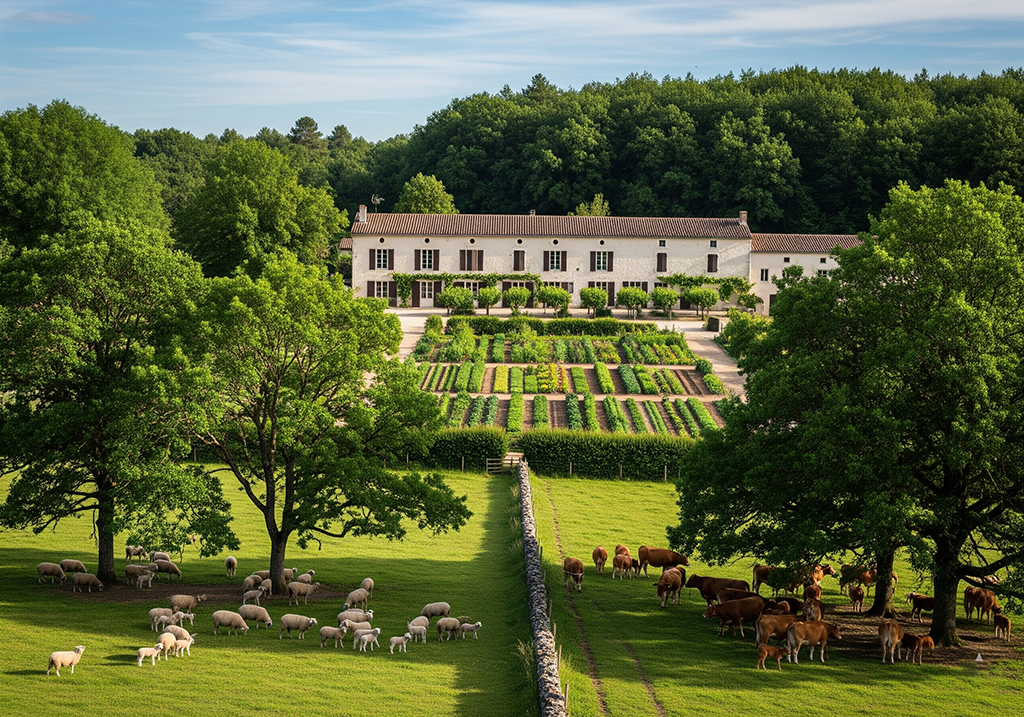
By contrast, raising herbivores fed exclusively on grass (cattle, sheep, goats, along with a few rare high-quality pasture-raised pig farms…) can have a positive ecological impact. When these animals graze outdoors, they contribute to the natural fertilization of soils through their manure. Their presence promotes the growth of diverse flora, carbon sequestration in the soil, and the return of insects, birds, and small mammals.

Large herbivores have always played an essential role in the balance of ecosystems.

The symbiosis between fauna and flora governs natural systems. Their disappearance quickly leads to soil degradation and loss of fertility. In the United States, the extermination of the bison contributed to the collapse of the natural prairie: deprived of the herds’ manure and regular trampling, soils became depleted, eroded, and eventually turned to desert in places. In Africa, declining wildebeest populations have contributed to similar consequences. Where massive migrations once maintained the fertility of the savannas, the land dries out and degrades in their absence. In both cases, the natural cycle of soil regeneration is broken: without organic input and stimulation from herbivores, the soil dies, loses its capacity to retain water, and becomes sterile. In reality, natural spaces need many living animals to sustain soil life and, along with it, biodiversity. The problem is not that there are too many farm animals, but that there are too few grazing outdoors and far too many raised indoors.

These findings have led pioneers of regenerative agriculture to develop managed grazing methods. In southern Africa, Allan Savory demonstrated that moving cattle herds regularly, mimicking wild migrations, can restore semi-arid areas by increasing soil fertility and re-establishing vegetation. In the United States, several ranches now practice this type of holistic management with spectacular results: the return of biodiversity, better water retention, increased carbon storage, and formerly sterile land becoming productive once again. These experiences prove that by reintroducing large herbivores into well-managed grazing cycles, we can reverse desertification and bring landscapes back to life.

In this 2016 study on North American livestock systems, the authors conclude that ruminants are not inherently "bad" for the climate; it is the management model (corn and soy monocultures, intensive tillage, etc.) that currently makes their climate footprint high. Integrating ruminants into regenerative crop-pasture systems (permanent grasslands, forage rotations, adaptive grazing) instead reduces the overall carbon footprint of North American agriculture and provides essential ecosystem services (carbon sequestration, nutrient cycling, biodiversity, and water quality). They call for agricultural policies that encourage these conservation farming practices with ruminants as an important pathway for mitigating agricultural emissions.

Teague R. et al., 2016, "The role of ruminants in reducing agriculture's carbon footprint in North America", Journal of Soil and Water Conservation.

If the farmland currently used to grow grains for livestock feed were converted into grasslands, and if those grasslands welcomed herbivores once again, we could not only produce meat rich in nutrients and healthy fats capable of feeding populations, but also restore numerous ecosystems.

Combining grazed pastures, diversified market gardening, and wooded areas would bring life back to landscapes currently destroyed by monocultures.

Unlike grain crops, diversified market gardening attracts pollinators, enriches biodiversity, and creates habitats for a wide variety of species. This does not mean grain crops must be eliminated entirely. Grains and legumes are survival foods, but there is no need to grow or consume as much of them as we do today.

Before World War I, humans did not consume vegetable oils extracted from seeds. These oils, rich in polyunsaturated fatty acids, cause numerous health problems because our bodies only need them in very small quantities. Olive oil, pressed from a fruit, was an exception, though its consumption remained rare in most regions. Animal fats, well balanced in saturated and monounsaturated fatty acids, formed the foundation of the diet back then. It is astonishing that consuming animal fats, practiced for several million years, came to be viewed as dangerous in less than a century.

In reality, the problem is not saturated fat itself, but its combination with excessive consumption of sugars and carbohydrates. Saturated fat is an excellent fuel for the body, yet it becomes harmful when paired with a daily intake of carbohydrates and sugars that is too high. What is truly abnormal and dangerous is not eating saturated fats, but treating such high daily consumption of sugars and carbohydrates as normal. This habit is recent on the scale of human history, and its newly emerged excess is now leading to alarming health consequences.

Agroforestry fits this virtuous model of animal-plant symbiosis particularly well. Combining trees and pastures enriches biodiversity while improving land productivity. Trees provide shade and a favorable microclimate for animals, improve soil fertility through their leaves and roots, and contribute to water retention as well as erosion control. They also serve as habitat for many species. In an agroforestry grazing system, herbivores maintain the grass and fertilize the soil, while trees enhance biodiversity and sequester carbon. Together, they recreate a living, balanced ecosystem.

A diet based on meat from grass-fed herbivores, accompanied by a wide diversity of vegetables and berries, would support not only human health, but also the health of the planet.

Key Ecological Benefits of Pasture-Based Grass-Fed Farming

Carbon sequestration:

Adaptive grazing (rapid rotations mimicking natural migrations) strongly increases carbon storage in soils. Studies show up to 12.1 metric tons of CO₂eq/ha/year compared to 2.9 in conventional systems.

Soil health and water retention:

Hooves and manure stimulate microbial life, improve soil structure, and increase the soil’s capacity to retain water, reducing desertification.

Biodiversity:

Herbivores naturally redistribute nutrients (nitrogen, phosphorus, potassium), which nourishes plant life and attracts insects, birds, and small mammals. Thoughtful grazing increases plant and animal diversity.

Agroforestry (silvopasture):

Combining trees and pastures strengthens ecological benefits. Trees sequester carbon, improve soil fertility, protect against erosion, and provide habitats for many species.

Holistic management:

Experiences conducted in southern Africa (by Allan Savory) and North America show that managed grazing can restore arid lands, bring back biodiversity, and reverse desertification trends.

Conclusion

The evidence is undeniable: eating animal products from livestock fed grains, vegetable oils, and plant proteins is catastrophic for the environment, just as directly consuming those grains, oils, and legumes is. This agricultural model destroys soils, eliminates biodiversity, and contributes to the collapse of ecosystems.

Conversely, animal products from herbivores raised outdoors and fed on grass represent an ecological alternative. They provide proteins and fats essential to health while helping restore soil life and biodiversity. Choosing this model means contributing to genuine ecosystem regeneration.

Rethinking our diet by reducing the share of grains, vegetable oils, and plant proteins intended for both human food and livestock feed, prioritizing grass-fed animal products, sharply limiting dairy, pork, and poultry consumption, and favoring diverse, local, seasonal vegetables as well as berries would help preserve ecosystems currently threatened with destruction.

Further Reading:

To deepen this reflection on our relationship with animals and food, reading Sacred Cow by Diana Rodgers and Robb Wolf is particularly illuminating. In it, the authors place cattle back at the center of soil and nature regeneration, arguing that regenerative ruminant farming can restore ecosystems, enrich soils, sequester carbon, and foster biodiversity when practiced responsibly. Rodgers and Wolf advocate ethical consumption: they encourage choosing meat from farms practicing pasture-based livestock farming according to agroecological principles, with low environmental impact and respect for animal welfare. It is an invitation to rethink our diet and choose practices that respect living systems, where the herbivore reclaims its rightful place at the heart of ecological balance.

Tags:

Animal Proteins

More articles

Les viandes transformées
Previous

Processed Meats

Les différentes qualités de protéines animales
Next

The Different Qualities of Animal Proteins

Next
Les différentes qualités de protéines animales
18 September 2025

The Different Qualities of Animal Proteins

Previous
17 September 2025

Processed Meats

Les viandes transformées

No Comment! Be the first one.

Leave a Reply Cancel reply

Your email address will not be published. Required fields are marked *

DJFORM natural food supplements banner
  • About Us

Copyright © 2026 DJFORM

  • Home
  • Nutrition: Our Advice
    • Nutritional Principles
    • Processed Foods
    • Organic Food
    • Nutritional Balance
  • Seasonal Supplement Courses
    • Spring Supplement Courses
    • Summer Supplement Courses
    • Autumn Supplement Courses
    • Winter Supplement Courses
  • Our Brand
    • DJFORM Supplements
    • DJFORM Formulas
    • DJFORM Quality
    • About Us
    • Our Eco Packaging
  • Our Reading List
  • DJFORM Shop
  • Contact