
• FrançaisFR
  • EnglishEN
  • DeutschDE
DJFORM Information Blog

Type and hit Enter to search

  • Home
  • Our Supplement Courses
    • Seasonal Supplement Courses
      • Spring Supplement Courses
      • Summer Supplement Courses
      • Autumn Supplement Courses
      • Winter Supplement Courses
    • Supplement Courses for Nutritional Deficiencies
  • Nutrition
    • Our Nutritional Principles
    • Processed and Industrial Foods
    • Organic vs. Conventional Food
    • Nutritional Balance
  • Our Brand
    • DJFORM Food Supplements
    • DJFORM Food Supplement Formulas
    • Capsule Quality and Selection
    • Our Story
    • Our Packaging: Ecology & Recycling…
  • Our Reading List
  • DJFORM Shop
  • Contact
Les huiles de légumineuses - Soja & Arachide
Vegetable Oils

Legume Oils – Soybean and Peanut

24 November 2025
2 Views
0 Comments

Legume oils, such as soybean and peanut oils, are ubiquitous in both industrial and home cooking. Although they are often presented as “healthy” alternatives, they are very rich in omega-6 polyunsaturated fatty acids, which are unstable and prone to oxidation. Excessive consumption alters the blood lipid profile, promoting the formation of small, dense LDL particles that oxidize easily and are likely to deposit in arterial walls. These polyunsaturated fatty acids are incorporated into adipose reserves, yet they are less readily mobilized to produce energy, which encourages fat storage and contributes to weight gain. Moreover, their fragility during cooking generates oxidized, reactive compounds that fuel chronic low-grade inflammation, increasing the risk of metabolic disorders, insulin resistance, and oxidative stress. The conversion of plant-based ALA into EPA and DHA, which are essential for cardiovascular and brain health, is very limited, reducing the effectiveness of these oils as an omega-3 source. Finally, they provide very little cholesterol, along with negligible amounts of fat-soluble vitamins and structural lipids that are nonetheless indispensable for cellular, hormonal, and cardiovascular function.

Soybean Oil

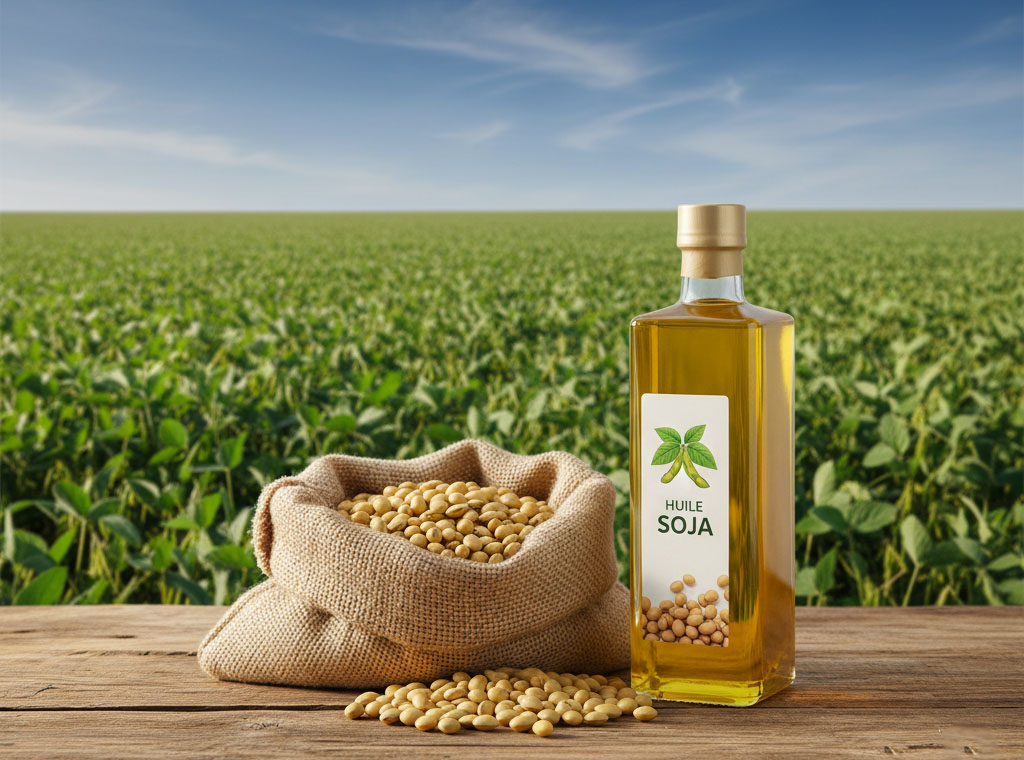
Soybean oil is extracted from the seeds of Glycine max, a legume native to East Asia that has been cultivated for more than 5,000 years and is now produced on a massive scale in the United States, Brazil, and Argentina. Originally intended for human and animal food, modern soybean cultivation prioritizes high yields, often relying on genetically modified varieties engineered to resist diseases and herbicides.

Industrial soybean oil production involves hot solvent extraction, followed by refining, neutralization, and deodorization. These steps yield a neutral-tasting, shelf-stable oil suited to the food industry, but they strip away original micronutrients and can leave behind chemical residues.

Intensive soybean farming also has a major ecological impact. The massive expansion of plantations drives the deforestation of tropical forests, soil erosion and depletion, and the destruction of entire ecosystems. Biodiversity is severely affected. Many animal and plant species are threatened or disappear, and local food chains are disrupted. The heavy use of herbicides and chemical inputs contributes to soil and water pollution, worsening environmental degradation.

Soybean oil is omnipresent in salad dressings, sauces, ready-made meals, margarines, and industrial baked goods. Sensitive to oxidation, it releases reactive compounds during cooking due to its high proportion of polyunsaturated fatty acids.

Lipid composition of soybean oil:

  • Saturated fatty acids: 14 to 16%
  • Monounsaturated fatty acids (omega-9): 23 to 25%
  • Omega-3 ALA: 6 to 7%, with limited conversion into EPA/DHA
  • Omega-6 linoleic acid (LA): 54 to 58%
  • Omega-6 gamma-linolenic acid (GLA): absent or negligible

Source: Gunstone FD., Vegetable Oils in Food Technology: Composition, Properties and Uses, 2011.

This oil is heavily concentrated in omega-6s, making it an oil to avoid as much as possible, especially given that the modern diet is already overloaded with this fatty acid.

Red blood cell omega-6 fatty acids are associated with an increase in dense LDL particles, which are considered more atherogenic (promoting plaque buildup in the arteries). This study suggests that omega-6s appear to have a negative impact on the quality of LDL particles, thereby increasing cardiovascular risk.

Wang et al., 2023, Association of red blood cell omega-6 fatty acids with small dense LDL particles and cardiovascular risk, PubMed.

As with most vegetable oils that are overly rich in omega-6s, regular consumption of soybean oil contributes to several health issues:

  • Disruption of the blood lipid profile: promotes the formation of small, dense LDL particles that oxidize easily and are prone to depositing in the arteries.
  • Chronic low-grade inflammation: oxidized polyunsaturated fatty acids generate pro-inflammatory compounds.
  • Inefficient energy storage: fats derived from omega-6s are less readily mobilized, encouraging weight gain.
  • Increased metabolic risk: inflammation and lipid disruption can contribute to insulin resistance and metabolic disorders.
  • Low supply of active omega-3s: the plant-based ALA contained in soybean oil is poorly converted into EPA and DHA, limiting its actual role in cardiovascular and brain health.
  • Lack of fat-soluble micronutrients: cholesterol and vitamins A, D, E, and K are virtually absent or destroyed by refining, reducing overall nutritional value.

In summary, soybean oil is unstable, pro-inflammatory, and imbalanced, and its frequent use can heighten cardiovascular and metabolic risks within a modern diet that is already high in omega-6s.

Peanut Oil

Peanut oil is extracted from the seeds of Arachis hypogaea, a legume cultivated for several millennia in South America, notably in Peru and Brazil. Today, global production is concentrated mainly in China, India, and the United States. Originally, peanuts were used not only for human food, but also as a natural lubricant and a source of cosmetic products. Gradually, peanut oil became a central ingredient in the food industry, thanks to its relative stability and neutral flavor, which make it well suited to large-scale preparations.

Modern industrial production of this oil relies on hot extraction or chemical solvents to maximize yield. After this step, the oil undergoes thorough refining, neutralization, and deodorization to produce a neutral, stable product compatible with the demands of the food industry. Although effective for consistency and shelf life, these processes strip away many original micronutrients and can leave behind residual chemical traces.

Peanut oil is widely used in both home and industrial cooking. It is used for frying, margarines, sauces, industrial baked goods, and many processed foods. Its neutral taste and relative heat resistance make it practical for these applications, yet its proportion of polyunsaturated fatty acids, although lower than that of soybean oil, remains significant. When exposed to high temperatures, these fatty acids can degrade and generate reactive compounds that may adversely affect health.

Peanut cultivation has a lower environmental impact than soybean farming, though it remains significant. It requires a regular supply of water, and industrial production often relies on chemical fertilizers and pesticides that can contaminate soil and waterways. Although this legume has the ability to fix nitrogen and enrich soils, intensive monocultures can deplete the land and reduce local biodiversity. Compared with crops such as soybeans or palm oil, its ecological footprint is smaller, yet environmental pressure remains considerable when production is industrial and extensive. Even so, thanks to its predominant content of saturated and monounsaturated fatty acids, peanut oil remains much more stable than soybean oil.

Lipid composition of peanut oil:

  • Saturated fatty acids: 16 to 20%
  • Monounsaturated fatty acids (omega-9): 45 to 60%
  • Omega-6 linoleic acid (LA): 20 to 30% depending on the variety and processing method
  • Omega-3 ALA: very low or negligible amount
  • Omega-6 gamma-linolenic acid (GLA): absent or virtually nil

Source: Gunstone FD., Vegetable Oils in Food Technology: Composition, Properties and Uses, 2011.

Tags:

Vegetable Oils

More articles

Les huiles de graines - Tournesol, Colza, Carthame & Sésame
Previous

Seed Oils – Sunflower, Rapeseed (Canola), Safflower & Sesame

Les huiles de fruits à coque - Noix & Noisettes
Next

Tree Nut Oils – Walnut and Hazelnut

Next
Les huiles de fruits à coque - Noix & Noisettes
25 November 2025

Tree Nut Oils – Walnut and Hazelnut

Previous
19 November 2025

Seed Oils – Sunflower, Rapeseed (Canola), Safflower & Sesame

Les huiles de graines - Tournesol, Colza, Carthame & Sésame

No Comment! Be the first one.

Leave a Reply Cancel reply

Your email address will not be published. Required fields are marked *

DJFORM natural food supplements banner
  • About Us

Copyright © 2026 DJFORM

  • Home
  • Nutrition: Our Advice
    • Nutritional Principles
    • Processed Foods
    • Organic Food
    • Nutritional Balance
  • Seasonal Supplement Courses
    • Spring Supplement Courses
    • Summer Supplement Courses
    • Autumn Supplement Courses
    • Winter Supplement Courses
  • Our Brand
    • DJFORM Supplements
    • DJFORM Formulas
    • DJFORM Quality
    • About Us
    • Our Eco Packaging
  • Our Reading List
  • DJFORM Shop
  • Contact
